
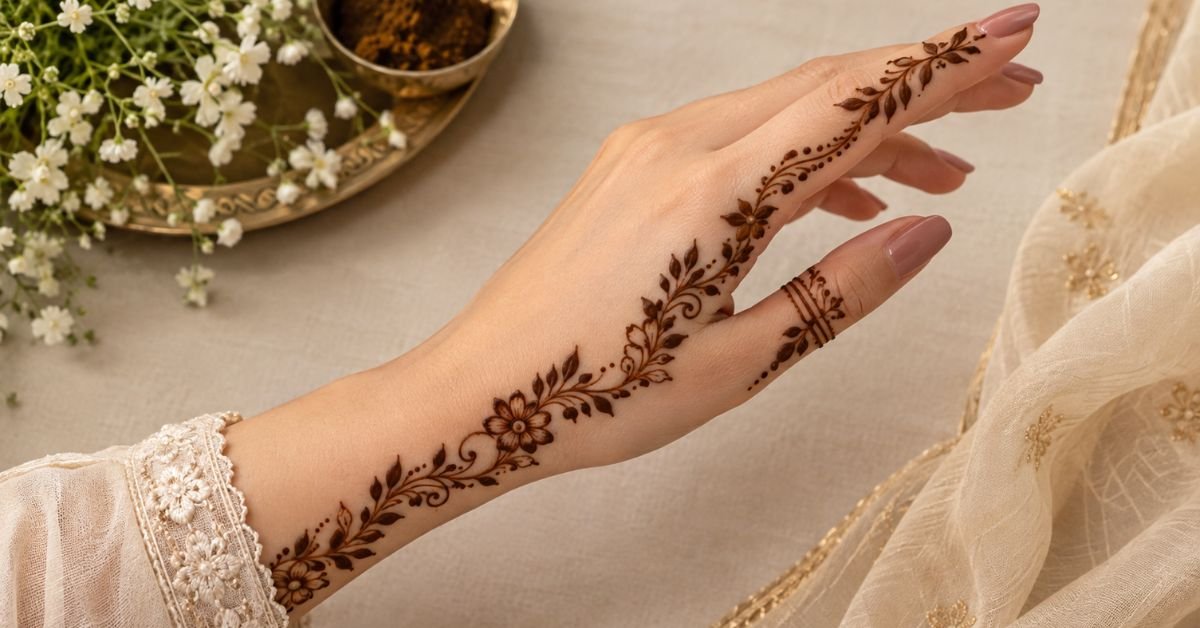
A mehndi pattern that follows the side of the hand has a quiet kind of charm. Instead of filling every inch of skin, it lets a few well placed curves, flowers, and leaves do the talking. The balance between henna and bare skin makes the whole look feel light and graceful.
Whether you like a single trailing vine or a richer floral arrangement, side hand mehndi designs suit almost every mood and occasion. The pattern can hug the outer edge of the hand or sweep diagonally across the back, so you have plenty of room to experiment.
Simple Side Hand Mehndi Designs for an Effortless Look


Simple side hand mehndi designs rely on a few small elements arranged with care. Picture a slim curved line running from the wrist toward the base of the little finger, dotted with tiny flowers and pairs of small leaves. Add a few dots between the motifs and the vine starts to look finished without being crowded.
These patterns work well if you prefer light detailing or only have a short window to sit still. A basic vine can be completed in minutes, and it still looks neat because the flowing line does most of the work. They are also forgiving, since a slightly uneven curve simply reads as natural movement.
Arabic Side Hand Mehndi Designs with Flowing Floral Trails
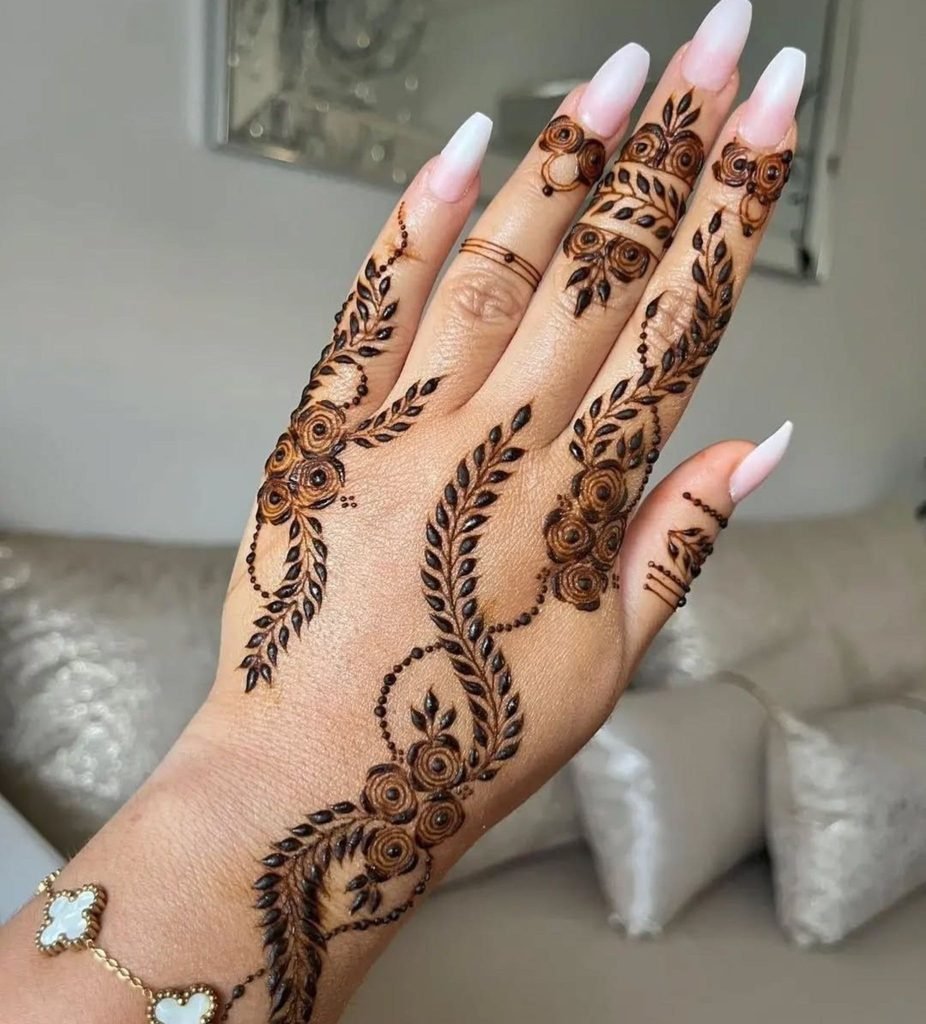
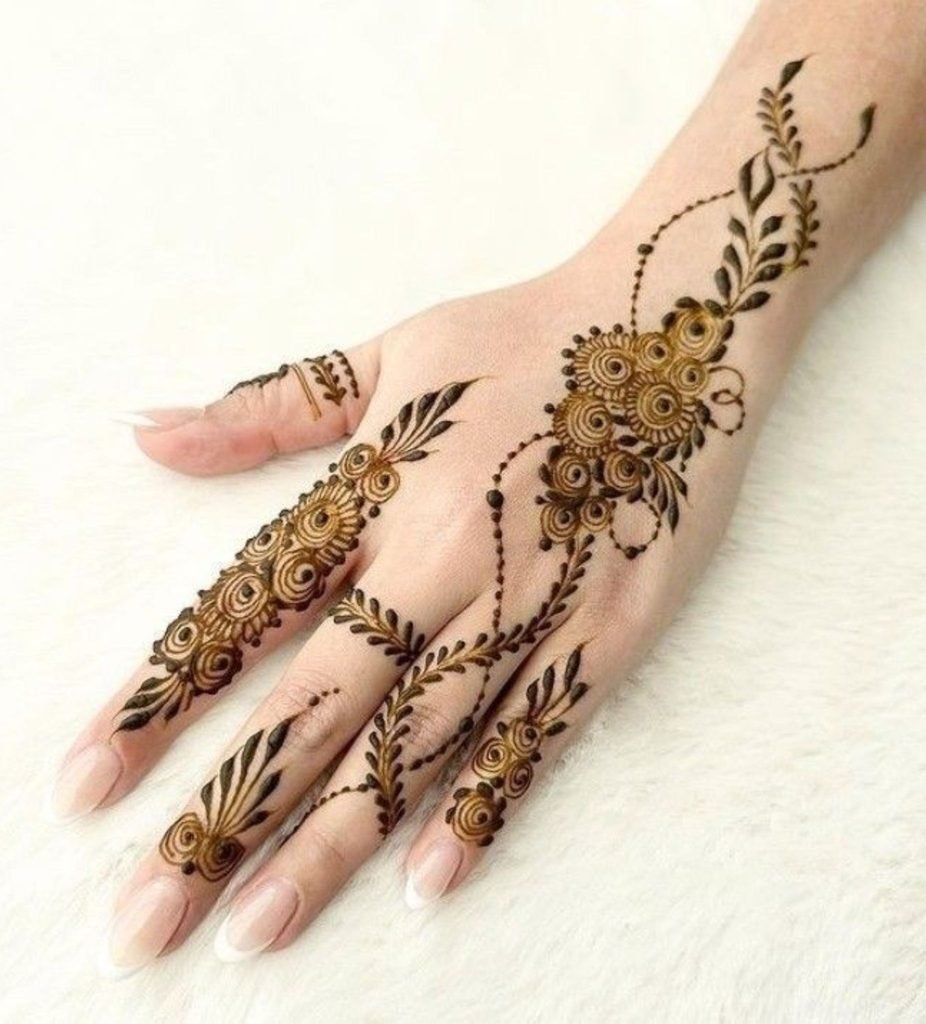
Arabic mehndi is known for bold, generous shapes and plenty of open space. In side hand Arabic mehndi designs, you will usually see large flowers, teardrop paisleys, and long sweeping vines that curve with confidence. Thicker outlines make the main motifs stand out, while thin tendrils fill the gaps.
Placement is what makes these designs special. A diagonal trail can start near the wrist, travel across the back of the hand, and end in a slim line along one finger. Another option is to run the trail straight along the outer edge, letting the largest flower sit near the wrist and the vine taper off toward the pinky. Both layouts draw the eye along the hand and make it look longer.
Delicate Floral and Leafy Side Hand Patterns
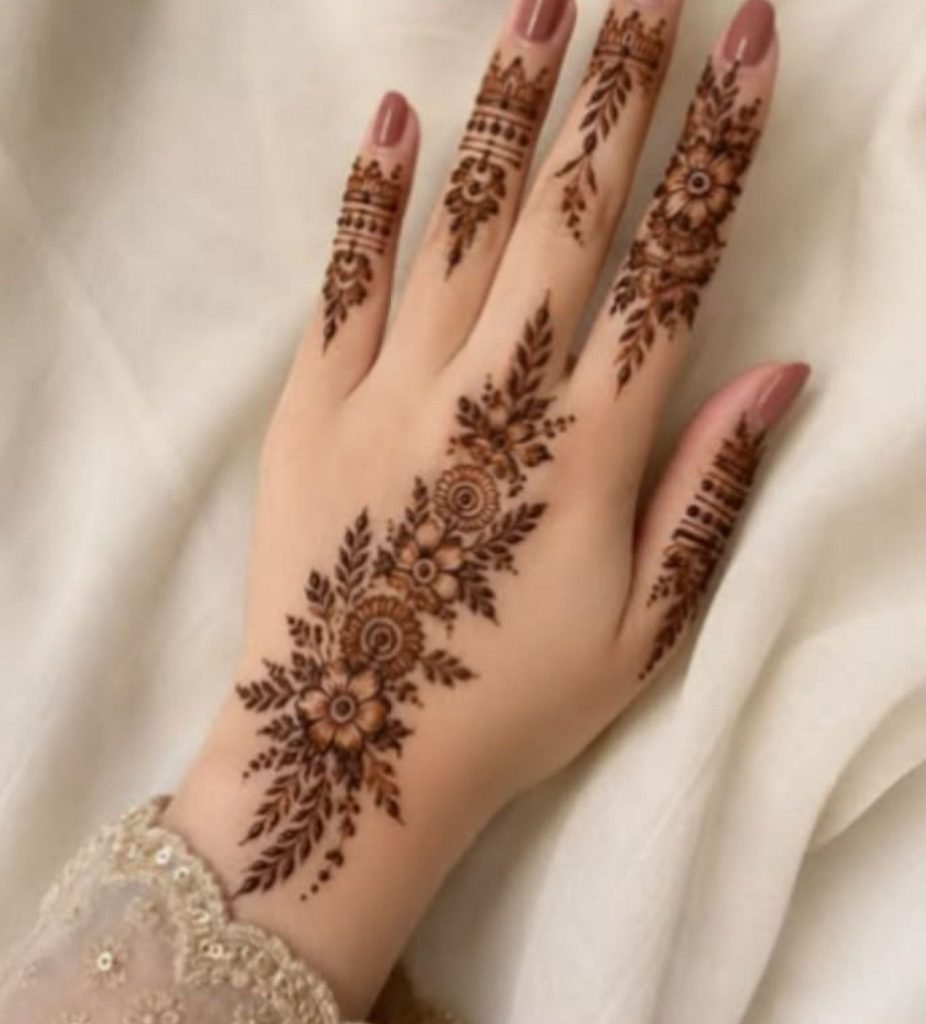
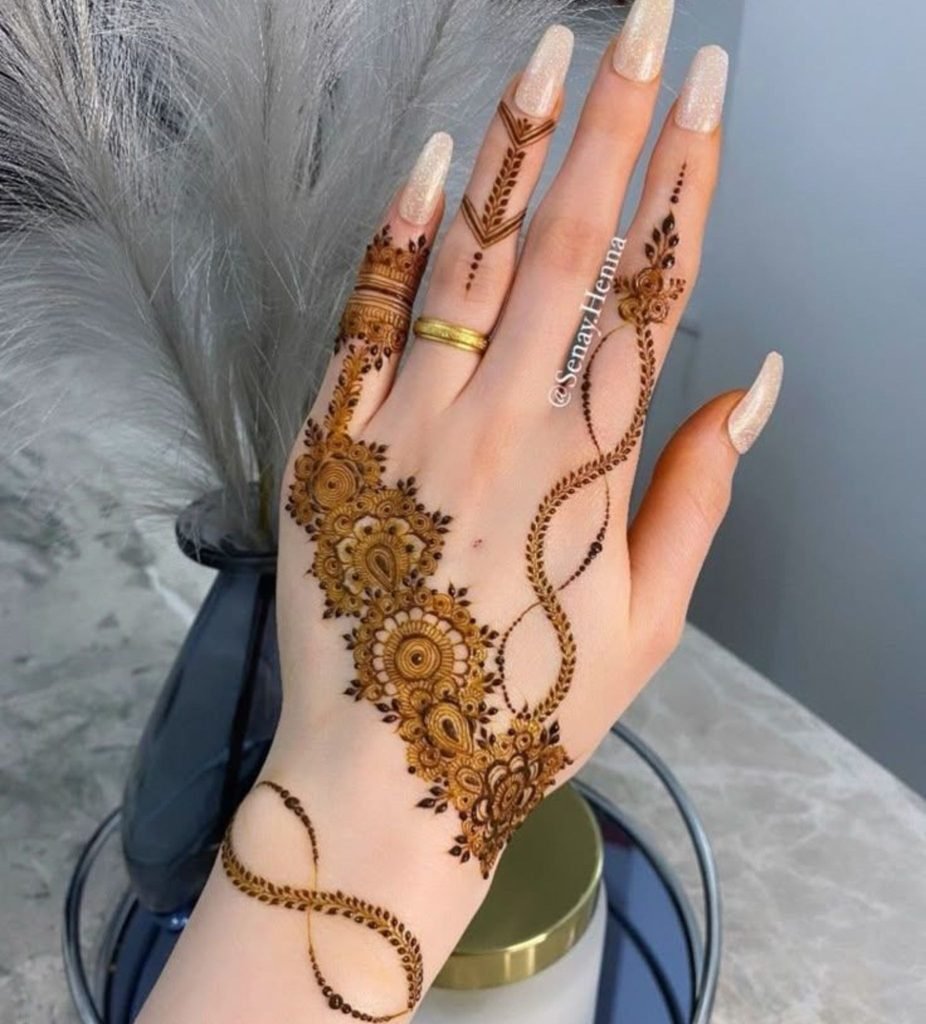
If you love soft, romantic motifs, floral side hand mehndi patterns offer a lot to play with. Rose-inspired flowers with a few curled petals, small blossoms, closed buds, and slender leafy branches combine into designs that feel almost like a drawn garden.
Direction matters here. A trail that curves upward toward the fingers feels lively, while one that drops gently toward the wrist feels calmer. Spacing matters just as much. Motifs set closer together create a lush, full look, while wider gaps give each bud and leaf room to breathe. Try varying the size of the flowers, with a larger bloom at the start and smaller ones trailing off, so the pattern feels natural rather than repetitive.
Minimal Side Hand Mehndi Designs with Negative Space
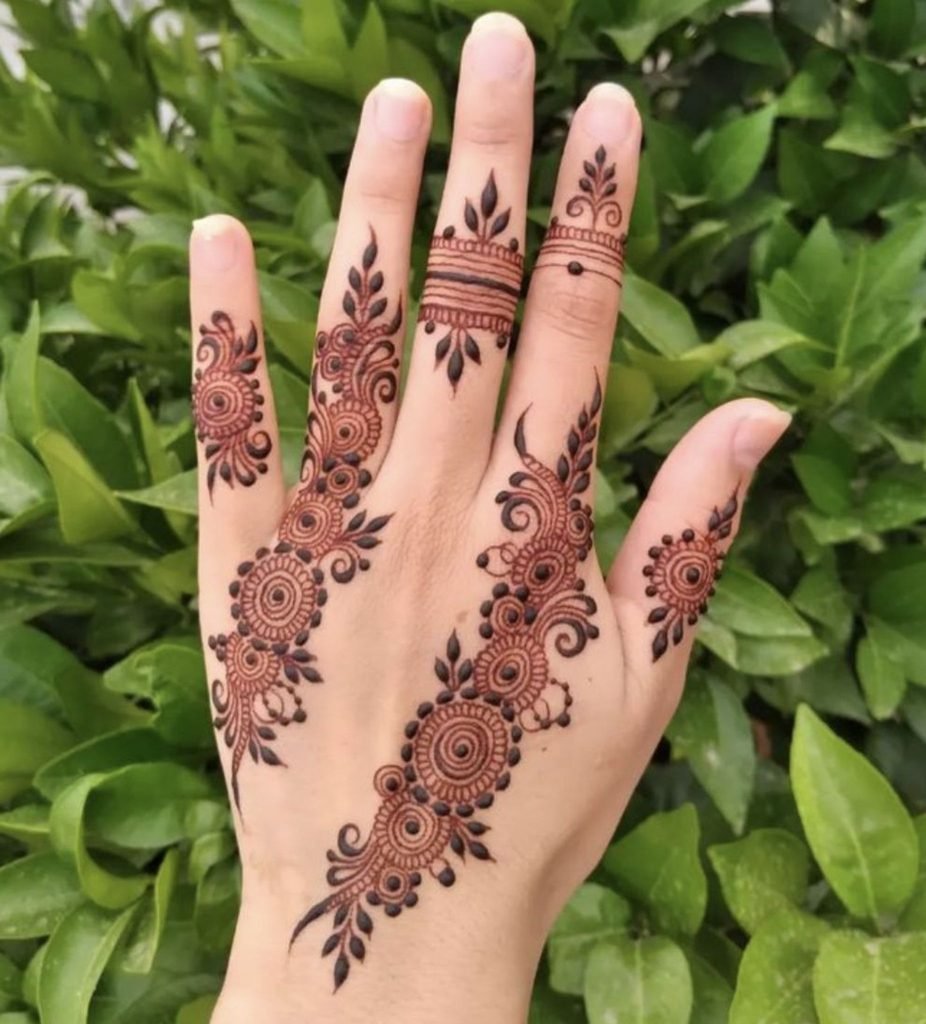
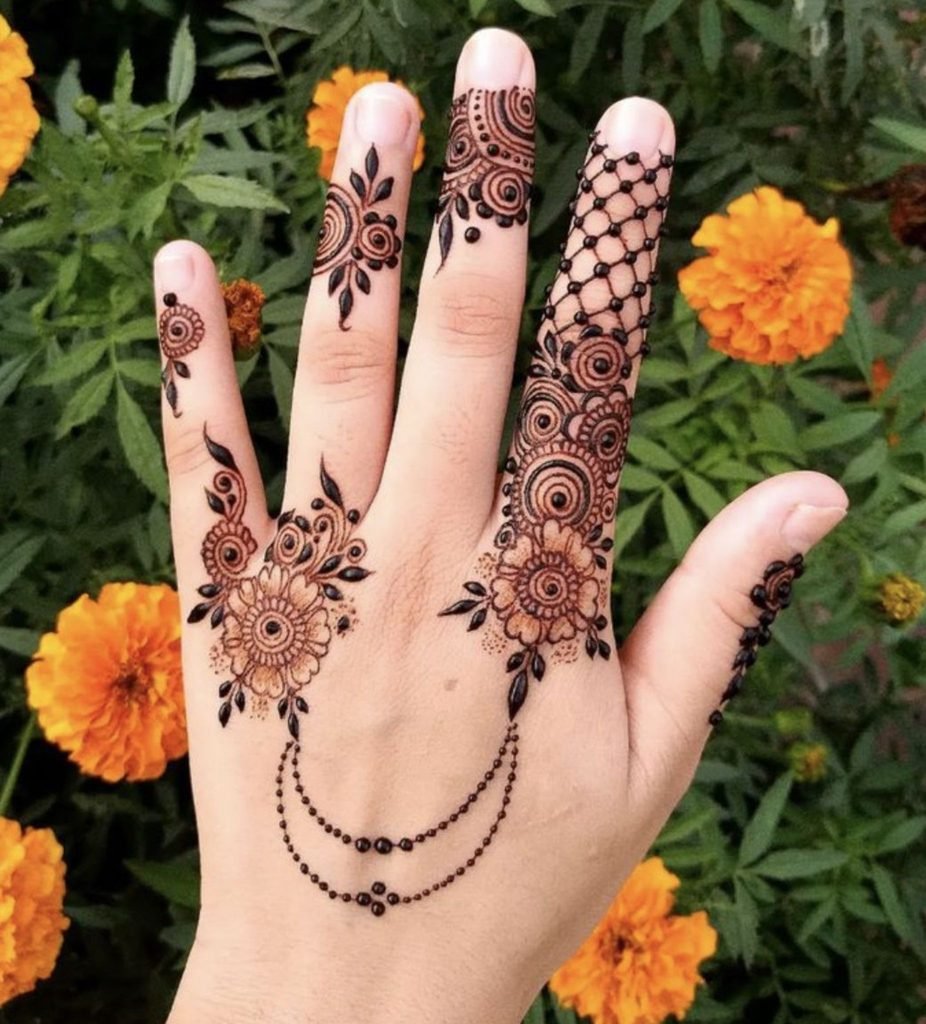
Minimal side hand henna designs lean on restraint. Think of a fine line running along the edge of the hand, a short row of dots, a tiny crescent, or a small geometric accent such as a diamond or a cluster of triangles. Everything is thin, clean, and deliberate.
Negative space is the real feature in these patterns. When part of the skin is left bare, each motif stands out more clearly and the design feels modern rather than busy. This style also pairs well with rings, bracelets, and plain outfits, since the henna adds interest without competing with accessories. If you want a design that looks refined at a glance, minimal is a dependable choice.
Stylish Side Hand Mehndi Designs for Eid and Weddings
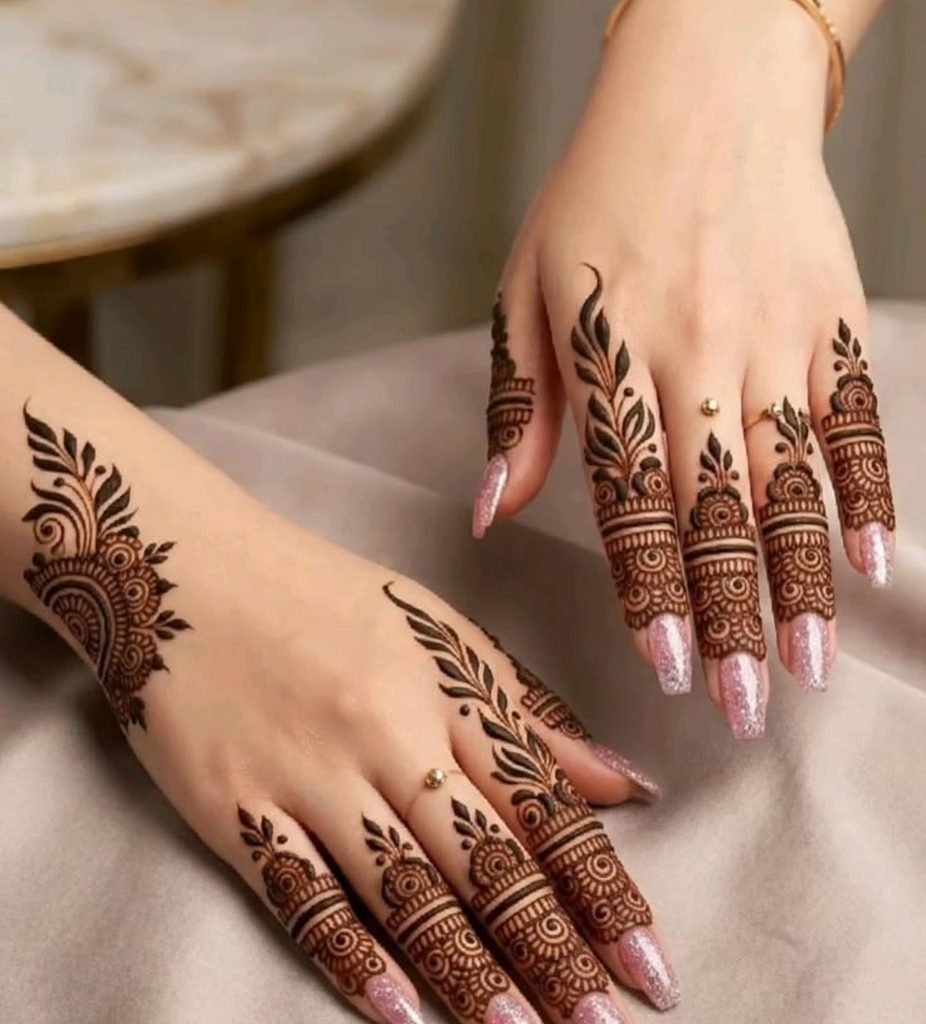
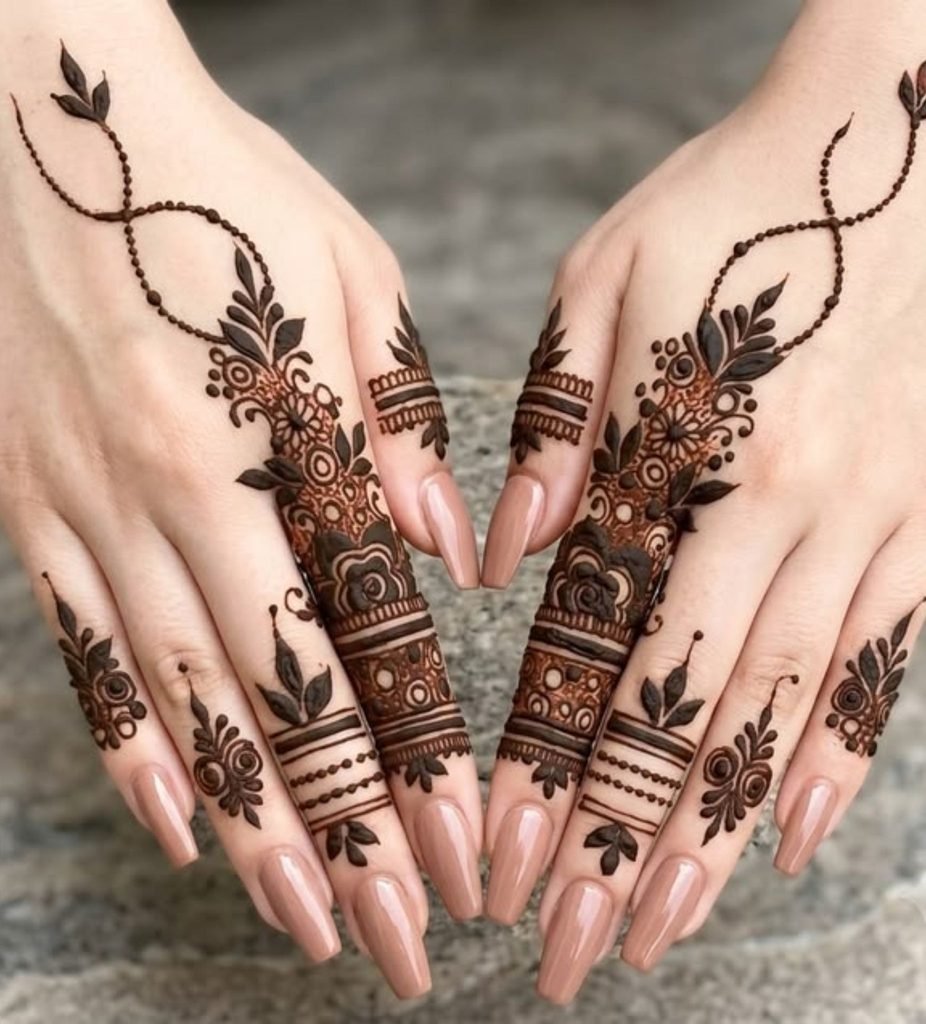
For festive days, you can build on the same side placement and simply add more detail. Side hand mehndi designs for Eid often combine a floral trail with a few paisleys, small jaali touches, and a finger accent that echoes the main vine. A decorative wrist connection, such as a slim band or a curl of leaves, helps the design look complete when paired with bangles.
A wedding-guest look can go a step further. Here you might layer denser flowers, add shading with fine dots, and extend the pattern to two or three fingers. The goal is still elegant mehndi designs for weddings that complement your outfit without competing with the bride, so keep the overall shape controlled and leave some breathing room. A light festive design stays airy and quick, while a wedding-guest design feels richer and more structured.
How to Choose the Right Side Hand Mehndi Design
Start with your personal style. If you prefer understated looks, lean toward minimal or simple vines. If you enjoy statement pieces, Arabic trails and paisleys will feel more like you.
Next, be honest about your skill and your time. Easy mehndi designs for beginners usually start with a single vine or one flower. Once that feels comfortable, add a few leaves, then dots, and later a finger detail. Building up in small steps keeps the process enjoyable and the results neat.
Finally, think about the occasion and how much coverage you want. A casual day out suits a thin trail, while a celebration can handle extra florals and paisleys. Check how the design will sit with your clothes and jewelry before you commit.
Final Thoughts
Side hand patterns are wonderfully flexible. You can keep things light with a few petals and dots, flow into an Arabic trail with bold flowers, or build a richer festive design with paisleys and finger accents.
Each option works because it respects the shape of your hand. Choose the one that matches your comfort level, your taste, and the day ahead, and let your next design feel like a small piece of art.