Author: Caandy Jacckson

  • The Bold Rise of Afghani Mehndi Design

    The Bold Rise of Afghani Mehndi Design

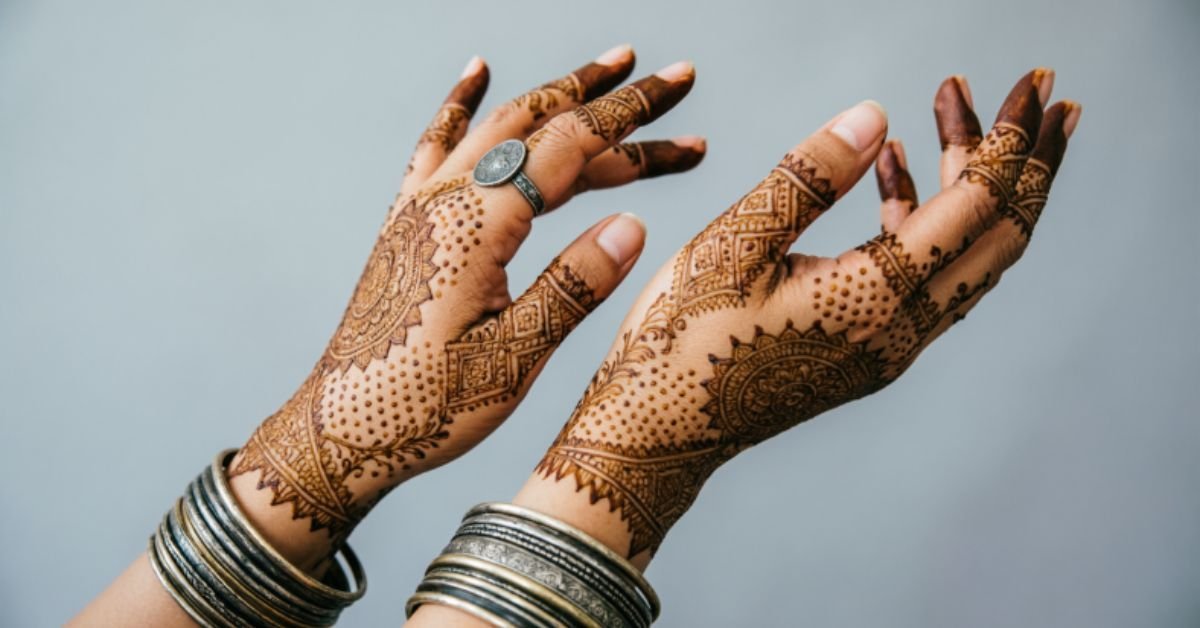
    Scroll through any bridal or boho aesthetic board right now and you’ll notice a shift. The ultra fine, lacy Indian florals are stepping aside. What’s taking center stage? Afghani Mehndi Design is raw, geometric, unapologetically bold, and rooted in centuries of tribal artistry.

    In 2026, brides, festival goers, and henna lovers are chasing something that means something. They want designs that look like wearable artifacts, not wallpaper. Afghani henna delivers exactly that  heavy lines, breathing space, and the kind of patterns that look like they belong on antique silver jewelry, not a doily.

    The Roots: Kuchi Tribe & The “Skin Jewelry” Concept

    Source: Pinterest
    Source: Pinterest

    Afghani Mehndi Design traces its strongest influence to the Kuchi nomads, a tribal community known for their stunning oxidized silver jewelry, embroidered textiles, and bold aesthetic language. Their designs were never about delicacy. They were about presence.

    When Kuchi jewelry motifs were translated into henna  the thick borders, the angular flowers, the stacked geometric bands  they created what artists now call “Skin Jewelry.” The henna doesn’t decorate the hand. It becomes an accessory. That concept is exactly what’s driving the 2026 henna trend.

    Afghani Mehndi Designs Trending in 2026

    1. The Kuchi Tribal Mandala

    Source: Pinterest
    Source: Pinterest

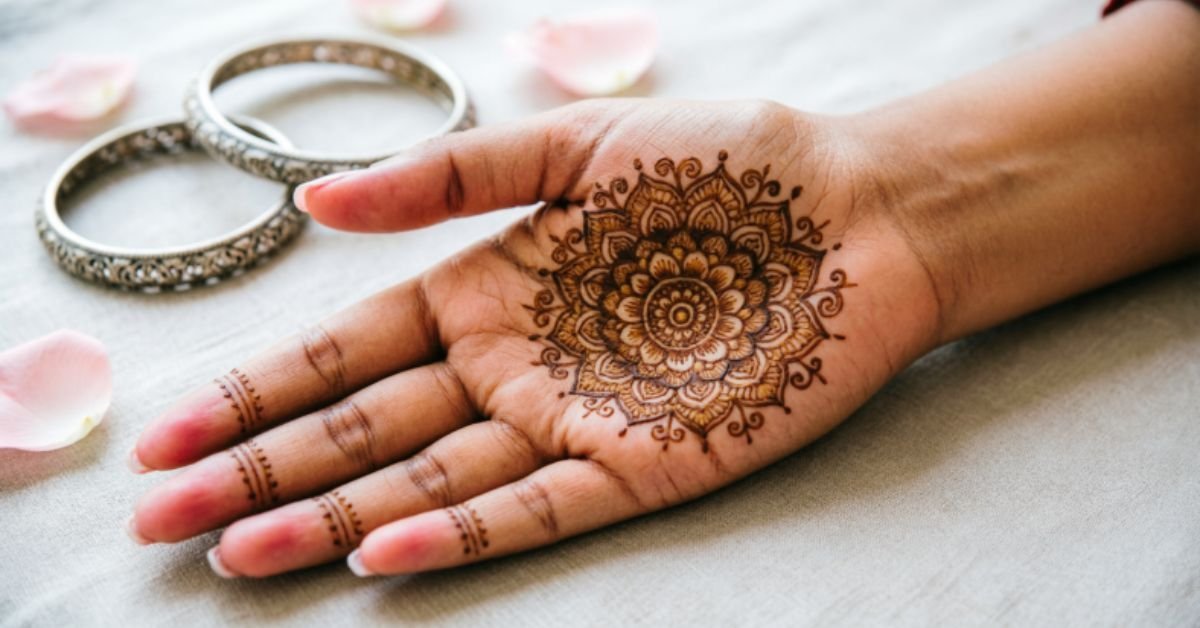
    This is the centerpiece design of 2026. Placed on the palm, it’s built from concentric geometric shapes of diamonds inside squares inside octagons  all inspired by the patterns etched into antique Kuchi silver pendants.

    Unlike traditional Indian mandalas with their petal heavy florals, this one is angular and architectural. Think less “garden” and more “amulet.” Bold outlines, minimal inner detailing, and a strong negative space frame make it look almost stamped onto the skin.

    Best for: Bridal palms, photoshoot henna, festival looks.

    2. The Nomadic Cuff (Zar Style)

    Source: Pinterest
    Source: Pinterest

    Inspired by the zar (gold/silver) stacked bracelets worn by Kuchi women, this wrist design mimics the look of a heavy cuff bracelet drawn in henna. Multiple stacked bands of geometric patterns, chevrons, triangles, chain link borders  wrap around the wrist like armor.

    The effect? You genuinely cannot tell at first glance whether someone is wearing jewelry or henna. That’s the goal.

    Key features:

    • 3–4 stacked band layers
    • Mix of solid fills and open geometric shapes
    • Cleaner skin above and below for maximum contrast

    3. The Geometric Finger Armour

    Source: Pinterest
    Source: Pinterest

    Heavy finger detailing with a deliberately minimal palm is one of the most editorial looking styles in Afghani Mehndi Design right now. Each finger gets its own geometric treatment: thick side borders, angular tip caps, diamond mid knuckle rings.

    The palm stays nearly bare, which makes the fingers look even bolder. It’s the henna equivalent of wearing statement rings and nothing else.

    Why it works in 2026: Social media close ups. This design was made for Reels and ring shots.

    4. The Antique “Gul” (Flower) Motif

    Source: Pinterest
    Source: Pinterest

    Gul means flower in Dari, but forget everything you know about floral henna. The Afghani Gul is a solid, stamp like shape with thick petals, filled centers, and bold outlines. No feathery lines. No trailing vines.

    It looks like someone pressed an antique wax seal onto your hand. These motifs are scattered intentionally across the design, framed by geometric borders, giving the overall look a rhythm without being repetitive.

    5. Symmetrical “Mirror” Henna

    Source: Pinterest
    Source: Pinterest

    Perfectly identical patterns on both hands  mirrored down to the last dot. This style takes serious skill and is one of the most requested Afghani Mehndi Design trends going into 2026.

    The symmetry creates a satisfying, almost optical illusion effect when both hands are placed together. Geometric shapes that look ordinary alone become something striking when they reflect each other.

    Pro tip: Ask your artist to photograph and plan both hands together before starting. Symmetry requires pre-mapping.

    6. The “Lapis” Border Style

    Source: Pinterest
    Source: Pinterest

    Named after the deep blue lapis lazuli stone, a gem historically mined in Afghanistan, this style runs a strong linear design along the outer edges of the hand. Think of it as a frame for the hand rather than a central design.

    A thick geometric border traces from the base of the pinky, along the outer wrist, down to the forearm. The center of the palm and inner wrist stay bare. Bold, structured, minimalist in its own way.

    Perfect for: Minimalist brides, photoshoots, anyone who wants impact without full coverage.

    2026 Styling Guide: How to Wear Afghani Mehndi

    Afghani Mehndi Design was built to pair with jewelry, specifically oxidized silver. Here’s how to style it in 2026:

    • Jewelry: Choose chunky oxidized silver rings, layered tribal cuffs, or raw stone pendants. Avoid delicate gold; it competes with the henna’s weight rather than complementing it.
    • Outfits: Boho chic coordinates, Afghan inspired embroidered tops, mirror work dupattas, and earthy linen sets all work beautifully. The henna reads as part of the outfit, not an add-on.
    • The Negative Space Technique: This is key for 2026. Afghani henna deliberately leaves skin bare. Don’t ask your artist to fill every gap. The breathing room between patterns is what gives the design its modern edge. Resist the urge to add more.

    Final Thoughts

    There’s something genuinely exciting about wearing a design that carries centuries of nomadic artistry on your skin. Afghani Mehndi Design isn’t just a 2026 trend, it’s a reclaiming of tribal roots through a medium that’s been around for thousands of years.

    Whether you go full Kuchi Mandala bridal or just a simple Lapis border for a festival, you’re wearing something with history. And in a world full of identical floral henna photos, that’s exactly what makes it stand out.

    Frequently Asked Questions

    Q1: How long does Afghani Mehndi Design last compared to Indian henna? 

    Both use the same natural henna paste, so longevity is similar  1 to 3 weeks depending on your skin type and aftercare. The bold, thick lines of Afghani designs may actually appear to last longer because the color saturation is deeper.

    Q2: Is Afghani Mehndi Design suitable for brides? 

    Absolutely. In fact, it’s gaining popularity among brides who want something distinct from traditional bridal henna. Many modern brides pair it with a Kuchi-inspired necklace or oxidized silver maang tikka for a cohesive tribal-luxury look.

    Q3: Can I mix Afghani and Indian henna styles? 

    Yes, and many artists are doing exactly that. The most common fusion is using an Afghani geometric border or cuff with a softer floral motif in the center. Just make sure the line weights are consistent  mixing ultra-thin Indian lines with heavy Afghani borders can look unbalanced.

    Q4: How do I find an artist who specializes in Afghani Mehndi Design? 

    Search specifically for “tribal henna,” “geometric henna,” or “Afghani mehndi” on Instagram or Pinterest. Review their portfolio carefully and look for thick, confident lines and strong geometric shapes. Ask for a consultation before booking, especially for bridal work.
  • The Renaissance of Classics Top Traditional Mehndi Designs to Watch in 2026 

    The Renaissance of Classics Top Traditional Mehndi Designs to Watch in 2026 

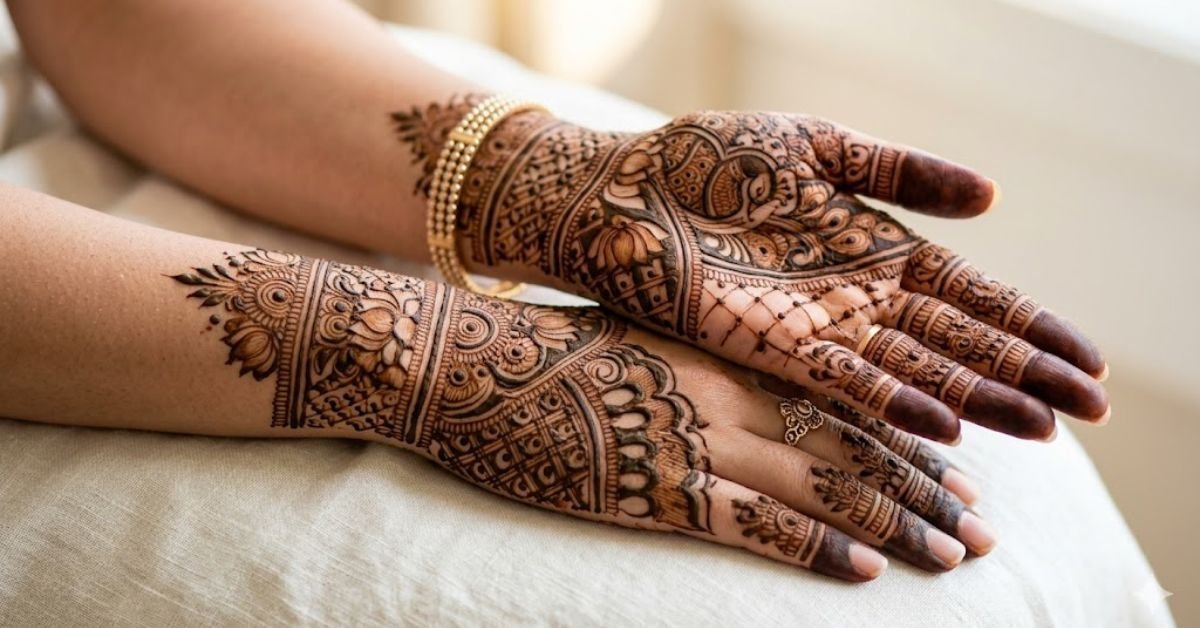
    Traditional Mehndi design has always carried this weight of mothers and grandmothers, of wedding nights lit by oil lamps, of cultural codes whispered through patterns that have survived centuries.

    In 2026, something extraordinary is unfolding across bridal studios, digital mood boards, and henna conventions worldwide. Brides and artists alike are turning away from stark minimalism and leaning, with deliberate elegance, back toward the ornate.

    Here at MehndiChic.com, we have been tracking this renaissance closely. These are the traditional Mehndi design trends defining 2026  and why each one deserves a place in your hands.

    The New Language of Traditional Henna Micro Storytelling

    Traditional Mehndi Designs
    Source: Pinterest
    Source: Pinterest

    This trend elevates traditional Mehndi design beyond decoration into heirloom. When a bride looks at her hands decades later, she will not just see henna, she will see a date, a name, a love story rendered in earth and leaves.

    What to ask your artist for:

    • Hidden initials within Rajasthani lattice borders
    • Wedding date encoded in petals or geometric segments
    • Symbolic motifs representing the couple’s story  cities, constellations, or meaningful objects

    1. The Royal Darbar: Intricate Rajasthani Full Hand Patterns

    Source: Pinterest
    Source: Pinterest

    Rajasthani Motifs remain the undisputed royalty of traditional Mehndi design, and 2026 sees them reclaiming their throne with renewed authority. Expect full hand compositions that travel from fingertip to mid forearm  dense jharokha (arched window) motifs, keri (mango) paisley clusters, and interlocking elephant processions that honour both craftsmanship and cultural heritage.

    2026 signature elements include:

    • Double border cuffs inspired by Mughal jewellery bands
    • Diwan e Khas inspired finger caps with fine grid shading
    • Meenakari style colour accents in saffron and ivory using natural pigments

    2. Ethereal Symmetry: The New Age Mandala Designs

    Source: Pinterest
    Source: Pinterest

    Symmetrical Henna Patterns are experiencing a sophisticated evolution in 2026. The mandala  rooted in Hindu and Islamic geometric tradition  is being reimagined with mathematical precision and meditative beauty. These are not the rushed circular fills of the early 2010s. 

    What defines the 2026 mandala:

    • Seven layer radial symmetry extending into wrist cuffs
    • Negative space used as an intentional design element, not empty area
    • Micro dotwork borders that blur the line between mehndi and fine line tattooing

    3. Floral Symphony 3D Lotus and Rose Motifs for the Modern Bride

    Source: Pinterest
    Source: Pinterest

    The 3D Peacock Design and sculptural floral work represent the most technically demanding frontier in contemporary traditional Mehndi. Using layered application and strategic 3D shading, master artists are achieving depth that makes lotus blooms appear to rise off the skin.

    Most requested 3D motifs in 2026:

    • 3D lotus blooms on palm centre with gradient shading
    • Sculptural rose clusters along the wrist band
    • Feathered peacock tails across the forearm with dimensional eye detailing

    4. Minimalist Heritage Traditional Arabic Fusion for Intimate Events

    Source: Pinterest
    Source: Pinterest

    Not every occasion calls for a full royal bridal statement  and 2026 acknowledges this beautifully. Traditional Arabic fusion designs offer a sophisticated middle ground: the flowing vine structures and bold floral anchors of classical Arabic henna, elevated with traditional Indo Pakistani motifs as accent points. 

    Defining characteristics:

    • Open palm compositions with deliberate breathing room
    • Classic Arabic vines anchored by a single traditional Rajasthani paisley
    • Finger detailing that references traditional patterns without overwhelming the hand

    Achieving the Deepest Stain in 2026 Natural Aftercare That Works

    The depth of your henna stain is determined not just by the quality of the paste, but by what happens in the critical 24 hours after application. The dye molecule in henna  Lawsone  must migrate from the paste into the keratin layers of your skin. Give it every advantage:

    • Leave the paste on for a minimum of 6–8 hours; overnight is ideal for bridal applications
    • Apply a warm lemon and sugar sealant over dry paste to keep it moist and encourage deeper oxidation
    • Wrap hands loosely in medical tape or breathable cloth  warmth accelerates dye transfer
    • Remove paste by scraping, never washing. Water disrupts the initial oxidation process
    • Seal with a thin layer of mustard oil, coconut oil, or shea butter immediately after removal
    • Avoid water contact for at least 12 hours post paste removal

    Your Roots Are Your Most Powerful Statement

    In a world that often mistakes newness for progress, the resurgence of traditional Mehndi design in 2026 carries a quiet but profound message: some things do not need reinventing. They need honouring. The Rajasthani lattice, the symmetrical mandala, the 3D peacock are not relics. They are living visual languages that grow more expressive with every generation that chooses to speak them.

    The Vintage Modern Fusion of 2026 invites you to do exactly that: take the wisdom of the ancient and render it in your own voice. Hide your story in a lotus. Let a peacock carry your joy. Ask for henna that was grown in soil, not manufactured in a lab.

    Because the most powerful ornament you will ever wear on your wedding day is one that knows where it comes from.

  • Minimalist Magic The Ultimate Guide to Short Mehndi Designs for 2026

    Minimalist Magic The Ultimate Guide to Short Mehndi Designs for 2026

    There’s a quiet revolution happening in the world of henna, and it’s beautifully understated. Short Mehndi Designs has officially taken center stage  not as a compromise for the time crunched, but as a deliberate style statement for women who know exactly what they want. Clean lines. Strategic placement. Maximum impact. 

    If you’ve been scrolling through Pinterest and Instagram wondering how to nail that effortlessly chic henna look, you’re in the right place.

    Why Short Mehndi Designs Are Trending in 2026

    Short Mehndi Designs
    Source: Pinterest
    Minimalist Magic
    Source: Pinterest

    The minimalist wave didn’t stop at interior design or capsule wardrobes; it arrived fully at your fingertips. Here’s why the short mehndi designs is dominating every mood board this year:

    The “Clean Girl” Aesthetic Has Taken Over Gen Z and millennials alike are gravitating toward the clean girl look  dewy skin, slicked buns, and yes, delicate henna that whispers rather than shouts. Heavy, full hand bridal patterns feel ceremonial and intentional; short designs feel personal. They complement your existing jewelry, your nail art, your vibe without competing with any of it.

    Time Is a Luxury. A full hand mehndi sitting can take two to three hours. A precisely crafted short design? Thirty minutes, dry time included. For the woman attending a Dholki on a Tuesday evening or an office Eid party during lunch, this is everything.

    Versatility Across Skin Tones and Occasions Unlike dense traditional patterns that can appear overwhelming on certain skin tones, short mehndi designs allow the stain to breathe. The contrast is sharper, the motifs are more visible, and the overall effect is universally flattering.

    Top Categories of Short Mehndi Designs

    Not all minimalist henna is created equal. Here’s a breakdown of the styles worth bookmarking:

    Arabic Trail Designs

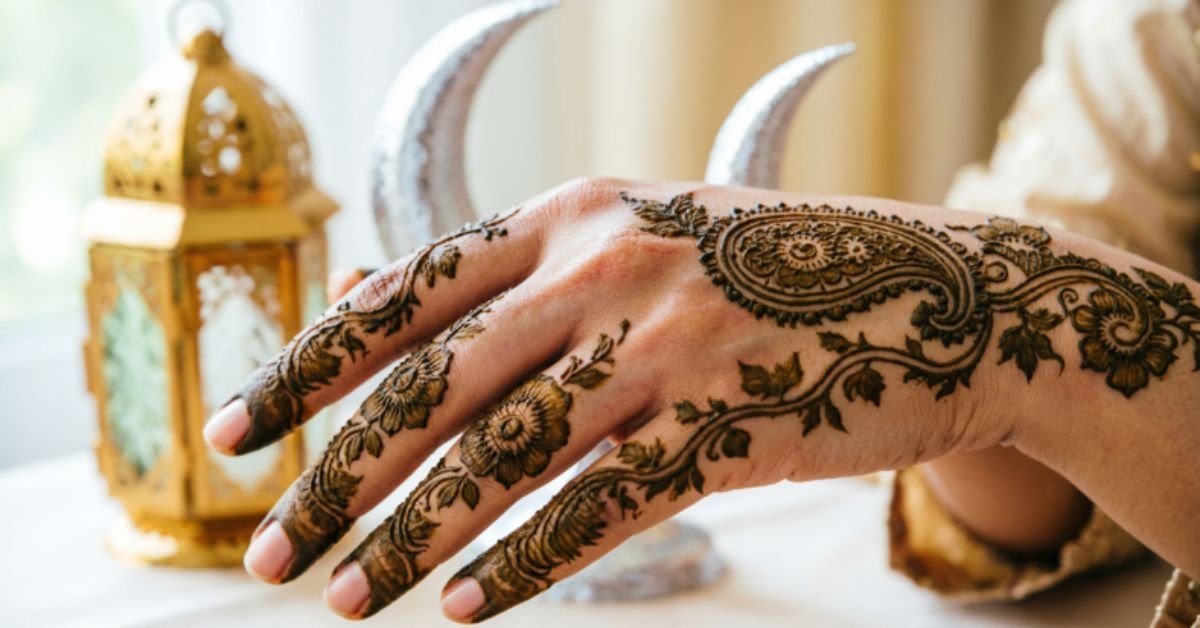
    Think flowing floral vines that begin at the wrist and trail lazily across one or two fingers. Arabic short mehndi designs is built on negative space; the unpainted skin is as much a design element as the henna itself. Bold petals, curved leaves, and the occasional dot cluster create an organic, editorial finish that photographs beautifully.

    Best for: Ring fingers, back of the hand, wrist to index finger trails

    Source: Pinterest
    Source: Pinterest

    Jewelry Style & Mandala Motifs

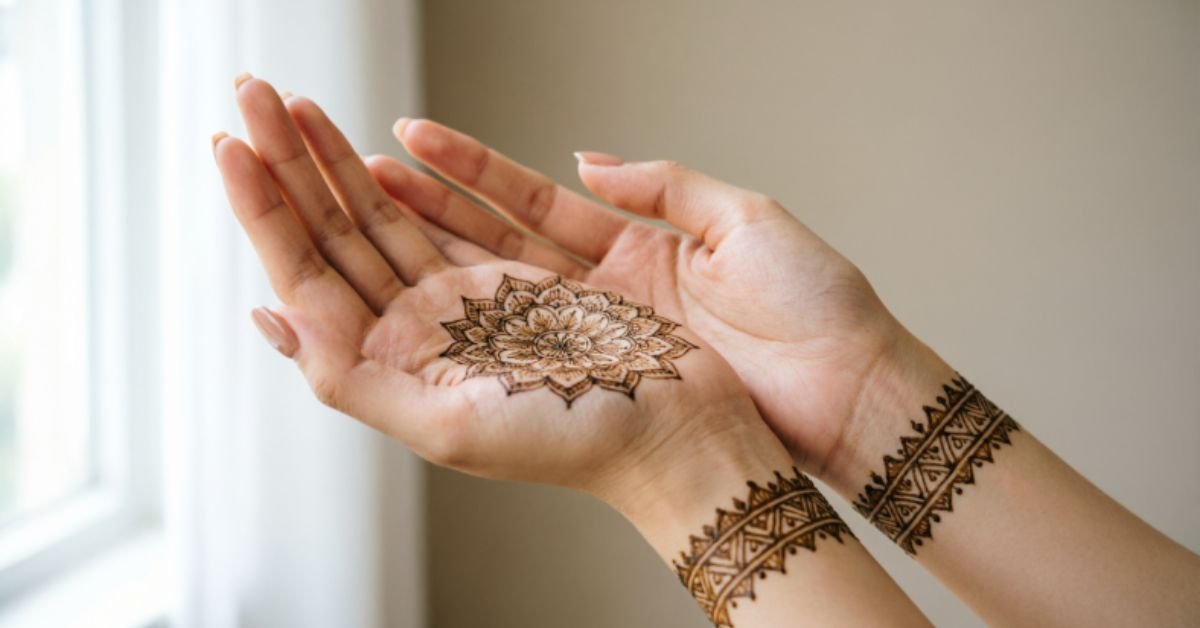
    This category mimics the look of actual jewelry: a ring style mandala on the middle finger, a delicate bracelet cuff at the wrist, or a circular motif on the palm center that echoes the look of a cocktail ring. It’s henna as an adornment, and it’s stunning styled with gold stacking rings or alone against a bare hand.

    Best for: Engagement shoots, pre wedding functions, styled content creation

    Source: Pinterest
    Source: Pinterest

    Finger Focused Patterns

    One statement finger, fully designed, the rest left bare. This asymmetrical approach is arguably the most modern short mehndi design style right now. A single finger adorned with geometric lines, delicate florals, or stacked crescent motifs creates an intentional, curated look.

    • Works brilliantly for reels and flat lay photography
    • Pairs perfectly with chunky rings on other fingers
    • Easy to touch up and refresh
    Source: Pinterest
    Source: Pinterest

    Wrist Cuff Designs

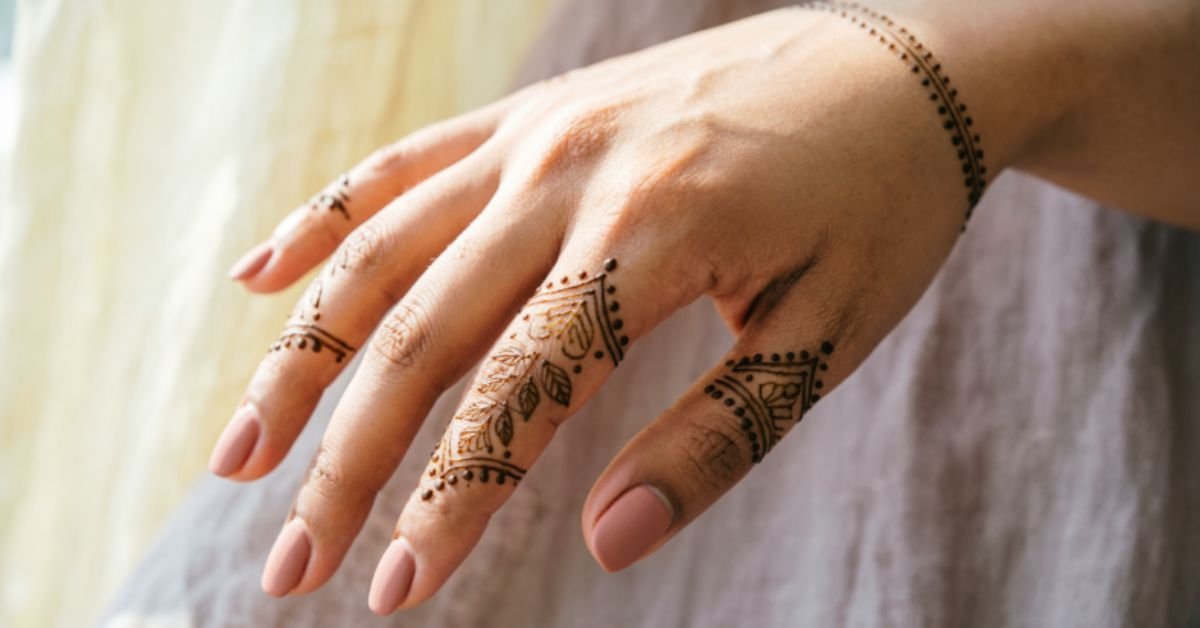
    Imagine a mehndi bracelet, a continuous band of fine geometric or floral work that wraps around the wrist like a tattooed cuff. It’s architectural, it’s fashion forward, and it’s the answer for women who want henna that works with both a silk sari and a linen coord set.

    Source: Pinterest
    Source Pinterest

    Best Occasions for Minimalist Mehndi Patterns

    Source: Pinterest
    Source: Pinterest

    A short mehndi design isn’t just for when you’re short on time. It’s the right choice for specific settings:

    Office Celebrations & Corporate Eid Gatherings Professional environments call for polish. A wrist cuff or single mandala keeps things festive without veering into overly traditional territory. You look put together, culturally connected, and completely workplace appropriate.

    Engagements & Roka Ceremonies Contrary to popular belief, you don’t need full bridal mehndi for an engagement. A jewelry style design on both hands  perhaps a matching mandala motif  photographs exquisitely and allows your actual engagement ring to remain the focal point.

    Casual Eid & Family Gatherings Arabic trail designs or finger focused patterns for Eid are ideal when you want that festive feeling without the commitment of a multi hour sitting. Apply the night before, wake up to a rich stain, and style accordingly.

    Pro Tips for Making Short Designs Pop

    The difference between a short mehndi design that looks intentional and one that looks incomplete comes down to execution:

    • Prioritize bold outlines. Fine line henna on shorter designs can fade and blur quickly. Ask your artist for slightly thicker outlines that hold their definition as the stain develops.
    • Seal with lemon sugar mixture. Once the paste is dry, dab with a lemon and sugar solution. It locks moisture in and deepens the final stain dramatically.
    • Placement is everything. A design placed slightly off center or asymmetrically often looks more intentional and modern than perfectly centered work.
    • Dark stain = longer wear time. Keep your hands warm, avoid water for at least 8 hours, and apply a light layer of coconut or mustard oil before washing  your color will reward you.
    • Less is more, but precision is non-negotiable. Request an artist who specializes in fine line or minimalist work specifically. Not every mehndi artist excels in both styles.

    The Final Word

    Short mehndi design is not the easy way out, it’s the evolved choice. It’s for the woman who edits, who curates, who understands that restraint in design is its own kind of mastery. 

    Whether you’re going for an Arabic trail at Eid, a mandala cuff for your engagement, or a single statement finger for your next event, wear it with intention and wear it with confidence.

  • Circle Mehndi Design 2026 The Gol Tikki Glow Up You Need Right Now

    Circle Mehndi Design 2026 The Gol Tikki Glow Up You Need Right Now

    After years of intricate all over coverage dominating bridal mehndi, 2026 is the year brides and henna lovers everywhere are returning to one powerful, timeless shape: the circle. But do not confuse this with the simple Gol Tikki your nani wore  today’s Circle Mehndi Design has been completely reimagined.

    Whether you are a dulhan searching for that statement back hand centrepiece or a bridesmaid who wants something chic and minimal, the round mehndi aesthetic is your answer this season. Chaliye, let’s break it all down.

    1. The Modern Gol Tikki: From Simple to Shaahi

    The classic Gol Tikki has always been a staple: a single circle, filled with florals or paisley, placed on the back of the hand or palm. In 2026, artists are taking this foundational shape and layering it into something truly royal.

    What makes a Modern Gol Tikki stand out:

    • Layered rings multiple concentric circles, each filled with a different motif (jaal, dots, petals)
    • A bold centrepiece  a single peacock, rose, or lotus sitting inside the innermost ring
    • Fine detailing in the gaps  tiny dots, dashes, and seed motifs that elevate the whole design
    • Clean outer borders  letting the circle breathe against bare skin for maximum impact

    Pro Tip: Pair a large Gol Tikki on the back of the hand with a thin bracelet style band around the wrist.

    Source: Pinterest
    Source: Pinterest

    2. Bridal Circle Mehndi Design: Royal, Regal, and 3D

    For brides who want drama without clutter, bridal circle mehndi design is the sweet spot between maximalist and refined. The biggest 2026 update is 3D shading inside mandala patterns, a technique where artists use varying cone pressure to create a light to dark gradient inside each petal and ring, making the design appear three dimensional on the skin.

    Trending bridal circle elements this season:

    • 3D mandala centrepiece on the back of the hand with shaded lotus petals
    • Jewelry style wrist circles that mimic diamond bangles and kundan sets
    • Negative space rings  where bare skin creates the circle’s inner border, surrounded by dense henna
    • Finger to palm flow  delicate vine extensions connecting the Gol Tikki to the fingertips

    The jewellery style wrist circle trend is particularly stunning for brides who wear statement kangan; the mehndi acts as a second layer of adornment that photographs beautifully.

    Source: Pinterest
    Source: Pinterest

    3. Negative Space Circle Mehndi: Less Cone, More Impact

    If there is one technique defining 2026’s henna aesthetic, it is negative space. Instead of filling every centimetre with henna paste, skilled artists are strategically leaving bare skin exposed  and that bare skin becomes the design itself.

    Why this style is winning in 2026:

    • Looks incredible on all skin tones  the contrast is dramatic and beautiful
    • Photographs like a professional shoot  both in regular and UV flash
    • Perfect for modern, fashion forward brides who prefer architectural design over traditional
    Source: Pinterest
    Source: Pinterest

    4. Minimalist Geometric Circle Mehndi Perfect for    Bridesmaids & Everyday Elegance

    Not everyone wants full bridal coverage  and 2026 gives beautifully minimalist options. Geometric round mehndi patterns using clean triangles, hexagons, and concentric lines inside a circle are having a major moment. Think Scandinavian meets desi: precise, breathable, and quietly confident.

    Ideal for:

    • Bridesmaids who want coordinated but understated mehndi
    • Henna enthusiasts who want a quick, clean front-hand look for Eid or casual events
    • Anyone who loves the mandala aesthetic but wants it condensed into one powerful focal circle

    Tip: For bridesmaids, consider a single geometric circle mehndi on the wrist only  that pairs beautifully with stacked rings and delicate bangles without competing with the bride’s fuller design.

    Source: Pinterest
    Source: Pinterest

    5. Pro Tips: How to Perfect Your Circle Mehndi Design

    A Circle Mehndi Design is only as stunning as its symmetry. Here is what professional henna artists do differently:

    Symmetry Secrets:

    • Always mark your circle first with a light henna dot at the top, bottom, and both sides  then connect them. Never freehand a full circle on the first pass.
    • Use a coin or circular stencil as a light trace guide for a perfect outer ring.
    • Work in quarters, fill one quarter, then mirror it. Yeh technique professional artists ki trade secret hai.

    Dark Stain Secrets:

    • After the paste dries (minimum 4–6 hours), seal with a lemon-sugar mixture and apply gentle heat.
    • Never wash the paste off under water, crack and peel only. Pani se dark stain kharab ho jaata hai.
    • Apply mustard oil or coconut oil immediately after paste removal to lock in colour.
    • Eucalyptus or clove oil in your henna mix intensifies the stain naturally.

    After Care for Circle Designs:

    • Circle designs are sensitive to cracking at the outer ring edges and apply a thin film of balm around (not on) the design during drying.
    • Moisturise surrounding skin daily but avoid direct application on the stained area for the first 48 hours.

    Ready to Wear the Circle?

    The Circle Mehndi Design is not just a trend, it is a statement. In 2026, it carries centuries of craft into a contemporary, camera ready aesthetic that works for bridal ceremonies, bridesmaids, Eid celebrations, and everything in between.

    Whether you choose a 3D shaded mandala, a bold negative space Gol Tikki, or a delicate jewelry style wrist circle  the key is intention. Every dot, every ring, every shaded petal should feel deliberate. That is what separates good mehndi from truly unforgettable mehndi.

  • Easy Mehndi Designs The 2026 Minimalist Edit for Modern Hands

    Easy Mehndi Designs The 2026 Minimalist Edit for Modern Hands

    Something shifted quietly in the world of henna this year. The ornate, wrist to elbow bridal coverage that once defined Mehndi culture is giving way to something far more intentional  and far more personal. In 2026, aesthetic minimalism has become the dominant design philosophy, and easy mehndi designs are leading that charge. 

    This isn’t a rejection of tradition. It’s an evolution of it. Mehndi is no longer reserved exclusively for weddings or religious festivals. It’s being worn to gallery openings, rooftop brunches, and beach holidays. It functions as a temporary tattoo, an accessory considered as a gold cuff or a signet ring  chosen to complement an outfit, express a mood, or simply mark a moment.

    The 2026 Trend Report: Negative Space & Skin Breathing Designs

    The technique defining this moment in henna is negative space  and if you’ve spent any time on Pinterest or Instagram recently, you’ve already seen it flooding your feed. Negative space design is the deliberate art of leaving skin bare. 

    Rather than filling every inch of a motif with dense hatching or crosshatching, 2026’s most viral easy mehndi designs use bold outlines to frame shapes, then let the skin inside breathe completely empty.

    The 5 Hero Designs of 2026

    1. The Micro Mandala 

    Coin sized and exquisitely precise, the micro mandala is placed at the dead centre of the backhand and left completely alone. Built from a tiny central dot surrounded by rings of teardrop petals, the design works outward through concentric geometric frames, thin diamond borders, rows of pinprick dots, and delicate chevron lines  before ending cleanly at about the diameter of a two pound coin. The surrounding hand stays entirely bare. That restraint is everything.

    Easy Mehndi Designs
    Source: Pinterest
    Mehndi Designs
    Source: Pinterest

    2. Geometric Cuff Trails 

    Where traditional henna placed flowers at the wrist, geometric cuff trails replace them with pure line work. Think two or three parallel bands circling the wrist, each carrying a different linear motif  interlocking triangles, repeating arrow heads, stepped ladder patterns. No curves, no petals, no paisley. Just clean, angular precision that reads like architectural drawing rendered on skin.

    Source: Pinterest
    Source: Pinterest

    3. The ‘Floating Petal’ Finger Art 

    Individual motifs are placed on each finger with no connective tissue between them. A rose bud on the index. A crescent on the ring finger. Three scattered dots trailing the middle. The palm was left completely untouched. Heavy, detailed fingers against an empty palm is one of 2026’s most photographed easy mehndi design combinations  and its visual impact comes entirely from that contrast.

    Source: Pinterest
    Source: Pinterest

    4. Minimalist Jewelry Strings 

    Henna rendered so fine it reads as jewellery. A single thread thin line looping the wrist with a tiny teardrop pendant hanging from it. A delicate chain pattern circling each finger knuckle like a stacking ring. These designs require a steady hand and a sharp cone, but the payoff is henna that doesn’t look like henna at all; it looks like you’re wearing the finest gold chain against your skin.

    Source: Pinterest
    Source: Pinterest

    5. Botanical Ferns 

    Nature inspired and effortlessly chic, botanical fern trails mimic the aesthetic of fine-line tattoos. Thin, branching stems carry rows of tiny opposite leaves  drawn with a single confident stroke each  cascading from the wrist toward the forearm or down toward the fingers. There are no mandalas here, no paisleys, no florals. Just the clean, honest geometry of a plant, translated into henna with the lightness of a pencil sketch.

    Source: Pinterest
    Source: Pinterest

    The MehndiChic Application Guide: Key Points

    • Essential Requirement: Cone control is the most critical factor for achieving these designs.
    • Cone Setup: Use a fresh cone with a very fine tip (no wider than a pin).
    • Application Pressure: Maintain consistent, gentle pressure throughout; never squeeze hard.
    • Best Suited Patterns: This technique is particularly effective for micro mandala and geometric cuff patterns.
    • Best Practices: Prior to skin application, practice on paper. Ensure your workspace is well lit with natural daylight for optimal results.”

    2026 Stain Secrets: Modern Aftercare

    The colour your henna develops depends almost entirely on what happens after application. Once the paste has dried to a firm crust  typically 35 to 45 minutes  mist it with a eucalyptus or clove essential oil spray. These oils penetrate the dried paste, reactivating the dye release without causing the paste to crack and flake prematurely. After removal, keep the design completely dry for a minimum of 12 hours. No handwashing, no dish water, no rain.

    In the 24 hours that follow, apply a thin layer of coconut or jojoba oil twice daily to keep the stained skin moisturised. Your colour will deepen from orange to a rich, dark mahogany  exactly the depth these minimalist designs deserve.

    .

  • Bakra Eid Mehndi Design 2026 The Ultimate Guide to This Season’s Most Gorgeous Trends

    Bakra Eid Mehndi Design 2026 The Ultimate Guide to This Season’s Most Gorgeous Trends

    Eid-ul-Adha is just around the corner, and if you’re already thinking about your hands, you’re ahead of the game! Choosing the perfect Bakra Eid Mehndi Design 2026 is more than just a beauty ritual; it’s a cherished tradition that ties together family, festivity, and femininity. 

    This year, the trends are bolder, more intricate, and surprisingly versatile. From dreamy mandala patterns to bold Arabic fusions, 2026 is all about mehndi that makes a statement. So, grab a cup of chai and let’s dive into the most stunning styles you need to try this Eid-ul-Adha!

    Minimalist & Elegant Mandala Styles for 2026

    Let’s talk about the trend that’s taking over bridal parlours and Instagram feeds alike  the minimalist mandala. This season, minimalist mandala mehndi is all about clean, confident geometry paired with breathtaking detail in just the right places.

    Key features of this style:

    • Circular mandala focal points centered on the palm or back of hand
    • 3D petal shading for a sculptural, modern feel
    • Micro floral details scattered around the mandala border
    • Negative space techniques to keep the design airy and elegant

    This style works beautifully for both brides and guests, and it photographs like an absolute dream!

    Bakra Eid Mehndi Design
    Source: Pinterest
     Most Gorgeous Trends
    Source: Pinterest

    Modern Arabic Fusion 

    If there’s one style dominating the 2026 mehndi scene, it’s the Modern Arabic Fusion. This trend blends the flowing, bold strokes of traditional Arabic mehndi with contemporary design elements, think geometric outlines, fine dotwork, and those gorgeous Net work (Jaali) patterns that everyone is absolutely obsessed with right now.

    Signature elements:

    • Large, sweeping floral and leaf motifs in classic Arabic style
    • Net work (Jaali) fill patterns between motifs for added texture
    • Fine geometric lines and chevron borders at the wrist
    • Negative space left intentionally for a “breathable” yet bold finish
    Modern Arabic Fusion
    Source: Pinterest
     Arabic Mehndi
    Source: Pinterest

    Intricate Back Hand Jewelry Patterns

    Want your mehndi to double as your jewellery? Then back hand jewelry patterns are your answer! This incredibly popular trend mimics the look of hand harnesses, rings, and bracelets  all drawn in mehndi. It’s the ultimate blend of fashion and tradition.

    Popular elements in this style:

    • Finger-tip to wrist “chain” designs mimicking hand harnesses
    • Circular “ring” motifs on each finger joint
    • Jaali (net-work) fill inside “bangle” sections at the wrist
    • Micro floral and paisley accents along chain links

    This style is the ultimate choice for the fashion forward woman who wants her Bakra Eid look to be completely on point from finger to wrist.

    Back Hand Jewelry Design
    Source: Pinterest
    Intricate Back Hand Jewelry Patterns
    Source: Pinterest

    Simple & Quick Designs for Busy Homemakers

    We see you, mama juggling the qurbani preparations, cooking the festive feast, and still trying to look your best! Not every woman has three hours to sit for an elaborate mehndi, and that is completely okay. Simple and quick Bakra Eid Mehndi Design 2026 options are just as beautiful, and this year’s trending quick designs are genuinely impressive.

    Here are some fast, fuss free ideas that take under 30 minutes but still look gorgeous:

    • Single large mandala on the palm with simple finger lines
    • Bold Arabic single-stem florals trailing from the wrist
    • A thin Jaali cuff at the wrist with a single floral centrepiece
    • Minimalist finger tip half designs for a chic, modern feel
    Simple & Quick Designs for Busy Homemakers
    Source: Pinterest
    Simple & Quick Designs
    Source: Pinterest

    Tips to Make Your Eid Mehndi Dark and Long Lasting

    You’ve picked your design, it’s been applied beautifully  now how do you make it stay dark and vibrant for as long as possible? Here are our tried and tested tips from the experts at mehndichic.com:

    • Leave it on longer: The longer you keep the mehndi paste on (ideally 6–8 hours or overnight), the darker the stain.
    • Lemon sugar seal: Once the paste starts drying, dab a lemon sugar mixture on top to keep it moist and intensify the colour.
    • Avoid water for the first 24 hours: Water is the enemy of fresh mehndi. Keep your hands dry for as long as possible after removal.
    • Clove smoke technique: Warming your dried mehndi over clove smoke helps deepen the colour significantly.
    • Moisturise daily: After the first wash, apply coconut or mustard oil daily to lock in colour and keep skin hydrated.

    Final Thoughts

    This Eid-ul-Adha, your mehndi deserves to be as special as the occasion itself. Whether you go for a dramatic Arabic fusion, a delicate Jaali net work cuff, or a quick mandala masterpiece, the perfect Bakra Eid Mehndi Design 2026 is the one that makes you feel confident, beautiful, and festive. Mehndi is more than ink on skin, it’s a love letter to our culture, our celebrations, and ourselves.

    Ready to find your perfect design? Head over to mehndichic.com for hundreds of curated Bakra Eid Mehndi Design 2026 inspirations, step by step tutorials, and expert tips to help you look absolutely stunning this Eid. We love seeing your beautiful handiwork! Eid Mubarak in advance from the mehndichic.com family. 

  • Stunning Leg Mehndi Design Trends From Minimalist Vines to Bridal Masterpieces

    Stunning Leg Mehndi Design Trends From Minimalist Vines to Bridal Masterpieces

    There is something undeniably captivating about a beautifully crafted leg mehndi design. Once considered a subtle accent to bridal looks, leg mehndi has evolved into a breathtaking art form that commands attention on its own.

    Whether you are preparing for a wedding celebration, an Eid gathering, or simply want to adorn yourself with traditional patterns, this guide will walk you through the most sought after styles of the year  along with expert tips to make your henna stain deeper and last longer.

    Simple and Minimalist Leg Mehndi Designs

    Not every beautiful leg mehndi design needs to be dense with detail. In fact, some of the most striking looks in 2026 are rooted in restraint.

    Popular minimalist styles to explore:

    • Vine and tendril patterns: A single trailing vine along the shin or calf creates a natural, organic feel. The beauty lies in its asymmetry  no two vines look alike, which makes the design feel personal and handcrafted.
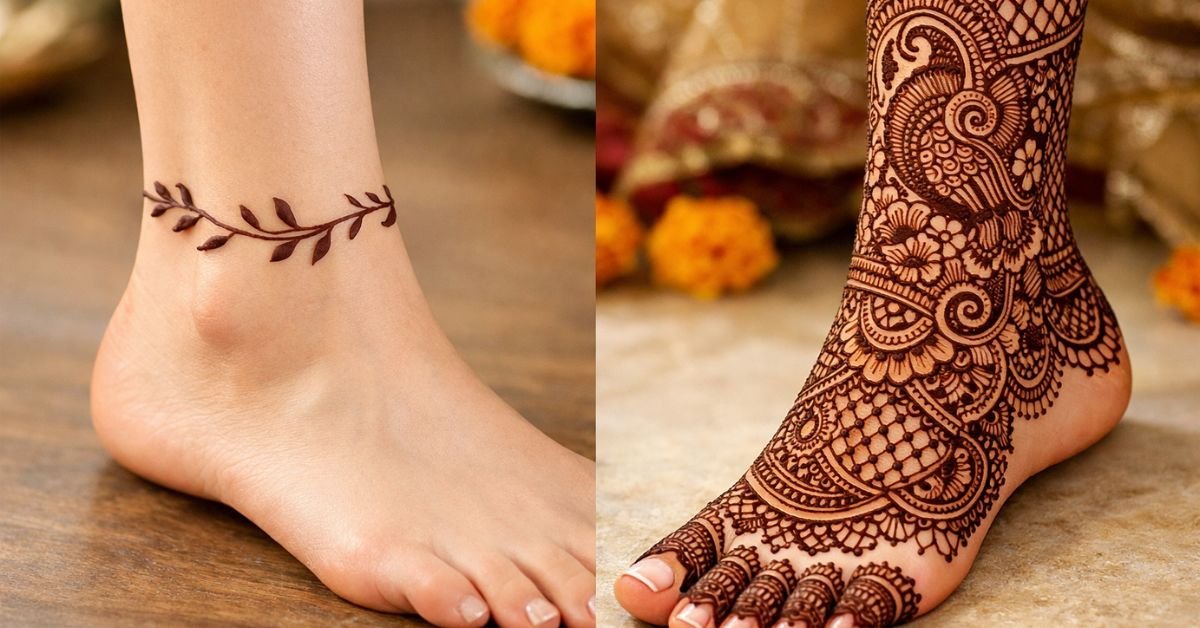
    • Anklet-style foot henna: Delicate chains of dots, tiny florals, or geometric links wrap around the ankle like living jewelry. This anklet style is especially popular for sangeet nights where the look needs to be festive but not overwhelming.
    • Small isolated flower clusters: Placed at the top of the foot or behind the ankle, small floral motifs add a soft, feminine touch without demanding the eye. They pair exceptionally well with strappy heels.
    • Single stem with leaves: A clean stem running along the side of the foot, dotted with teardrop leaves, echoes the grace of traditional patterns while feeling refreshingly contemporary.
    Leg Mehndi Designs
    Simple and Minimalist

    Intricate Bridal Leg Mehndi Patterns

    For brides, the leg mehndi design is not just decoration  it is a ritual, a memory, and a work of art.

    The most sought after bridal leg mehndi patterns this season include:

    • Full leg coverage: This dramatic style blankets the leg from thigh to toe in layered motifs  mandalas, paisleys, and fine latticework interweave to create a tapestry of tradition. The density of design reflects joy and abundance, making it a favourite for brides.
    • Peacock motifs: The peacock remains the undisputed royalty of bridal mehendi. Positioned along the calf or sweeping up the shin, the bird’s elaborate tail feathers allow the artist to fill space beautifully while fine detailing showcases true craftsmanship.
    • Royal doli (palanquin) patterns: These narrative designs depict the bride’s journey  doli scenes, elephants, and floral processions tell a story along the leg. They are deeply rooted in Mughal era artistry and continue to captivate modern brides who want a deeply personal design.
    • Jaal (net) patterns with floral borders: A fine jaal base overlaid with blooming roses or lotus flowers creates richness without feeling chaotic. The contrast between the tight net and open florals gives the design visual breathing room.
    Intricate Bridal Leg Mehndi Patterns
     Bridal Leg Mehndi Patterns

    Modern Arabic and Geometric Styles

    Arabic mehndi has long been celebrated for its flowing, free form boldness and in 2026, it is merging with geometric precision to create a truly modern aesthetic. 

    What defines this modern movement:

    • Negative space as a design tool: Rather than filling every inch of skin, modern Arabic designs intentionally leave skin bare as part of the composition. The contrast between the dark henna and untouched skin creates a striking, graphic effect that photographs like fine art.
    • Bold, clean outlines: Thick strokes form the skeleton of flowers, leaves, and vines. This bold approach ensures the design remains visible even from a distance  ideal for stage settings or large wedding gatherings.
    • Geometric lattice overlays: Triangles, diamonds, and hexagons are woven into organic shapes, blurring the line between mehndi and contemporary body art. This style particularly resonates with younger brides and festival attendees.
    • Fusion of Arabic florals with Indian paisley: Combining the expansive florals of Arabic tradition with the intricate, curving paisley of Indian mehndi produces a hybrid style that is uniquely versatile  rooted in both worlds, limited by neither.
    Arabic and Geometric Styles
    Modern Arabic and Geometric Styles

    Pro Tips for a Long Lasting Dark Henna Stain

    • Prep the skin properly: Clean, exfoliated skin absorbs henna more deeply. Avoid applying any oil, lotion, or moisturiser before your mehndi session; these create a barrier that prevents the dye from penetrating the skin.
    • Keep the paste on as long as possible: For legs, aim for a minimum of 6–8 hours. Overnight application yields the darkest results. Wrap the dried paste with medical tape or plastic wrap to prevent cracking and lock in moisture.
    • Use lemon-sugar water to seal the paste: Once the mehndi begins to dry, gently dab a mixture of lemon juice and sugar over the design using a cotton ball. This keeps the paste moist, pushes the dye deeper, and dramatically improves colour intensity.
    • Avoid water for the first 24 hours: This is the most critical rule. Water interrupts the oxidation process, the chemical reaction that darkens the stain over time. Keep the legs dry for at least a full day after removal.

    Your Next Leg Mehndi Design Awaits

    Leg mehndi is no longer just a beautiful tradition, it is a powerful form of self expression that bridges the ancient and the contemporary. Whether you are drawn to the quiet elegance of minimalist vines, the grandeur of full bridal coverage, or the bold confidence of modern geometric Arabic fusion, there has never been a more exciting time to explore what a leg mehndi design can be.

    The right design does more than decorate  it, tells your story, honours your heritage, and elevates your look for the most special moments in life.

  • Pakistani Mehndi Design Trends for 2026 What’s Ruling the Bridal Right Now

    Pakistani Mehndi Design Trends for 2026 What’s Ruling the Bridal Right Now

    2026 has redefined what a Pakistani mehndi design can be. Gone are the days of cookie cutter patterns replicated from decade old bridal lookbooks. This year’s aesthetic is a confident blend of heritage craftsmanship and contemporary minimalism  and if you’re prepping for a wedding, Eid, or a mehndi night, you need to know exactly what’s trending before you book your artist.

    Here’s your complete guide to the five dominant styles taking over timelines, bridal suites, and Instagram feeds in 2026.

    The “Minimalist Rose” Fusion Pattern (Back Hand)

    The Minimalist Rose has quietly become the defining look of the 2026 Pakistani mehndi design season. It draws on negative space, hence  the technique of leaving large areas of skin bare to let the design breathe rather than filling every inch with motifs.

    Styling Tips:

    • Paired with rose gold or champagne toned jhumkas, heavy earrings balance the delicate design.
    • Choose a nude or dusty rose nail polish to extend the minimalist palette across the fingers.
    • Skip the wrist bangles on the mehndi hand; a single thin gold kangan is enough.
    • This design suits both the right and left hands equally, consider booking it for both.
    Source: Pinterest
    Source: Pinterest
    Source: Pinterest
    Source: Pinterest

    Royal Mughal Style Full Arm Bridal Design

    If you want a statement Pakistani mehndi design that photographs like a piece of wearable art, this is it. The Mughal style full arm design is experiencing a major resurgence in 2026, reimagined with 3D floral patterns, a technique where the artist uses layered henna to build dimension into motifs like lotuses, peonies, and kairi (mango) paisleys.

    Styling Tips:

    • Wearing polki or kundan sets, their matte, uncut diamond surfaces complement the earthy henna tones.
    • Opt for deep burgundy or oxblood nail polish to anchor the richness of the design.
    • A choorian stack from elbow to wrist enhances the full arm visual on the second hand.
    • Book a patch test if your skin runs sensitive  full arm coverage uses significantly more paste.
    Source: Pinterest 
    Source: Pinterest
    Source: Pinterest
    Source: Pinterest

    Contemporary Geometric “Tikki” Style for 2026

    The Tikki style  centered around bold circular medallions (tikkis) as anchor motifs  has been completely restructured for 2026. Where traditional tikkis were dense and filled, the contemporary 2026 version integrates geometric negative space directly into the medallion: think hexagonal cutouts, concentric triangles, and linear micro-patterns radiating outward like a mandala..

    Styling Tips:

    • Pair with structured silver jewelry, geometric earrings and a bar ring echo the angular design language.
    • Metallic nail polish (silver, bronze, or gunmetal) reads incredibly well against the geometric lines.
    • If wearing for Eid, this design holds for 4–5 days when applied correctly  and plans your application the evening before.
    • Works especially well on longer fingers; ask your artist to emphasize the extending lines toward the fingertips.
    Source: Pinterest
    Source: Pinterest
    Source: Pinterest
    Source: Pinterest

    Intricate Jewelry Inspired Finger Mehndi Designs

    2026’s most photographed mehndi trend is the one that makes people ask: “Wait, is that a ring or mehndi?” Jewelry inspired finger designs simulate the look of actual adornments  stacked rings, delicate finger chains, and knuckle bands  using ultra-fine linework and precision dot work.

    Styling Tips:

    • Skip actual rings entirely on the mehndi and  the henna is the jewelry.
    • Choose a neutral or clear topcoat on nails to keep attention on the mehndi itself.
    • On the other hand, go bold: statement cocktail rings and layered rings contrast beautifully.
    • This style is ideal for brides who want to keep their bridal jewelry minimal but still make a visual impact.
    Source: Pinterest
    Source: Pinterest
    Source: Pinterest
    Source: Pinterest

    The Shaded Floral “Arabic Pakistani” Hybrid Trend

    The Arabic Pakistani hybrid is 2026’s most sophisticated crossover in the Pakistani mehndi design landscape. It takes Arabic mehndi’s hallmarks of large, open florals, bold strokes, and generous negative space  and infuses them with Pakistani sensibilities: jali detailing, fine interior shading, and traditional bel connectors.

    Styling Tips:

    • Emerald or ruby accented gold sets are a perfect pairing  the jewel tones pop against the warm brown stain.
    • Pick coral or terracotta nails to echo the petal’s gradient palette.
    • Works best in natural light, schedule your photography during the golden hour to capture the shading.
    • This design is particularly flattering on broader palms; the open florals elongate the visual proportion of the hand.
    Source: Pinterest
    Source: Pinterest
    Source: Pinterest
    Source: Pinterest

    How to Achieve the Darkest Stain in 2026 (Natural Tips)

    Before Application:

    • Exfoliate your hands 24 hours prior with a sugar scrub; fresh skin absorbs henna pigment more deeply.
    • Avoid applying lotion or oil on the day of application; it creates a barrier between the paste and skin.
    • Warm skin stains darker. Apply your mehndi in a warm room or after a brief warm water soak.

    During Application:

    • When your artist finishes, apply a mixture of lemon juice and sugar over the dried paste. This acts as a sealant and re-activates the paste’s dye release.
    • Wrap hands loosely in tissue  never cling film, which traps moisture inconsistently.
    • Leave paste on for a minimum of 6–8 hours, ideally overnight.

    After Removal:

    • Scrape (do not wash) the paste off with a blunt card or spoon.
    • Immediately rub with mustard oil or coconut oil  this seals the freshly revealed stain and deepens the color within the first critical hour.
    • Stay away from water for at least 12 hours post-removal.
    • The stain will oxidize and darken over the next 24–48 hours. Your peak color appears on Day 2.

    Ready to Slay Your 2026 Wedding Look

    2026 is the year the Pakistani mehndi design finally broke free from the “more is more” tradition without losing any of its soul. Whether you’re a bride choosing between a full Mughal arm and a minimalist rose, or an Eid guest wanting geometric tikkis that photograph beautifully, the design vocabulary available this season is the most sophisticated and intentional it has ever been. 

    Book your artist early, communicate your styling vision, and prioritize organic paste  your skin and your photos will thank you.

  • Cute & Easy Baby Mehndi Design Ideas for 2026

    Cute & Easy Baby Mehndi Design Ideas for 2026

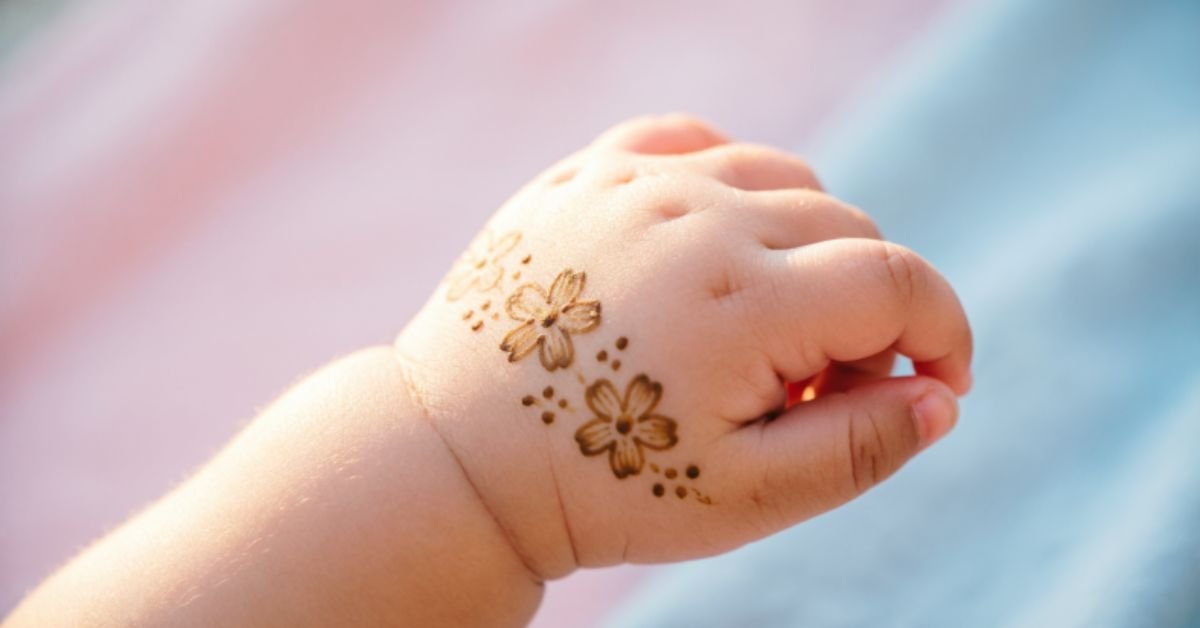
    Mehndi season brings excitement for the whole family but when it comes to little ones, the challenge is real. Kids squirm, lose patience, and rarely sit still for more than two minutes. Yet a delicate Baby Mehndi Design on tiny hands is one of the most heartwarming sights at any wedding, Eid celebration, or family gathering. 

    The trick is knowing which designs work for children: quick to apply, simple in structure, and absolutely adorable. Here’s your complete guide.

    Why Baby Mehndi Designs Are Different

    Adult mehndi can take an hour or more. Baby mehndi needs to work in under 10 minutes. That means fewer lines, bolder motifs, and strategic placement. The goal is a design that looks beautiful even if the child moves slightly  because they will move.

    1. Minimalist Dot Patterns

    Dots are a baby mehndi artist’s best friend. A cluster of dots on the palm center, a dotted border along the fingers, or a simple peacock made entirely of dots are forgiving, fast, and incredibly charming on small hands.

    Why it works for kids: Dots require zero drag time. The cone touches, lifts, and moves on. Less pressure on the skin, less chance of smudging.

    Popular variations:

    • Star shaped dot clusters
    • Simple floral dots on each fingertip
    • Dotted bracelet on the wrist
    Baby Mehndi Design
    Source: Pinterest
    Minimalist Dot Patterns
    Source: Pinterest
     A cluster of dots on the palm
    Source: Pinterest
    baby mehndi
    Source: Pinterest

    2. Butterfly & Animal Motifs

    Children love seeing something they recognize. A tiny butterfly, a smiling sun, a baby elephant, or a simple fish on the back of the hand instantly becomes their favorite part of the day.

    Why it works for kids: Familiar shapes keep children engaged and curious. They’re more likely to stay still when they can watch their favorite animal take shape.

    Popular variations:

    • Butterfly with simple wing outlines
    • Tiny elephant with a curled trunk (symbol of good luck)
    • Ladybug on the thumb
     Butterfly & Animal Motifs
    Source: Pinterest
     a baby elephant
    Source: Pinterest
    r favorite animal take shape.
    Source: Pinterest
    Children love seeing
    Source: Pinterest

    3. The Classic Tikka / Mandala Center

    A small mandala or tikka style circle at the center of the palm surrounded by simple petals is a timeless baby mehndi design that looks rich without requiring much detail.

    Why it works for kids: The circular, symmetrical structure means imperfection is barely noticeable. Even a slightly wobbly circle looks intentional.

    Popular variations:

    • Single mandala with 6–8 petals
    • Tikka style center with two curved leaf trails going toward the wrist
    • Sun mandala with radiating lines
    A small mandala
    Source: Pinterest
    palm surrounded by simple petals
    Source: Pinterest
    Tikka mehndi
    Source: Pinterest
    The Classic Tikka
    Source: Pinterest

    4. Floral Vine on the Back of the Hand

    A thin vine running from the wrist to the middle finger, with tiny flowers blooming along its length, is one of the most elegant yet simple baby mehndi design options for formal events like weddings or Eid.

    Why it works for kids: The linear flow means the artist works in one direction  clean, fast, and easy to complete even if the child shifts position slightly.

    Popular variations:

    • Single rose at the wrist with leaf trail up one finger
    • Lotus bud on the back with curling stems
    • Daisy chain along the wrist
     baby mehndi design
    Source: Pinterest
     simple baby mehndi design
    Source: Pinterest
     Floral Back of the Hand
    Source: Pinterest
     Floral Vine on the Back of the Hand
    Source: Pinterest

    5. Simple Bracelet & Ring Combo

    A delicate mehndi bracelet around the wrist with a matching ring on one finger is minimalist, modern, and perfect for kids who want something but can’t sit long.

    Why it works for kids: It’s the fastest design on this list  done in under 3 minutes. Perfect for toddlers.

    Safety & Pro Tips (Must Read)

    Before applying any mehndi on a child, please follow these non negotiable rules:

    • Always use 100% organic/natural henna. Avoid black henna it contains PPD (para phenylenediamine), which can cause severe allergic reactions and permanent scarring on children’s sensitive skin.
    • Do a patch test 24 hours before. Apply a tiny dot behind the ear or inside the elbow and check for redness or irritation.
    • Keep them distracted. A favorite cartoon, a small snack, or a simple game on a tablet can buy you the 5–10 minutes you need.
    • Apply on clean, dry skin. No lotions or oils beforehand  they prevent henna from penetrating properly.
    • Don’t force it. If a child is very young (under 2) or very uncomfortable, skip it. There’s always next time.

    Final Thoughts

    A beautiful baby mehndi design doesn’t need to be complicated, it needs to be appropriate, safe, and applied with love. Whether you choose a simple dot pattern or a delicate floral vine, the memory you create on those tiny hands is what truly lasts. Keep it simple, keep it safe, and let the little ones enjoy their mehndi moment.