Author: Caandy Jacckson

  • Left Hand Mehndi Design 2026 Stunning Patterns for Weddings, Eid & Everyday Glam

    Left Hand Mehndi Design 2026 Stunning Patterns for Weddings, Eid & Everyday Glam

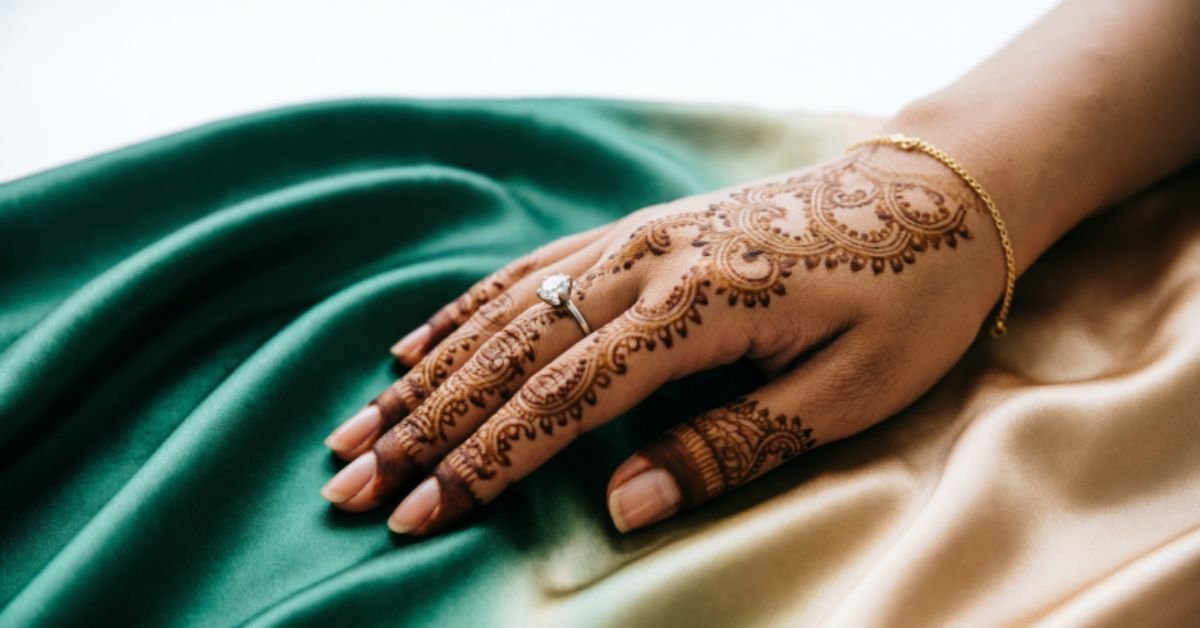
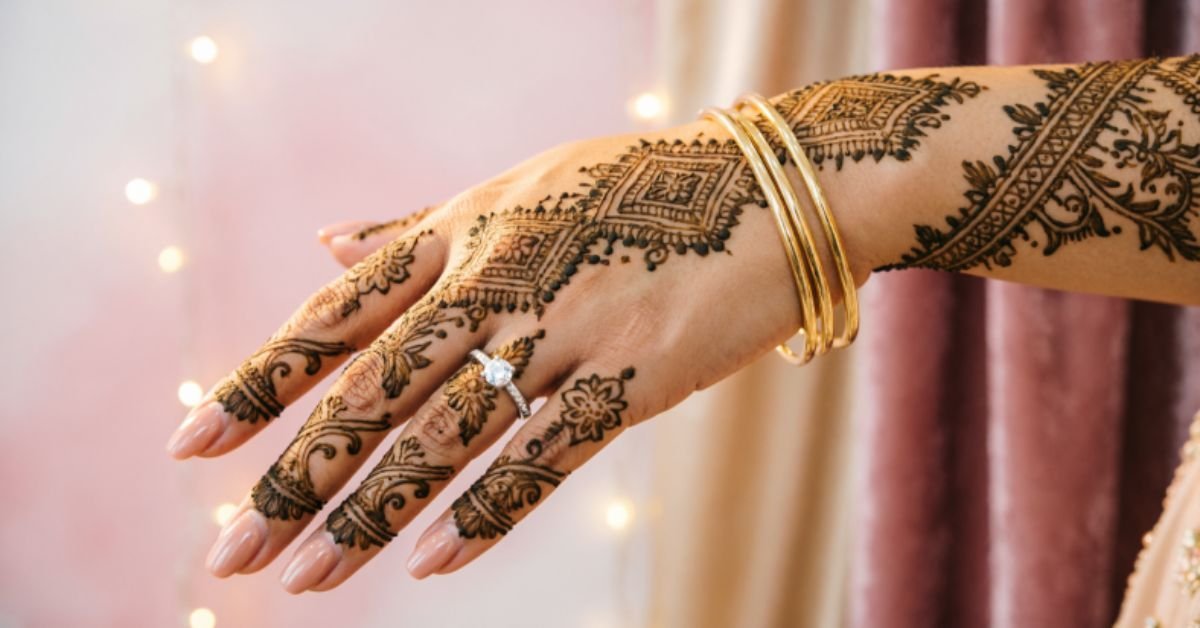
    Your left hand holds a ring. It’s the hand everyone notices when you walk into a room full of people dressed up for a shaadi or Eid celebration.

    Whether you want something simple and sweet for a casual outing or full on bridal henna drama for your big day, Here are the most beautiful, on trend left hand mehndi designs for 2026  with real style direction, detailed descriptions, and pro tips to help you get that deep, gorgeous stain every time.

    Simple & Minimalist Left Hand Mehndi Designs

    Left Hand Mehndi Design
    Source: Pinterest
    Source: Pinterest

    For Beginners & Daily Wear

    Not every beautiful mehndi has to cover your entire hand. left hand mehndi design is very much on trend in 2026  and honestly, it looks effortlessly elegant in a way that heavy designs sometimes don’t.

    • Single stem floral trails running from the wrist up to the middle finger, with tiny dot accents scattered along the edges. It looks like a delicate piece of jewellery drawn directly onto your skin.
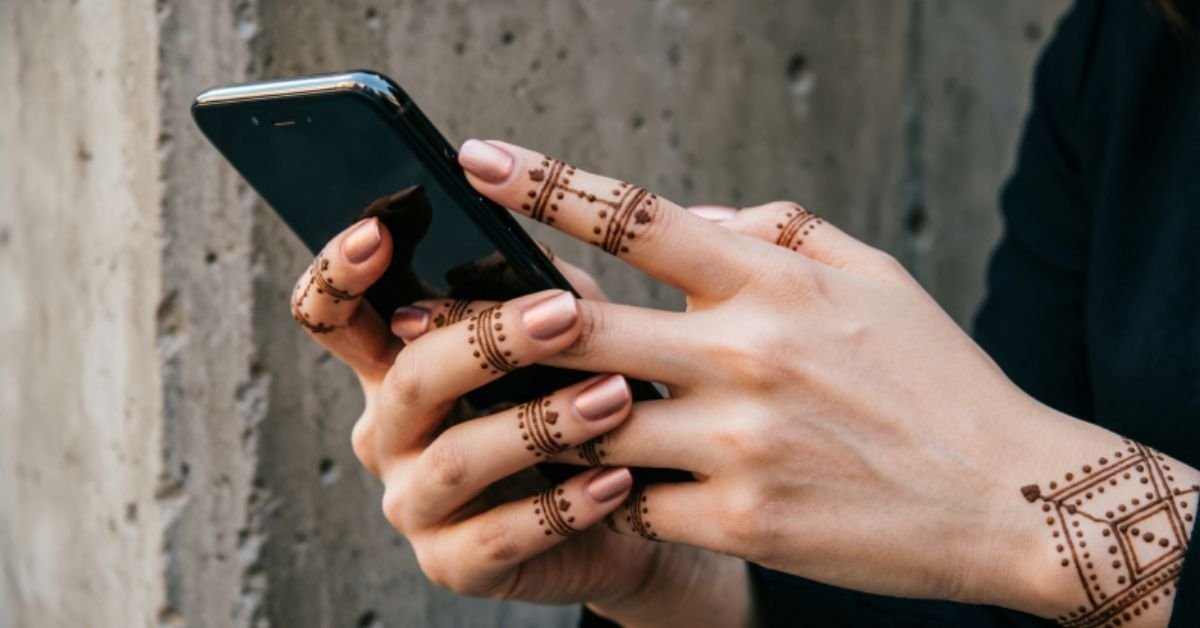
    • Ring finger wrap designs  a simple vine or leaf pattern that highlights just one or two fingers without overwhelming the rest of the hand. Perfect for women who want a hint of mehndi without commitment.
    • Wrist band patterns are a thin band of interlocking geometric shapes or tiny paisley motifs sitting just above the wrist, like a henna bracelet. Clean, pretty, done in 10 minutes.

    Arabic Left Hand Mehndi Patterns

    Source: Pinterest
    Source: Pinterest

    Floral Trails & Bold Strokes

    Arabic mehndi has a personality of its own, bold, free flowing, and unapologetically beautiful. What makes Arabic style finger patterns so irresistible is the generous use of negative space.

    Classic Arabic left hand designs feature:

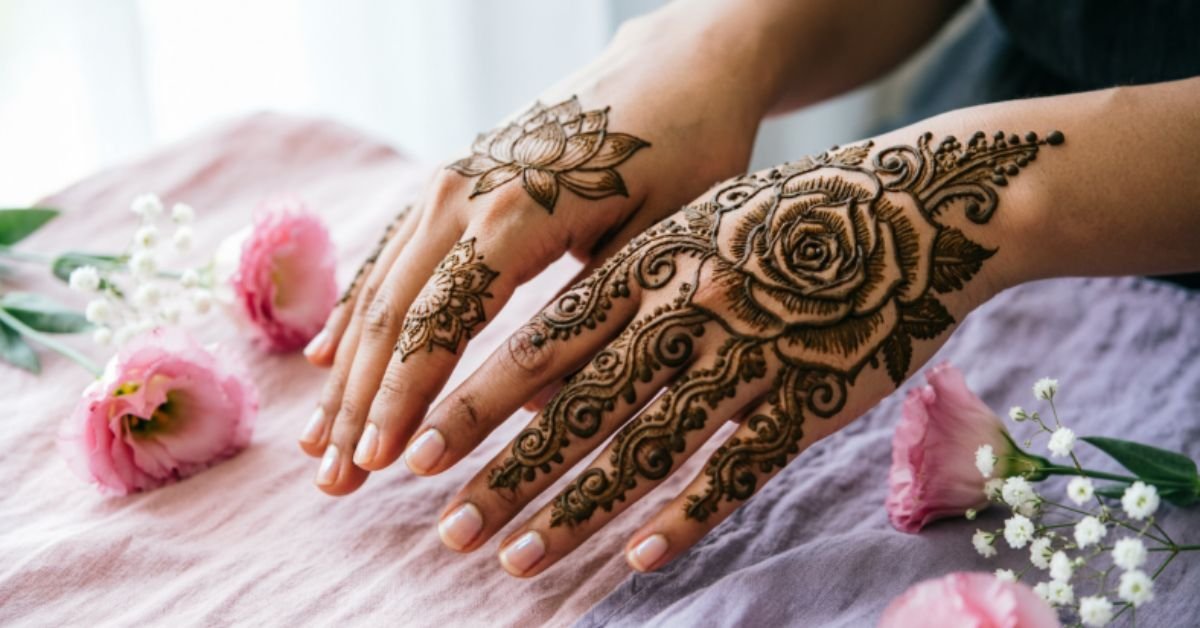
    • Large roses and floral motifs are placed on the back of the hand, each bloom layered with bold petals and surrounded by curling leaf sprigs that trail naturally toward the fingers.
    • Diagonal floral trails that sweep from the pinky side of the wrist diagonally across the back of the hand toward the index finger creating movement, flow, and a lot of visual drama.
    • Thumb and forefinger accents with bold vine work and swirling tendrils that frame the overall design. Arabic mehndi always feels intentional, never random.

    Back Hand vs. Front Hand Mehndi What’s Trending in 2026?

    Source: Pinterest
    Source: Pinterest

    The Back Hand (Dorsal Side)

    The back of the left hand mehndi design is prime real estate for statement mehndi. The most popular trends in 2026 include:

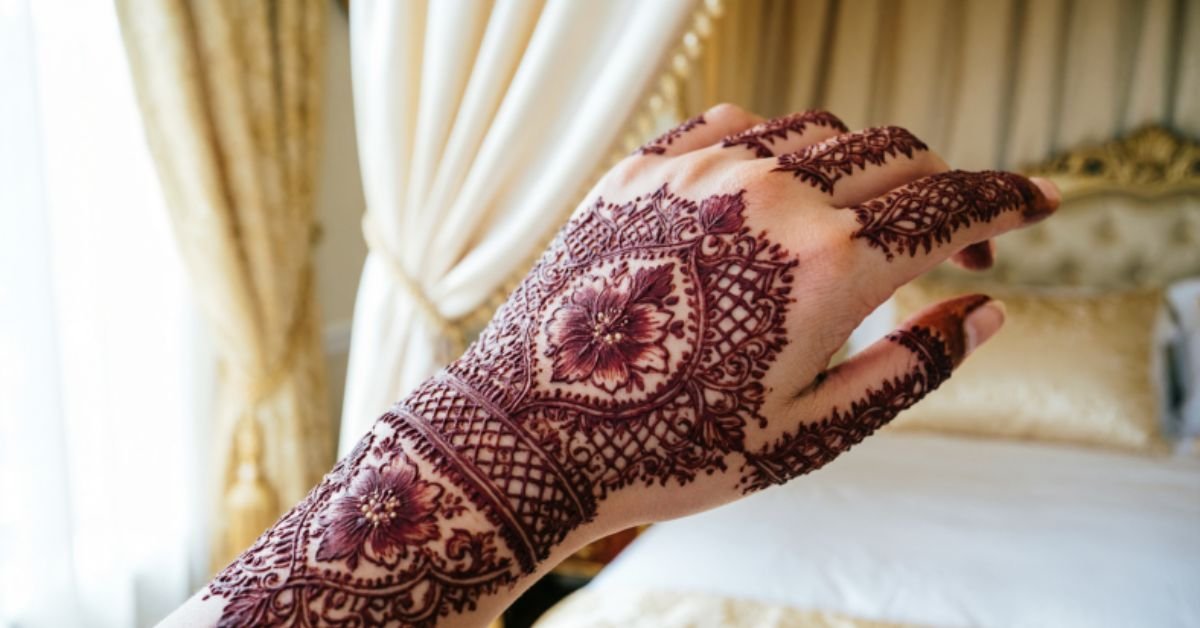
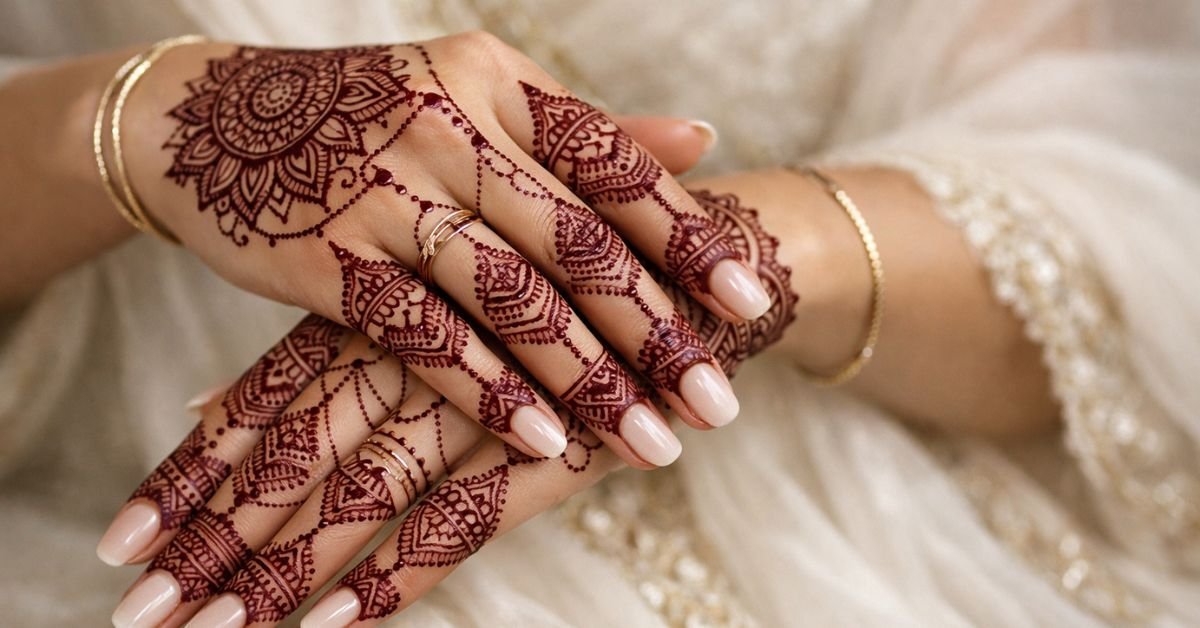
    • The full mandala centerpiece designs  a large, intricate circular motif placed at the center of the back hand, surrounded by radiating petals, lace like jaal work, and dotted borders. It’s the kind of design that makes people stop and ask for a closer look.
    • Easy back hand mehndi that uses bold florals with clean outlines and minimal fill loved by brides who want impact without heaviness, and by beginners who want something beautiful without too much detail work.
    • Lace-like jaal work covering the entire back hand a fine mesh of interlocking diamonds and tiny flowers that looks almost like a piece of embroidered lace has been placed over your skin.

    The Front Hand (Palm Side)

    The palm is where traditional and bold designs truly shine:

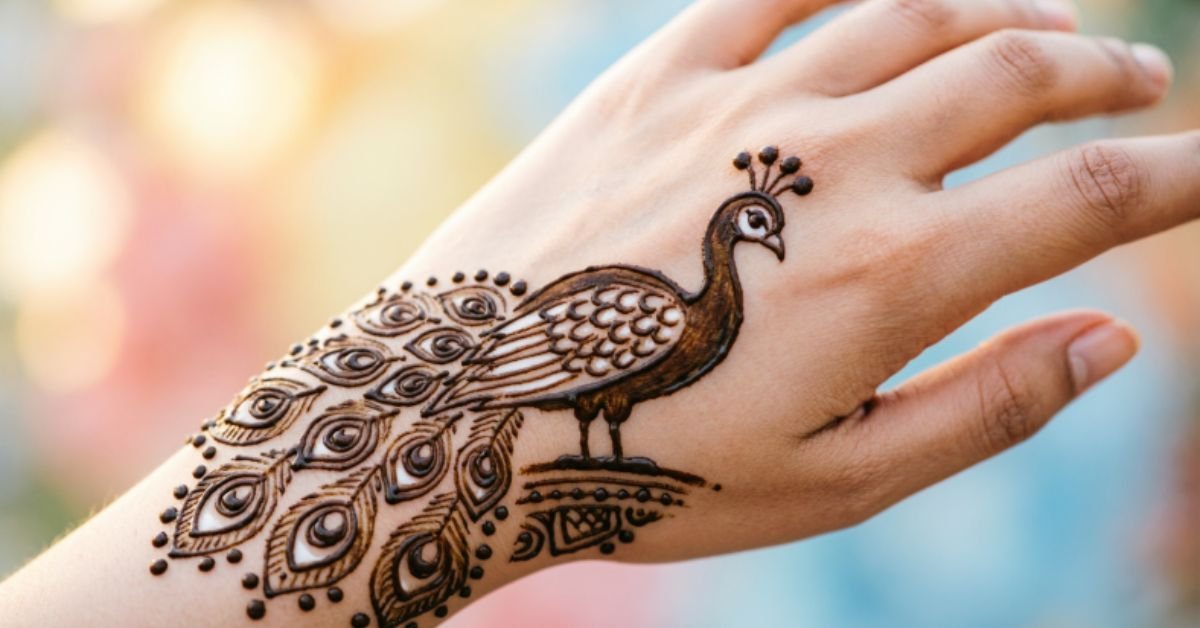
    • Peacock elements, a peacock with a fully fanned tail spread across the palm, is one of the most requested designs for weddings and Karwa Chauth. The tail feathers radiate outward in beautiful detail, and the overall effect is regal and timeless.
    • Circular tikki patterns large filled circles with petal borders placed at key points across the palm, connected by thin trailing vines.
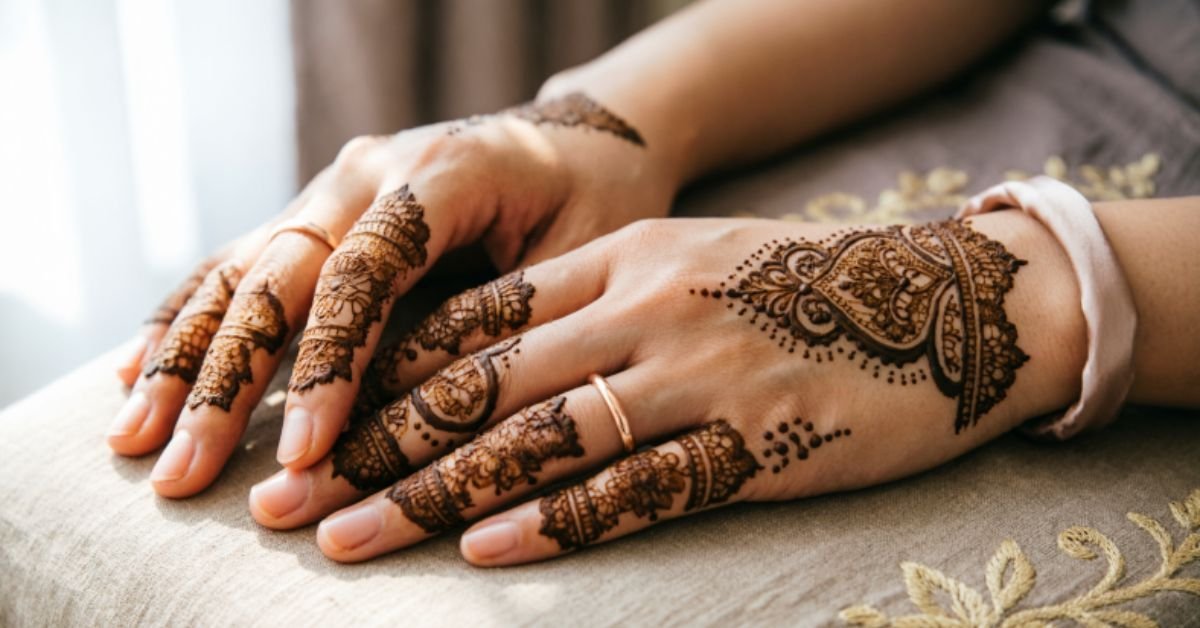
    • Finger detailing that extends the palm design upward mehndi bands, chevron patterns, or simple vine work on each finger that feels like rings of henna stacked beautifully together.

    Engagement Special Left Hand Designs Spotlight on the Ring Finger

    Source: Pinterest
    Source: Pinterest

    The ring finger deserves its own moment  and great mehndi artists know exactly how to frame it so your ring and your henna work together, not against each other.

    • Ring finger mehndi designs a delicate band of floral or geometric mehndi drawn around the base of the ring finger, mimicking the look of a statement ring sitting right beneath the real one. The combination is stunning.
    • Teardrop finger cap The tip of the ring finger is decorated with a filled teardrop or cone shape that tapers beautifully when viewed from the front. Simple, elegant, and very photogenic.
    • Vines spiraling up the finger, a thin vine with tiny leaves and dots that winds upward from the base of the ring finger all the way to the tip, drawing the eye naturally toward the finger and your ring.

    Modern Geometric Mehndi Patterns The Chic Edit

    Source: Pinterest
    Source: Pinterest

    If florals feel too traditional for your taste, welcome to the world of geometric mehndi where clean lines, sharp angles, and structured symmetry create a look that feels architectural, contemporary, and completely unique.

    • Triangular and diamond lattice work  interlocking triangles covering the back hand in a tessellating pattern, each triangle filled with alternating dots and chevrons. It looks like a mosaic made of henna.
    • Mandala and geometry fusion  a circular mandala at the center with straight geometric rays extending outward instead of traditional curved petals. Bold, modern, and absolutely unforgettable.
    • Negative space blocking  large filled sections of mehndi contrasted against completely blank skin, creating a graphic, almost editorial look that photographs dramatically on Instagram and Pinterest.

    Pro Tips Get It Right on the Left Hand

    Tip 1  Prep your skin the night before. Wash your left hand mehndi design with a mild exfoliating scrub to remove dead skin cells. Dry, flaky skin prevents even application and reduces stain depth. On the day of application, skip moisturizer completely and oils create a barrier between the henna and your skin.

    Tip 2  Hold the cone like a fine pen. Grip the cone firmly in your right hand, close to the tip exactly like holding a detailed drawing pen. Rest your left hand completely flat on a table or cushion. Work in sections, starting from the wrist and moving upward toward the fingers. Don’t rush.

    Tip 3 Leave the paste on for at least 6–8 hours. The longer the mehndi paste stays on, the deeper the stain. Wrap your hand loosely in tissue paper or plastic wrap overnight for the best results. Avoid water contact for the first 24 hours after you remove the paste.

    Tip 4  Use the lemon-sugar trick. Once your mehndi starts to dry (after about 30–40 minutes), dab a cotton ball soaked in lemon juice mixed with a little sugar syrup lightly over the design. 

    Tip 5 Scrape, don’t wash. When it’s time to remove the paste, scrape it off gently with the edge of a card or a butter knife. Then rub a few drops of mustard oil or coconut oil into your skin and let it absorb.

    Your Left Hand Deserves the Spotlight

    From a dainty wrist to finger floral trail to a full lace-like jaal covering or a bold geometric masterpiece  your left hand mehndi design is a personal statement.

    Whether you’re sitting down for Eid mehndi with your cousins, getting dolled up for your engagement ceremony, or simply treating yourself on a quiet Sunday afternoon  we hope this guide gave you exactly the inspiration you were looking for.
  • Bel Mehndi Design 5 Stunning Vine Styles Redefining Bridal Beauty in 2026

    Bel Mehndi Design 5 Stunning Vine Styles Redefining Bridal Beauty in 2026

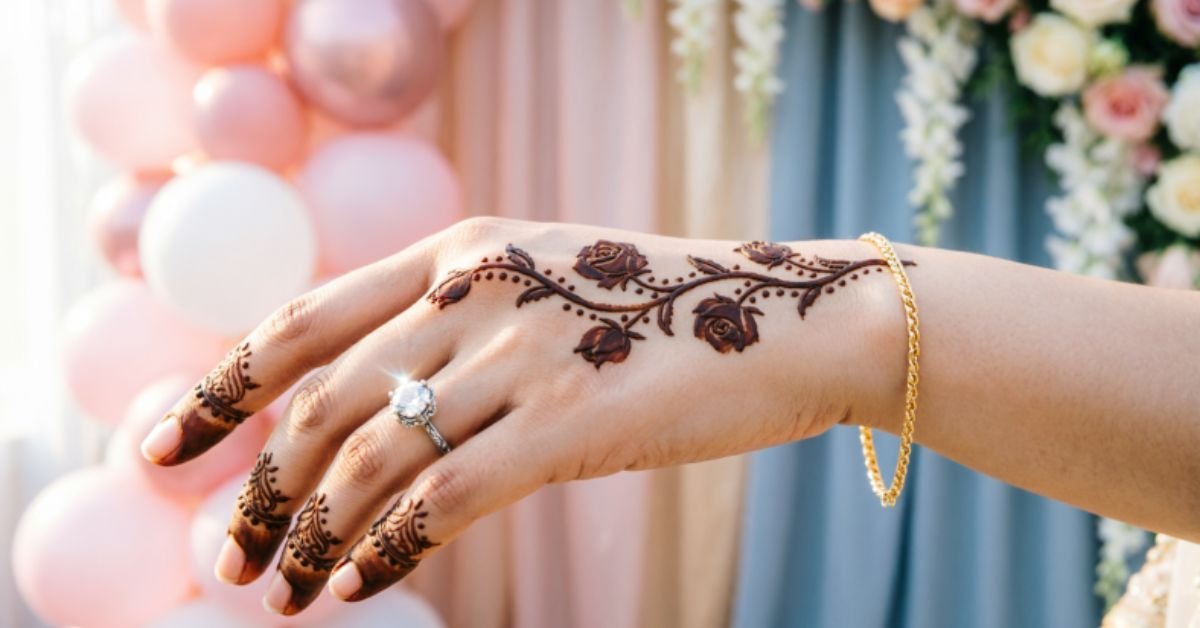
    The vine. The creeper. The flowing, unbroken thread of pattern that travels across skin with architectural precision  Bel Mehndi Design is having its definitive moment in 2026, and for very good reasons. Unlike dense, space filling patterns, the bel style is built on rhythm: a continuous stem that breathes, curves, and blooms at calculated intervals.

    The 2026 mehndi aesthetic centres on three principles: intentional negative space, architectural line work, and motifs that feel curated rather than crowded. Bel Mehndi is the natural vehicle for all three.

    Where Jali Meets the Vine Royal Intricate Back Hand Bel

    Source: Pinterest
    Source: Pinterest

    This is the statement interpretation of Bel Mehndi Design  structured for the back of the hand where visible surface area is at its most generous. The composition begins at the wrist with a bold, anchored stem that travels diagonally toward the middle finger, creating a natural visual axis across the hand.

    • Diagonal placement from wrist to middle fingertip creates elongation
    • Bold stem outline (2–3mm) contrasts with sub-1mm Jali fill lines
    • Lotus or paisley accents placed at the knuckle joints for natural emphasis
    • Negative space is a design element  resist the urge to fill everything

    Less Is the Statement Minimalist Finger Style Bel Patterns

    Source: Pinterest
    Source: Pinterest

    Where the royal back hand design commands, the Bel Mehndi Design style bel whispers. This interpretation keeps the palm largely bare, instead sending disconnected vine segments climbing each finger independently. A single slender stem with two or three leaf pairs per finger nothing more. The spacing between each motif is generous and deliberate, making the finger appear longer and more elegant.

    • 3–4 isolated vine segments per finger, placed symmetrically
    • Leaf motifs kept under 5mm never wide enough to encircle the finger
    • No base or wrist anchor; the design floats freely
    • Works particularly well in dark henna for maximum contrast on lighter skin tones

    Two Traditions, One Hand Arabic Florals Woven into Bel

    Source: Pinterest
    Source: Pinterest

    The most artistically ambitious style on this list fuses the bold floral vocabulary of Arabic mehndi with the flowing structure of the bel tradition. Large, shaded roses or open lotus flowers drawn with the dramatic negative space technique that Arabic work is known for  are positioned as anchors at the wrist and near the base of the fingers. Between them, a sinuous bel stem acts as the connective tissue, linking blooms through swirling tendrils and micro leaves.

    • 2–3 large floral anchors, each 3–4cm in diameter, connected by bel stems
    • Watercolour shading achieved by slightly diluting paste for outer petal strokes
    • Bel connector stems kept unshaded to provide visual relief from floral density
    • Arabic style negative space petals create depth without additional fill work

    Henna That Looks Like Gold The Jewelry Style Bel Design

    Source: Pinterest
    Source: Pinterest

    This interpretation treats the bel vine as the structural framework for a trompe-l’œil jewellery piece. The aim is to mimic the visual appearance of a Hathphool, the traditional hand harness worn by brides  using only henna line work. A central chain travels from a wrist cuff motif to a ring on the middle finger, with delicate bel stems branching off to adorn the index and ring fingers.

    • Central chain line from wrist to middle fingertip, kept at 1.5–2mm width
    • Micro-dot bead rows along both sides of the main stem
    • Branching sub vines to ring and index fingers, terminating in loop motifs
    • Avoid thick lines  the illusion depends entirely on fine, consistent strokes

    Mirror, Mirror on the Palm Full Palm Symmetrical Bel Masterpiece

    Source: Pinterest
    Source: Pinterest

    The most complete expression of Bel Mehndi Design covers the entire palm in a mirrored composition. Two primary vine stems emerge from the wrist  one on the left, one on the right  and curve inward toward the centre of the palm before spiralling upward to their respective fingers.

    • Twin bel stems from wrist, curving symmetrically toward the centre
    • Single clean mandala or geometric motif at the palm centre as focal anchor
    • Matching leaf and dot detailing on both sides  precise mirroring is essential
    • Best executed with a fine-tip cone, 0.5–1mm opening, to maintain proportionality

    The Art of the Dark Stain Expert Application & Aftercare Tips

    Thick & Thin Line Precision  Vary cone pressure mid stroke. Begin with light pressure for the thin entry, increase at the curve for boldness, then release for the exit. Practice on paper first. The bel’s rhythmic curves demand this control more than any other style.

    Lemon-Sugar Sealant  Once the paste is dry (45–60 minutes), dab a lemon sugar solution gently over the design. This moisturises the dried henna and keeps it pressed against the skin, deepening penetration and richness of stain.

    Avoiding Water in the First 24 Hours  Water is the enemy of a fresh stain. Keep hands dry for at least 24 hours after paste removal. Avoid washing dishes, swimming, or using sanitiser. The stain darkens to its peak over 36–48 hours post-removal.

    Essential Oils for Longevity Before removing the dried paste, warm a few drops of eucalyptus or clove oil in your palm and coat the design. Oil accelerates dye release and helps the design last 2–3 weeks rather than 7–10 days.

    A Final Note from MehndiChic

    The five interpretations covered here represent the full range of what Bel Mehndi Design is capable of in 2026 from barely there minimalism to full palm grandeur. The vine is a forgiving structure: it accommodates different skill levels, hand shapes, and occasion types without losing its inherent elegance.

    Share your results with us on Instagram using #MehndiChic, and drop a comment below telling us which of these five styles you are most excited to try. Your next favourite design might be one vine stroke away.

  • Khafif Mehndi Designs The Art of Elegant Minimalism Every Bride Needs to Know

    Khafif Mehndi Designs The Art of Elegant Minimalism Every Bride Needs to Know

    Khafif Mehndi Design is redefining bridal beauty in 2026. Unlike heavy, filled patterns, khafif mehndi focuses on delicate linework, open spaces, and intricate detailing that looks refined rather than overwhelming. 

    Modern brides are choosing it precisely because it complements contemporary outfits, suits shorter ceremonies, and photographs beautifully without competing with the dress or jewelry.

    The Royal Intricate Back Hand Khafif Design

    Source: Pinterest
    Source: Pinterest

    This design centers on the back of the hand with a central motif, usually a mandala or floral medallion, surrounded by fine trailing vines that reach up toward the wrist and fingertips. The lines are thin, clean, and evenly spaced, giving the hand a jeweled appearance without the heaviness of traditional full coverage.

    What makes this style royal is its symmetry. Each vine mirrors the other, each petal is placed with intention. The wrist area typically carries a delicate bracelet line detail that ties the entire design together. For brides who want presence without excess, this back hand composition delivers exactly that.

    Minimalist Finger Style Khafif Patterns

    Source: Pinterest
    Source: Pinterest

    Finger mehndi has grown into a standalone art form. In the Khafif Mehndi Design, only the fingers receive design, while the palm remains bare or features just a small central motif. Each finger gets its own pattern, such as geometric bands, tiny floral clusters, or dotwork details, creating a stacked ring effect that looks intentional and modern.

    This style is ideal for brides who prefer understated elegance or for functions other than the main wedding, such as engagement ceremonies or bridal showers. It is also a popular choice among guests who want to participate in the mehndi tradition without committing to a full design.

    Floral Fusion Arabic Meets Khafif Mehndi Design

    Source: Pinterest
    Source: Pinterest

    Arabic mehndi is known for its bold florals and flowing composition. When merged with the khafif approach, the result is a lighter, more breathable version of Arabic style where flowers are outlined but not filled, leaves are drawn with single strokes, and spacing between elements is used as a design tool rather than empty space.

    This fusion style typically runs diagonally from one corner of the hand to the other, with roses, lotuses, or daisies as focal points. The stems and leaves connecting them are drawn in the thinnest possible lines. The overall effect is romantic and airy, and it works particularly well on brides with medium to large hands where the design has room to flow naturally.

    The Delicate Jewelry Style Khafif Design

    Source: Pinterest
    Source: Pinterest

    Jewelry style mehndi imitates the look of actual accessories, including rings, bangles, bracelets, and maang tikka, drawn entirely with mehndi. In the khafif version, every element is rendered in hairline strokes with intricate interior detailing that mimics the texture of gold filigree.

    A typical jewelry style Khafif Mehndi Design on the palm includes a finger ring on the middle finger connected by a fine chain to a wrist cuff, which then extends into a bracelet pattern. Tiny diamonds, dots, and paisley motifs fill the chain links. When done correctly, this design looks like actual jewelry placed on the skin, making it one of the most visually stunning options in the khafif family.

    Full Palm Symmetrical Khafif Masterpiece

    Source: Pinterest
    Source: Pinterest

    For brides who want full coverage without density, the full palm symmetrical khafif design is the answer. This style fills the entire palm using a grid-like composition where every element on the left side is mirrored on the right. The center of the palm features a large mandala or geometric pattern, and from there, vines, paisleys, and florals radiate outward toward the fingers and wrist.

    The key distinction from traditional full palm designs is negative space. In khafif mehndi, the spaces between motifs are just as deliberate as the motifs themselves. This restraint is what keeps the design light despite covering the entire hand.

    Expert Tips for Perfect Khafif Results

    Getting khafif mehndi right requires technique and preparation. Here is what experienced artists recommend:

    • Use a fine-tipped cone with a very small opening. A medium or large tip will never produce the thin lines that khafif demands.
    • Practice pressure control on paper before applying to skin. The cone should glide, not press.
    • Always apply mehndi on clean, dry, and oil free skin. Moisturized skin resists color absorption.
    • Leave the dried paste on for a minimum of six to eight hours, ideally overnight, for the deepest possible stain.
    • Once the paste is removed, apply a thin layer of lemon and sugar mixture to seal the design and boost color development.
    • Avoid water contact for at least twelve hours after paste removal. Even brief exposure dulls the final shade.
    • Wrap the design loosely with tissue before sleeping to protect the paste without smudging it.

    Final Thoughts

    Khafif Mehndi Design is not a trend that fades quickly. Its emphasis on precision, elegance, and artistic restraint makes it a timeless choice for brides, guests, and mehndi enthusiasts alike. Whether you choose a minimalist finger pattern or a full symmetrical composition, the philosophy remains the same: less is more, and every line matters.

    Try one of these styles for your next occasion and share your experience in the comments below. The MehndiChic community would love to see your designs.

  • Trending Flower Mehndi Design Ideas for 2026 The Ultimate Floral Guide

    Trending Flower Mehndi Design Ideas for 2026 The Ultimate Floral Guide

    Floral patterns are the heart of henna artistry, timeless, versatile, and universally loved. Whether you’re a beginner or a bride, a great Flower Mehndi Design transforms your hands into a canvas. Here’s everything you need to know, from simple daisies to ornate bridal lotus.

    Simple Flower Mehndi Design for Beginners

    Source: Pinterest
    Flower Mehndi Design
    Source: Pinterest

    Not every design has to be elaborate. A simple Flower Mehndi Design is perfect for everyday wear, casual events, or those just picking up the henna cone for the first time.

    Best Patterns to Start With

    • Daisies with dot centers  five rounded petals around a filled circle. Clean, quick, and charming.
    • Single bloom on each finger  one small flower per knuckle creates a delicate, jewellery-like effect.
    • Scattered petal sprigs  small leaf and petal combos across the back of the hand for an airy, boho feel.

    Tip: Practice petal shapes on paper with a toothpick first. Consistency in petal size is what separates a messy design from a polished one.

    Intricate Arabic Flower Mehndi Design

    Source: Pinterest
    Source: Pinterest

    Arabic style is defined by its bold outlines, flowing leafy trails, and open negative space. The design doesn’t cover the entire hand; it curves and cascades, making the skin itself part of the art.

    Signature Elements of Arabic Floral Henna

    • Large focal flowers with thick, defined petals that command attention
    • Sweeping vine trails that run from the wrist across the back of the hand toward the fingers
    • Teardrop and comma shaped leaves filled with fine internal line work
    • Open layout  lots of skin showing, which creates a high contrast, dramatic look

    An Arabic Flower Mehndi Design suits festivals, Eid celebrations, and any occasion where you want to be noticed without going full bridal.

    Elegant Rose Flower Mehndi Design for Back Hand

    Source: Pinterest
    Source: Pinterest

    The rose is the undisputed queen of floral henna. Its spiralling centre and layered petals lend themselves perfectly to the curved canvas of the back hand.

    How to Style a Rose Design

    • Central rose with finger extensions  place a large rose at the centre with thin floral vines running up each finger
    • Rose bouquet cluster  group three roses of different sizes near the wrist for a realistic bouquet effect
    • Half-hand rose cascade  one large rose at the wrist with petals “falling” toward the palm in a waterfall style

    Pair roses with fine dot work and micro leaf details to fill gaps without overwhelming the main bloom. The result is effortlessly romantic.

    Traditional Lotus Bridal Mehndi Patterns

    Source: Pinterest
    Source: Pinterest

    The lotus symbolises purity, new beginnings, and spiritual grace. Its layered petals and geometric base make it ideal for intricate, full coverage bridal work.

    Why Brides Love Lotus Mehndi

    • The symmetrical petal structure fills the palm beautifully and pairs well with mandala style inner circle work
    • Lotus motifs sit naturally at the centre of the palm, with vines branching out toward fingers and wrist
    • It pairs seamlessly with peacock and paisley motifs for a full traditional bridal look

    For brides, the lotus Flower Mehndi Design is often combined with the groom’s initials hidden within the petals, a timeless tradition that adds personal meaning.

    Modern Shaded Floral Mehndi for Festivals

    Source: Pinterest
    Source: Pinterest

    Shading has taken contemporary mehndi to a whole new level. Instead of just outlines, artists now use dense hatching and gradient fills to give petals a three dimensional, almost photographic quality.

    How Shading Works in Floral Henna

    • Dense hatching inside petals fine parallel lines drawn close together near the base create depth
    • Feathered edges the outer edge of each petal stays light while the inner edge darkens, mimicking real petal shadow
    • Contrast play combine a fully filled dark flower against an open background for a striking festival look

    This technique works brilliantly for sunflowers, peonies, and dahlias flowers with many petals that reward intricate detail.

    Tips to Make Your Floral Mehndi Darker and Long Lasting

    Even the most beautiful Flower Mehndi Design won’t impress if it fades within a day. Here’s how to lock in that rich, deep colour.

    Before Applying

    • Wash hands thoroughly and avoid any moisturiser oils prevent henna from binding to the skin
    • Exfoliate lightly the night before to give henna a fresh layer to stain

    After Applying

    • Lemon sugar seal: Dab a mixture of lemon juice and sugar over the drying design to keep paste moist and push dye deeper
    • Avoid water for at least 6–8 hours after removing the paste  water is the number one reason for faded mehndi
    • Apply clove smoke or warm your hands gently to boost oxidation
    • Moisturise with coconut or mustard oil once the design develops oil seals the stain and slows fading

    Golden rule: The longer you keep the paste on (ideally overnight), the darker and longer lasting the colour will be.

    From dainty daisies to ornate bridal lotus patterns, there is a floral design for every hand, occasion, and skill level. Visit MehndiChic.com for hundreds of curated henna patterns  from beginner friendly florals to show stopping bridal collections. Find your favourite, save it, and wear it with confidence.

  • Fancy Mehndi Design Trends for 2026 What’s Setting the Standard This Season

    Fancy Mehndi Design Trends for 2026 What’s Setting the Standard This Season

    Not all mehndi is fancy  and that distinction matters. Traditional heavy mehndi fills every inch of the hand with dense motifs: solid florals, intricate paisleys, and stacked borders with little breathing room. Fancy mehndi design operates on a completely different visual logic.

    Three technical elements define the fancy aesthetic:

    • Negative space as design: Uncoated skin isn’t absent,  it’s part of the pattern. Fancy henna patterns use open areas deliberately to create contrast and make motifs pop.
    • Bold, clean outlines: Instead of fully filled shapes, outlines are drawn with precision and left hollow or lightly shaded. This demands sharper cone work and a steadier hand.
    • Jewelry inspired geometry: Chains, bangles, finger rings, and pendant shapes replace organic florals as the dominant motif language. The henna mimics ornamental accessories.

    The Rise of Jewelry Style Fancy Mehndi

    Source: Pinterest
    Source: Pinterest
    Source: Pinterest
    Source: Pinterest

    If there’s one category defining modern Fancy mehndi design heading into 2026, it’s jewelry style henna. These designs don’t just complement your accessories, they replace them or extend them visually.

    Ring Style Designs

    Thin, geometric bands drawn around individual fingers replicate the look of stacked rings. Popular formats include twisted rope patterns, solitaire inspired diamond shapes centered on the middle finger, and chain link bands. These are especially sought after for engagement ceremonies and cocktail events.

    Bracelet Style Designs

    A single bold bracelet motif across the wrist  with dangling pendant style extensions toward the fingers  is one of the fastest-growing requests across South Asian and Western clients alike. Think delicate chains, floral drops, and chevron edging.

    Haath Phool (Hand Flower)

    The Haath Phool structure, a central ring connected by chains to a wrist cuff, is experiencing a significant revival for 2026 bridal and festive wear. Rendered in henna, it becomes a full hand statement that works equally well for traditional lehengas and contemporary sarees. The trending variation adds micro dot detailing along the chain lines for added depth.

    Fancy Mehndi Designs for Back Hand

    Source: Pinterest
    Source: Pinterest
    Source: Pinterest
    Source: Pinterest

    The dorsal side of the hand is the most visible surface during gestures, photography, and prayer. The back hand fancy mehndi design should deliver impact without crowding the fingers.

    Symmetry as the Foundation

    Bilateral symmetry is non-negotiable in high end back hand work. A central motif, typically a mandala, elongated oval, or pendant shape  sits at the center of the hand, with matching extensions flowing outward toward each side. Breaking symmetry even slightly reads as an error on the back hand.

    Finger Detailing

    For back hand fancy patterns, finger detailing should be minimal and intentional:

    • Single line geometric bands on the middle and ring fingers only
    • A small geometric accent on the index fingertip
    • Thumb left clean or with a half ring at the base

    Minimalist Chic Patterns

    At parties and mehfils, minimalist fancy henna patterns, a central mandala with four radial extensions and clean finger lines  are replacing heavy traditional coverage. They suit both ethnic and Western evening wear and can be applied in under 30 minutes by a skilled artist.

    Front Hand Mastery Bold and Intricate

    Source: Pinterest
    Source: Pinterest
    Source: Pinterest
    Source: Pinterest

    The palm side allows more creative freedom because the design doesn’t need to mirror the back. The challenge: balancing empty space with dense motifs without the result looking unfinished or patchy.

    Key Motifs for 2026

    • Lotus: Drawn in outline form at the center of the palm, petals layered outward. Works as an anchor for surrounding geometric fills.
    • Peacock: A stylized single peacock with geometric tail feathers placed on the upper palm below the fingers. The tail lines double as structural grid elements.
    • Geometric grids: Hexagonal and diamond grid fills inside bordered sections give modern fancy mehndi its graphic design quality. These replace freeform filling with precision structure.

    The Space to Detail Ratio

    A reliable rule for front-hand fancy work: 40% covered, 60% open skin. If a palm design exceeds this ratio, it shifts from fancy into traditional territory. Use the open areas around the wrist and lower palm as visual breathing room not as space that still needs to be filled.

    How to Style Your Fancy Mehndi with Outfits

    With Traditional Wear

    For lehengas and anarkalis in deep jewel tones (emerald, burgundy, royal blue), choose Haath Phool or bracelet style fancy henna; the structured jewelry look complements heavy embroidery without competing with it. Avoid dense palm coverage with heavily embellished outfits.

    With Western Wear

    Strapless gowns and jumpsuits pair best with minimalist back-hand patterns or single bracelet designs. Keep fingers clean or with only thin ring bands. The goal is statement not costume the henna should read as intentional accessorizing.

    Quick Rule

    Match henna density inversely with outfit embellishment: heavy outfit → minimal henna; simpler outfit → bolder fancy pattern.

    The Future of Henna Art at MehndiChic

    The fancy mehndi design movement isn’t a passing phase; it’s a fundamental shift in how henna is positioned: as wearable art, not just a ceremonial requirement. Jewelry style structures, precise negative space, and geometric mastery are setting the standard for 2026 and beyond. Whether you’re prepping for a bridal night, Eid, or a festive event, these patterns deliver maximum elegance with disciplined restraint.

    Explore the full gallery of 2026 fancy henna patterns, bridal lookbooks, and step-by-step design breakdowns at MehndiChic.com.

  • Beyond Bridal The Cool Mehndi Designs Redefining Body Art in 2026

    Beyond Bridal The Cool Mehndi Designs Redefining Body Art in 2026

    Mehndi has always been more than pigment on skin, it’s a language. But in 2026, that language has gotten a serious glow. A cool mehndi design is no longer just the dense, heavily patterned bridal work of tradition. Today’s henna aesthetic borrows from tattoo culture, fine line jewelry, and architectural geometry, producing a new visual vocabulary that is as at home on a festival runway as it is at a wedding ceremony.

    The global mehndi renaissance is being driven by artists and wearers who refuse to choose between honoring heritage and chasing modernity. The five defining trends below represent a fundamental shift in how we think about henna as a medium of self expression.

    Minimalist Finger Tip Magic

    Cool Mehndi Design
    Source: Pinterest
    Source: Pinterest

    The most influential shift in contemporary mehndi is the radical pruning of design to its absolute essence. Fingertip mehndi focuses ornamentation on the top two phalanges of each finger, leaving the palm as deliberate negative space. The result reads as effortlessly modern like an editorial accessory you were born wearing.

    What makes it distinctly 2026: single stroke linework inspired by Japanese sumi-e brushwork gives each finger a sculptural, almost calligraphic identity.

    The genius of this style is restraint as a power move. It photographs beautifully without competing with rings, nail art, or bracelets.

    Geometric Mandala Fusion

    Source: Pinterest
    Source: Pinterest

    Classic mandalas are circular meditations in symmetry. Geometric mandala fusion deliberately breaks that symmetry, introducing hexagonal grids, triangulated compartments, and fractured radial lines that feel closer to sacred geometry than traditional florals.

    Key elements to request: isometric triangles radiating from a central lozenge, alternating filled and unfilled segments for a high contrast graphic effect, and sharp interior angles within curved outer borders; the tension between cool mehndi design geometry and organics is where the magic lives.

    The ‘Tattoo Style’ Bird & Botanical Motifs

    Source: Pinterest
    Source: Pinterest

    Henna and tattoo culture have been quietly flirting for years. In 2026, they’re official. Tattoo style mehndi adopts the compositional grammar of fine line tattoos: single needle detail, botanical accuracy, and narrative placement along the forearm or collarbone rather than the standard palm canvas.

    Swallows in flight, trailing moonflower vines, and anatomically precise fern fronds are replacing stylized peacocks and generic paisleys. Henna’s organic warmth  ranging from terracotta to near black gives botanical motifs a depth no ink black tattoo achieves on olive or deep skin tones. 

    Negative Space (Reverse) Mehndi Patterns

    Source: Pinterest
    Source: Pinterest

    The most technically demanding trend on this list is also the most visually arresting. Negative space mehndi flips the traditional approach: instead of applying paste to create the design, the paste creates the background, and the unpainted skin forms the actual motif.

    Imagine a lotus bloom whose petals are the color of your skin, framed by a dense henna field. On deeper skin tones especially, the contrast between natural pigment and darkened henna creates something genuinely striking. Motifs that work best in reverse: geometric shapes, crescent moons, five pointed stars, and simplified animal silhouettes. 

    Boho Chic Jewelry Style Mehndi

    Source: Pinterest
    Source: Pinterest

    Jewelry style mehndi mimics the visual effect of layered gold adornment  cuffs, rings, chains, and pendant drops  drawn entirely in henna paste. The 2026 cool mehndi design interpretation is far more editorial than its predecessors, integrating boho layering logic: designs wrap around the wrist as a cuff, cascade down a single finger like a ring and chain set, and pool at the back of the hand in the shape of a hand harness.

    Tiny hammered texture dots arranged along chain link lines evoke artisan gold more convincingly than smooth lines alone. Pendant motifs, crescent moons, evil eyes, tiny beetles add personal symbolism.

    Making Your Modern Design Last

    • Leaving the paste on for a minimum of 6–8 hours overnight always yields a deeper stain.
    • Once dry, apply a light lemon-sugar sealant to prevent cracking.
    • Avoid water on the design for the first 12–24 hours post removal.
    • Apply natural oil (coconut, mustard, or olive) twice daily to slow exfoliation.
    • Avoid chlorine, exfoliants, and direct sun exposure for the duration of wear.

    Final Thought

    Mehndi in 2026 is not asking for your permission to evolve  it already has. From the calculated restraint of fingertip minimalism to the structural drama of negative space patterns, these trends share one philosophy: intention over excess, craft over convention.

    Your skin is the most personal canvas you own. Don’t fill it with someone else’s default, fill it with something unmistakably, unapologetically you.

  • Where Skin Becomes Silk The Most Breathtaking Back Hand Mehndi Designs of 2026

    Where Skin Becomes Silk The Most Breathtaking Back Hand Mehndi Designs of 2026

    There is an ancient idea that modern runways keep rediscovering  that the most exquisite jewelry a woman can wear costs nothing and fades beautifully. In 2026, back hand mehndi designs have stepped fully into that role. It isn’t just a bridal ritual anymore; it’s a personal art form, a quiet statement, a second skin worn to weddings, Eid mornings, and intimate festive gatherings.

    This year, the most sought after designs sit at the intersection of heritage and haute couture. Whether you want something that whispers or something that commands a room, the 2026 henna palette has a design made for your hands.

    The Ethereal Jewelry Illusion (Hathphool Style)

    Source: Pinterest
    Source: Pinterest

    Vibe: Romantic & Architectural

    Imagine slipping on a ring bracelet crafted entirely from delicate henna strokes  that is the ethereal jewelry illusion. The back hand mehndi designs Inspired by the traditional Hathphool, 2026’s version strips away heavy fill and replaces it with open, breathable linework that traces the outline of gold jewelry across the fingers and wrist.

    • Best for: Brides who want to complement their actual jewelry without competing with it
    • Why it’s trending: The open-linework technique photographs beautifully under natural light
    • Tip: Ask your artist for “zero fill” linework so the design breathes and feels modern

    The Negative Space Floral Mandala

    Source: Pinterest
    Source: Pinterest

    Vibe: Minimalist & Meditative

    Instead of filling petals with dense henna, artists leave the interior untouched  allowing the natural skin tone to become part of the pattern itself. The result is a floral mandala that feels like it was stamped in moonlight.

    Placed centrally on the back of the hand, this design radiates outward in perfect concentric rings. Symmetrical Balance, one of 2026’s defining trends  is the ruling principle here. Every petal, every gap, every point mirrors its opposite with quiet precision.

    • Best for: Bridesmaids, minimalist brides, and girls attending daytime festivities
    • Why it’s trending: Looks stunning with both Western outfits and traditional lehengas
    • Tip: Pair with bare fingers or a single vine on the index finger for maximum impact

    The Moroccan Geometric Cuff

    Source: Pinterest
    Source: Pinterest

    Vibe: Bold & Global

    This design borrows from Moroccan tilework  interlocking diamonds, sharp chevrons, and hexagonal fills  and wraps them around the wrist like a wide cuff bracelet. The back hand mehndi designs The silhouette is bold and graphic, a striking contrast to the organic florals dominating traditional mehndi.

    What makes it feel fresh in 2026 is how it softens as it climbs the hand. Bold silhouettes at the wrist give way to delicate strokes at the fingers, a design with a beginning, a middle, and a quietly beautiful ending.

    • Best for: Destination brides, fusion wedding aesthetics, and fashion-forward guests
    • Why it’s trending: The cuff shape photographs like actual jewelry on Instagram and reels
    • Tip: Request fine point cones for geometric lines  precision is everything here

    The Micro Minimalist Finger Vine

    Source: Pinterest
    Source: Pinterest

    Vibe: Effortless & Chic

    Not every occasion calls for a full back hand design  and 2026 fully validates that instinct. The micro minimalist finger vine is exactly what its name promises: a single, wandering vine of tiny leaves and dots that climbs one or two fingers, leaving the rest of the hand elegantly bare.

    The restraint is the statement. A single strand of micro linework winding from the base of the index finger to its tip communicates more sophistication than a palm full of overdone florals.

    • Best for: Office celebrations, non bride mehendi functions, or casual Eid looks
    • Why it’s trending: Pairs beautifully with manicured nails and stacked rings
    • Tip: Add a single tiny star or moon motif at the fingertip as a signature detail

    The Royal Arabic Jaali Fusion

    Source: Pinterest
    Source: Pinterest

    Vibe: Opulent & Heritage Rich

    Arabic mehndi’s flowing florals meet the intricate mesh of South Asian Jaali work  and the result is architectural grandeur on skin. A large, open jaali (lattice) pattern sits across the center of the back hand, while Arabic style flowers and leaves flow freely from its edges.

    • Best for: Main brides, grand receptions, and anyone who loves storytelling in design
    • Why it’s trending: The cultural fusion resonates deeply with modern South Asian brides
    • Tip: Keep the jaali portion open (no fill) so the lattice effect reads clearly

    The Contemporary ‘Tattoo Style’ Motif

    Source: Pinterest
    Source: Pinterest

    Vibe: Edgy & Unconventional

    Of all the 2026 trends, this one is the most quietly radical. Tattoo-style henna borrows from fine line tattooing: single needle thin lines, botanical realism, and unexpected motifs like constellations, crescent moons, and abstract botanicals replace traditional mehndi imagery entirely.

    • Best for: Bridesmaids, sangeet functions, or non-traditional brides wanting an artistic edge
    • Why it’s trending: Gen-Z brides are choosing this over conventional full hand designs
    • Tip: Seek an artist specifically skilled in fine line henna  technique matters enormously here

    The Artist’s Secret: Tips for a Flawless 2026 Henna Stain

    1. Do not wash for the first 8–12 hours. The longer the paste sits  and the longer you avoid water after removal  the deeper the final stain. Wrap your hands loosely in tissue overnight if you applied in the evening.

    2. Seal with lemon sugar solution while the paste is on. Mix one tablespoon of sugar into fresh lemon juice and dab gently over dry henna paste with a cotton ball. This keeps the paste moist and locked against the skin, the key to achieving rich, dark Organic Stain Shades.

    3. Warm the stain, not the water. After removing the paste, hold your hands over a candle flame or warm lamp (not too close) for 30–60 seconds. Heat oxidizes the lawsone dye and visibly darkens the stain within minutes.

    4. Apply mustard oil or Vicks VapoRub post removal. These are the two secrets every seasoned henna artist swears by. A thin layer rubbed in after the paste falls off protects the stain from water and deepens the color over the next 24 hours.

    5. Avoid chlorine and long baths for 48 hours. The stain continues developing for up to 48 hours post application. Moisturize daily with coconut or almond oil to extend its life as long as possible.

  • Peacock Mehndi Design Top 7 Styles From Bridal Mor Work to Minimalist Motifs

    Peacock Mehndi Design Top 7 Styles From Bridal Mor Work to Minimalist Motifs

    The peacock mehndi design is no longer just a bridal staple; it has evolved into the most versatile motif of 2026, appearing on festival hands, engagement parties, and everyday chic.

    What’s driving this surge? A perfect collision of modern minimalism, bold fusion aesthetics, and a renewed appetite for nature inspired art. Here are the seven styles setting the standard this year.

    Minimalist Micro Peacocks

    Source: Pinterest
    Source: Pinterest

    The “less is more” philosophy has fully arrived in henna. Micro peacock designs feature a single, delicately outlined peacock head  just 2–3 cm across placed on the middle finger or inner wrist. The tail feathers are suggested with three or four slim curved lines rather than fully filled plumage, leaving the skin to breathe.

    • Single feather placement between knuckles for a ringed effect
    • Dot work shading around the eye of the feather only
    • Clean outlines with zero fill  pure line art precision

    2026 Trend Note: Pair two micropeacocks facing each other on opposite wrists for a symmetrical “mirror look”  one of the biggest requests at South Asian weddings this season.

    Royal Bridal Mor Work

    Source: Pinterest
    Source: Pinterest

    At the opposite end of the spectrum sits the bridal Mor Mehndi, an opulent full hand composition that commands every centimeter of the palm. This 2026 iteration introduces 3D shading techniques where the peacock body is built up in layers: deep base lines, mid tone cross hatching, and fine dot highlights that create an almost sculptural depth.

    What a full bridal Mor layout includes:

    • Central motif: A large standing peacock on the back of the hand, tail fanning across all four fingers
    • Wrist cuff: Interlocking peacock necks forming a collar like band
    • Palm fill: Paisley within paisley patterns radiating from a peacock eye centerpiece
    • Finger detailing: Individual feather tips on each fingertip, all connected by vine work

    Arabic Peacock Fusion

    Source: Pinterest
    Source: Pinterest

    The Arabic peacock fusion style merges the flowing, vine dominant language of Arabic henna with the iconic peacock silhouette. Peacock Mehndi Design, Rather than filling the bird’s body, artists trace just its dramatic outline  a bold, confident stroke  and let sweeping arabesques of leaves and floral vines grow organically from its tail.

    • Thick outer lines with deliberately sparse interior fill
    • Cascading vine tendrils that trail from tail feathers down to the wrist
    • Bold teardrop “mango” shapes arranged to mimic spread plumage

    This style works beautifully on one hand only, letting the bare skin of the other hand contrast a modern bridal statement that photographs exceptionally well in natural light.

    Negative Space Aesthetics

    Source: Pinterest
    Source: Pinterest

    Perhaps the most avant garde 2026 henna trend, negative space peacock mehndi flips the traditional approach entirely. The peacock’s shape is created not by filling it in, but by heavily filling the space around it  leaving the skin blank in the exact outline of feathers, bodies, and tail arcs.

    Imagine a dark henna canvas on the back of the hand, with the peacock’s silhouette glowing through in bare skin tones  the bird appears in your natural skin color against a richly adorned background.

    • Works best on medium to fair skin tones where the contrast is dramatic
    • Geometric fillings  crosshatch, chevron, tiny triangles  pack the background
    • Effective even as a small wrist design: a 4cm negative space peacock feather looks striking

    Jewelry Style Peacocks

    Source: Pinterest
    Source: Pinterest

    The jewelry mehndi trend has been growing for years, but 2026 is the year the peacock fully claimed it. Henna artists now design entire peacock bracelet compositions: a peacock motif suspended at the center of the wrist like a pendant, with delicate chain-like henna links wrapping around to the inner wrist.

    Popular jewelry peacock combinations:

    • Peacock ring: A small peacock head on the ring finger with tail feathers extending down to the knuckle
    • Bangle design: Alternating peacock profiles and floral medallions forming a complete wrist band
    • Haath phool style: Central palm peacock connected by henna “chains” to individual finger rings

    Gold effect henna using jagua mixed pastes deepens the jewelry illusion for evening events and receptions.

    Expert Tips for Dark Stain

    The design is only as good as its stain. In 2026, organic and chemical free henna cones are dominating, which means aftercare matters more than ever.

    • Leave paste on for 6–8 hours minimum  organic henna releases its dye slowly. Overnight application yields the darkest results.
    • Seal with lemon sugar solution  dab gently once the paste is nearly dry to prevent cracking and lock in moisture.
    • Avoiding water for 12 hours after scraping off  water is the single biggest stain killer on the first day.
    • Apply warm mustard oil or coconut oil after the paste drops naturally  it deepens the oxidation process.
    • Stay warm: Body heat accelerates dye transfer. Wrap hands in plastic cling wrap after application and sleep with light gloves on.

    Always verify your henna is 100% natural with no PPD (p-phenylenediamine). Black or “instant stain” henna products often contain skin damaging additives that can cause burns and scarring, particularly on sensitive areas like fingers.

    Conclusion

    Whether you’re drawn to the whisper light micro motifs or the bold royal Mor work of a full bridal set, 2026’s peacock mehndi design landscape has a style built exactly for you. Pick one, practice it, and make it yours.

    Tried one of these designs? Share your photos with #MehndiChic2026 and tag us  your art might be featured on our homepage.

  • Your Skin Is the Canvas Bridal Mehndi Design 2026 Is Now a Story Worth Telling

    Your Skin Is the Canvas Bridal Mehndi Design 2026 Is Now a Story Worth Telling

    The 2026 Bridal Mehndi Design landscape has broken free from repetitive peacock motifs and copy paste mandalas. What’s replacing them? Personalization at a level the industry has never seen  woven with next generation techniques, luxe embellishments, and a global design vocabulary that blends borders as seamlessly as it blends pigments.

    Whether you’re a bride finalizing your look or an artist staying ahead of bridal henna trends, this guide cuts straight to what’s defining 2026  and how to wear it beautifully.

    The Narrative Portrait  Storytelling Mehndi

    Bridal Mehndi Design
    Source: Pinterest
    Source: Pinterest

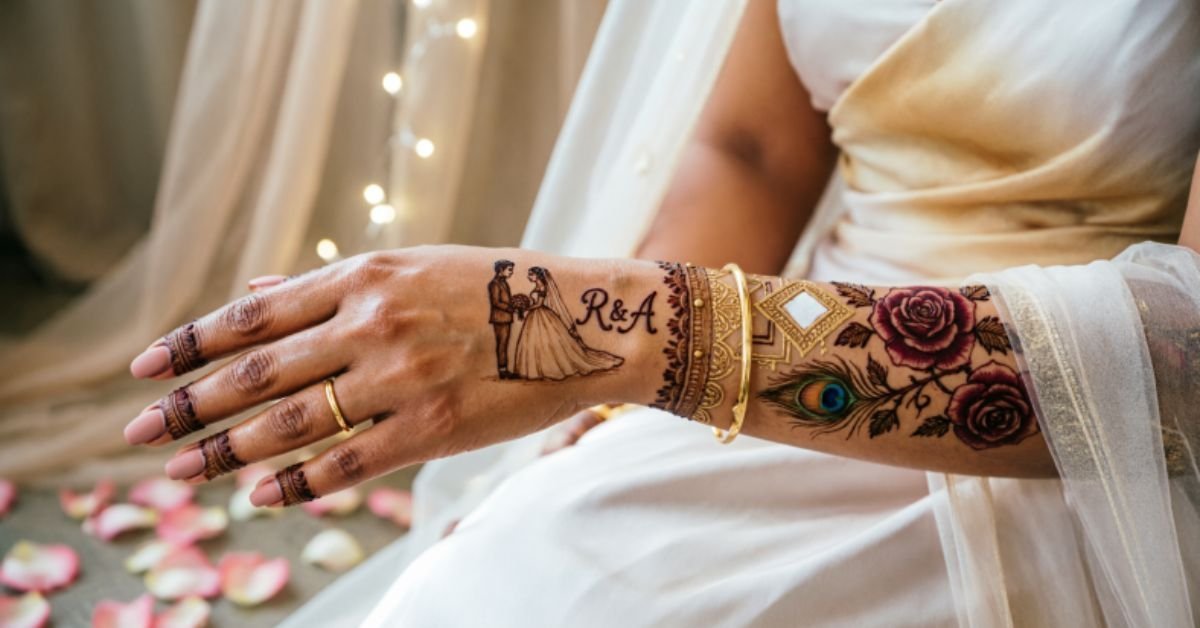
    The most conversation starting Bridal Mehndi Design 2026 trend is also the most intimate: henna that tells your actual love story.

    What makes it work in 2026:

    • Hidden QR codes are embedded inside geometric borders, linking to the couple’s wedding film or a private album  a detail guests only discover when they look closely.
    • White henna accents highlight portrait silhouettes on top of the dark stain, creating a two dimensional depth effect that photographs exceptionally well.
    • Placement matters: narrative elements belong on the inner forearm or the back of the hand, where they’re naturally framed and readable.

    3D Shaded Florals & Architectural Patterns

    Source: Pinterest
    Source: Pinterest

    Traditional flat line henna has been thoroughly disrupted. The 2026 upgrade is all about dimensional shading  using gradient pressure and layered application to make petals curl, stems twist, and geometric lattices feel structurally solid against the skin.

    • Rose shadow technique: A secondary, lighter henna paste is applied around dominant florals after the first layer darkens, mimicking cast shadow. The result is a bloom that visually lifts off the skin.
    • Architectural jali patterns inspired by Mughal lattice screens replace standard fill mesh backgrounds, giving the design structural weight and cultural resonance.
    • Swarovski crystals are set into the center of dimensional florals post removal, amplifying depth. Use heat safe gems with medical grade adhesive; they last through the reception without budging.
    • Aftercare note: Dimensional shading requires longer paste contact  minimum 6 hours  for the stain to reach the deep maroon that makes the shading visible. Scrape, don’t wash.

    The “Less is More” Minimalist Bridal Bloom

    Source: Pinterest
    Source: Pinterest

    Not every 2026 bride wants arms covered from elbow to fingertip. The minimalist bridal henna movement has matured from sparse finger dots into something genuinely refined: intentional negative space used as a design element itself.

    • Placement is the design: A lone magnolia at the center of the palm creates more drama than a cluttered half hand composition.
    • White henna works brilliantly here; it photographs softly and complements diamond jewellery without competing for attention.
    • For brides concerned about stain aftercare: smaller surface area means more concentrated heat retention under a lemon sugar sealant. Results are consistently darker on minimalist designs than on full coverage mehndi.
    • Pro pairing: Combine a minimalist palm design with a bold full sleeve on one arm for editorial asymmetry, one of 2026’s most photographed bridal choices.

    Jewelry Inspired “Hathphool” Designs

    Source: Pinterest
    Source: Pinterest

    The traditional hathphool, a hand ornament of chains connecting a bracelet to finger rings  has been reimagined as the centrepiece of bridal henna trends in 2026.

    How to style this trend correctly:

    • Share a photograph of your actual wedding jewellery with your artist at least one week before the appointment. The design should mirror the metalwork’s filigree, stone placement, and chain links.
    • Swarovski crystal integration is non-negotiable here: crystals placed at every “stone” point in the henna jewellery design create a convincing, glamorous illusion in photographs.
    • Use fine tip cones (0.5mm opening maximum) for chain detailing; anything thicker loses the precision that makes this trend credible.
    • The wrist “bracelet” section should be the most detailed zone; it anchors the entire composition and should feature the densest, darkest stain for contrast.

    Cultural Fusion  The Arabic Indian Hybrid

    Source: Pinterest
    Source: Pinterest

    Perhaps no Bridal Mehndi Design 2026 trend reflects the modern bride more honestly than the Arabic Indian fusion style.

    • Structure it like this: Large Arabic style blooms as anchor points, Indian paisley and fine latticework as filler between them, and Arabic bold vines connecting the composition across the hand and forearm.
    • The transition zone (usually the wrist) is where the two styles visually “meet”  use a geometric Arabic border here as a deliberate bridge element.
    • This style is ideal for brides with cross cultural weddings or those who want a design that doesn’t fit neatly into one tradition.
    • Colour layering: Some artists apply a translucent orange tinted jagua blend over the Arabic sections after the initial henna layer, deepening those zones to near black while the Indian filler sections remain warm maroon, a stunning tonal contrast.

     Pro Tip: The Secret to a Deep, Dark Maroon Stain

    After removing the dried paste, resist washing with water for at least 12 hours. Instead:

    • Apply a thin coat of mustard oil or virgin coconut oil immediately after scraping  it locks in oxidation and accelerates darkening.
    • Wrap the design loosely in medical gauze overnight to retain body heat, which deepens the stain by up to 40%.
    • Avoid water, soap, and swimming pools for the first 24 hours. Chlorine is the single biggest enemy of a rich maroon stain.
    • When you do finally rinse, use lukewarm water only  hot water strips the top stain layer before it’s fully set.

    Your Mehndi Your Signature.

    The most powerful thing about Bridal Mehndi Design 2026 is that it has finally stopped asking brides to fit a template. Whether you’re drawn to the emotional depth of narrative portrait henna, the glamour of crystal set hathphool designs, the clean confidence of minimalist blooms, or the rich complexity of cultural fusion  there is no wrong choice. There is only your choice.

    Book your artist early, bring reference images, communicate your story, and trust the process. The stain darkens over 48 hours  and so does the memory of wearing it.

  • Henna Reimagined The Most Exquisite Designer Mehndi Designs

    Henna Reimagined The Most Exquisite Designer Mehndi Designs

    Mehndi has always been more than a ritual; it is a language of beauty, tradition, and identity. But 2026 marks a definitive turning point. Gone are the days of dense, all over patterns that left little room to breathe. Today’s modern bride, bridesmaid, and henna enthusiast demands something far more intentional: a designer mehndi design that is expressive, editorial, and uniquely hers.

    From micro scale mandalas to 3D Mughal masterpieces, the 2026 henna aesthetic is rooted in artistry, precision, and a sophisticated understanding of negative space. 

    1. The Micro Mandala ‘Clean Girl’ Aesthetic

    Designer Mehndi Design
    Source: Pinterest
    Source: Pinterest

    Minimalism is having its greatest moment in henna art. The Micro Mandala trend strips away excess and centres the entire design around one breathtaking focal point  usually placed on the back of the hand or the centre of the palm.

    What defines this designer mehndi design:

    • A single, intricate mandala serves as the centrepiece  every line is precise, every petal deliberate.
    • Surrounding space is intentionally left bare, amplifying the design’s visual impact.
    • Fine dotwork and seed-like detailing radiate from the core, creating an almost jewellery like effect.
    • Trails along one or two fingers extend the composition without overwhelming it.
    • Ideal for brides who prefer understated elegance or modern minimalists seeking a festive touch.

    This style pairs exceptionally well with sleek, contemporary bridal wear and is the go-to choice for those who want henna that photographs like fine art.

    2. 3D Mughal Fusion Art

    Source: Pinterest
    Source: Pinterest

    This is the designer mehndi design for the bride who wants her hands to tell a story. Inspired by the grandeur of Mughal architecture, domed arches, intricate jalis, and symmetrical flora  this trend takes traditional motifs and layers them with stunning 3D depth.

    Signature elements of 3D Mughal Fusion:

    • Stippling and shading techniques give the illusion of a raised, sculptural surface.
    • Peacock feathers, lotus blooms, and palace arch motifs are rendered with layered detail.
    • Dense inner sections gradually fade into lighter, airier linework  creating movement and dimension.
    • Back of hand placement is most popular, though full arm compositions are gaining traction.
    • Deep mahogany stains are essential to make the shading pop with maximum contrast.

    This style is undeniably opulent, a perfect match for heavy bridal lehengas and embellished anarkalis.

    3. Henna Jewelry: The Statement Cuff & Ring Designs

    Source: Pinterest
    Source: Pinterest

    Why wear jewelry when your mehndi can be the jewelry? The Henna Jewelry trend is one of the most searched designer mehndi design styles of 2026. It mimics the look of actual accessories, blurring the line between body art and adornment.

    Design features to look for:

    • Wrist cuffs replicating intricate gold bangles, complete with beading and chain link detailing.
    • Ring designs on individual fingers are thin bands adorned with tiny florals or geometric gems.
    • Knuckle to wrist compositions that mirror statements haath phool aesthetics.
    • Negative space used cleverly to suggest metallic gleam without filling every inch.
    • Works brilliantly on brides who choose to skip traditional jewellery for a fashion forward, editorial look.

    This style is particularly popular at intimate nikkah ceremonies and engagement shoots where the hands are prominently featured.

    4. Geometric Negative Space Patterns

    Source: Pinterest
    Source: Pinterest

    Geometry meets garden in this striking trend that marries angular precision with organic floral softness. This is a designer mehndi design built for the contemporary woman, one who appreciates structure, contrast, and visual tension.

    What makes this style stand out:

    • Bold triangles, hexagons, and diamond grids act as the structural skeleton of the design.
    • Delicate floral sprigs, roses, jasmines, and ferns fill the geometric frames.
    • Negative space (bare skin) is used as intentionally as the henna itself, creating a chessboard-like illusion.
    • Colour blocking effects are achieved by densely filling alternating sections.
    • Looks especially striking on deeper skin tones where the contrast is dramatically amplified.

    If you want henna that feels architectural and avant-garde, this is your 2026 style.

    5. Architectural Arabic Trails

    Source: Pinterest
    Source: Pinterest

    Arabic mehndi has always been celebrated for its fluidity and openness. In 2026, it evolved into the Architectural Arabic Trail  where bold outlines and deliberate open air spacing create a sense of movement that feels almost calligraphic.

    Defining characteristics:

    • Thick, confident outlines anchor the design with no featherweight strokes here.
    • Large floral motifs (oversized roses and tropical leaves) are placed with generous breathing room between them.
    • Vines and tendrils flow asymmetrically from the wrist toward the fingertips.
    • Fewer elements, placed with more intention quality valued over quantity.
    • Extremely fast to apply, making it ideal for large bridal parties or same-day events.

    The Architectural Arabic Trail is effortlessly chic, relaxed yet refined, and endlessly photogenic.

    Pro Tip: Achieving the Perfect Deep Burgundy Stain in 2026

    A rich, dark stain is non-negotiable for the bold contrast that 2026 mehndi demands. Here is how to get it using organic ingredients:

    • Use fresh, sifted Rajasthani henna powder with the highest lawsone content for maximum dye release.
    • Mix paste with strong black tea or coffee instead of water to intensify colour depth.
    • Add 1–2 drops of eucalyptus or cajeput essential oil to boost stain absorption.
    • Once dry, seal with a lemon sugar solution to keep the paste pressed against the skin.
    • Leave on for a minimum of 8–12 hours. Overnight is ideal.
    • After removal, rub with mustard oil or coconut oil and never wash immediately with soap.
    • Avoid water contact for 6–8 hours post-removal. The stain deepens to burgundy-red over 48 hours.

     Your 2026 Henna Journey Starts Here

    The world of mehndi in 2026 is richer, bolder, and more artistically evolved than ever before. Whether you are drawn to the quiet sophistication of micro mandalas, the royal grandeur of 3D Mughal art, or the clean geometry of negative space patterns, there is a designer mehndi design that speaks your visual language.

    Ready to wear the future of henna? Explore our full gallery at MehndiChic.com  where every design is crafted for the modern woman who refuses to choose between heritage and style. Browse, save, and share the looks that inspire you, and let us help you find your perfect designer mehndi design for every occasion.