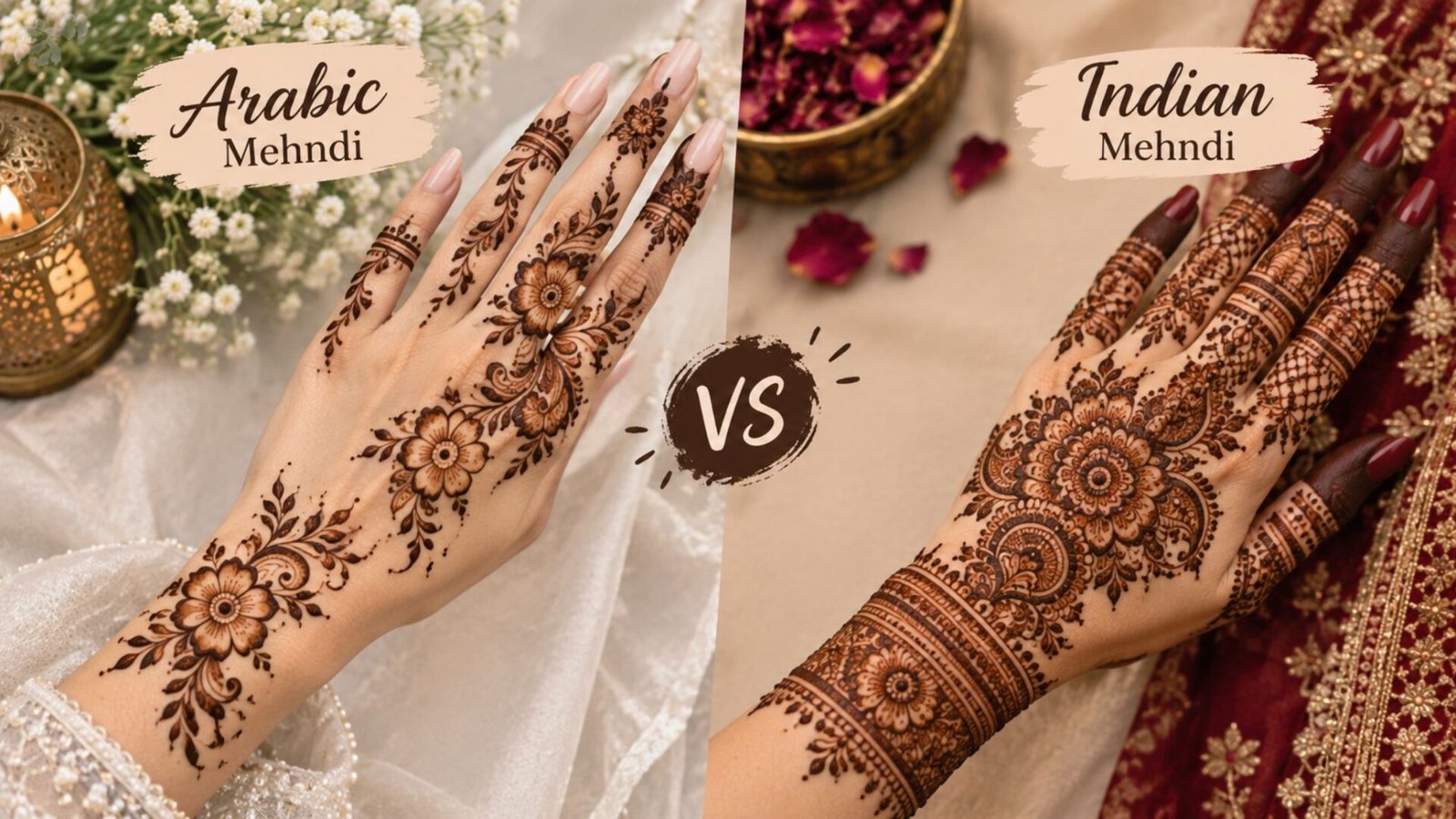
Put two mehndi hands side by side and you’ll notice the difference before you can name it. One seems to breathe, with big blooms and vines drifting across the skin. The other feels like a woven tapestry, every inch filled with tiny, deliberate detail.
If you’ve ever wondered what really separates Arabic vs Indian mehndi designs, here are six pattern ideas, a quick comparison, and a few thoughts on choosing your own.
Bold Arabic Floral Trail
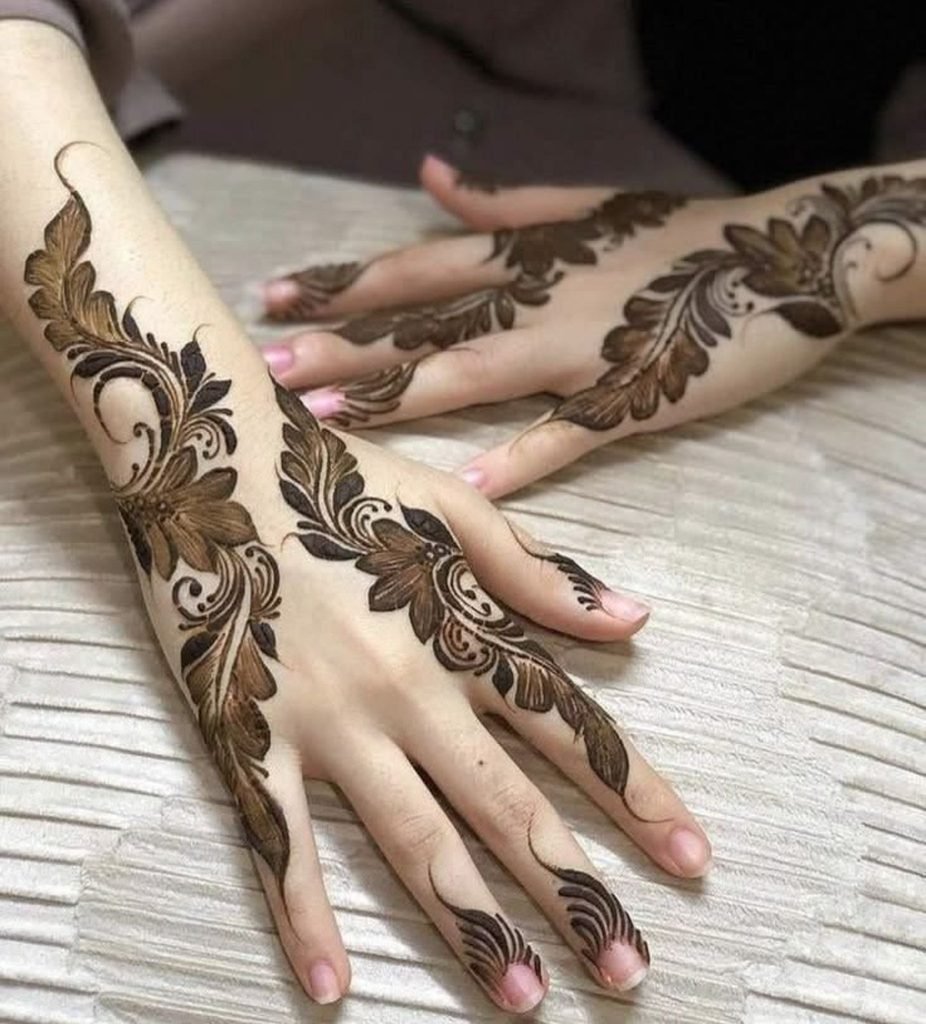
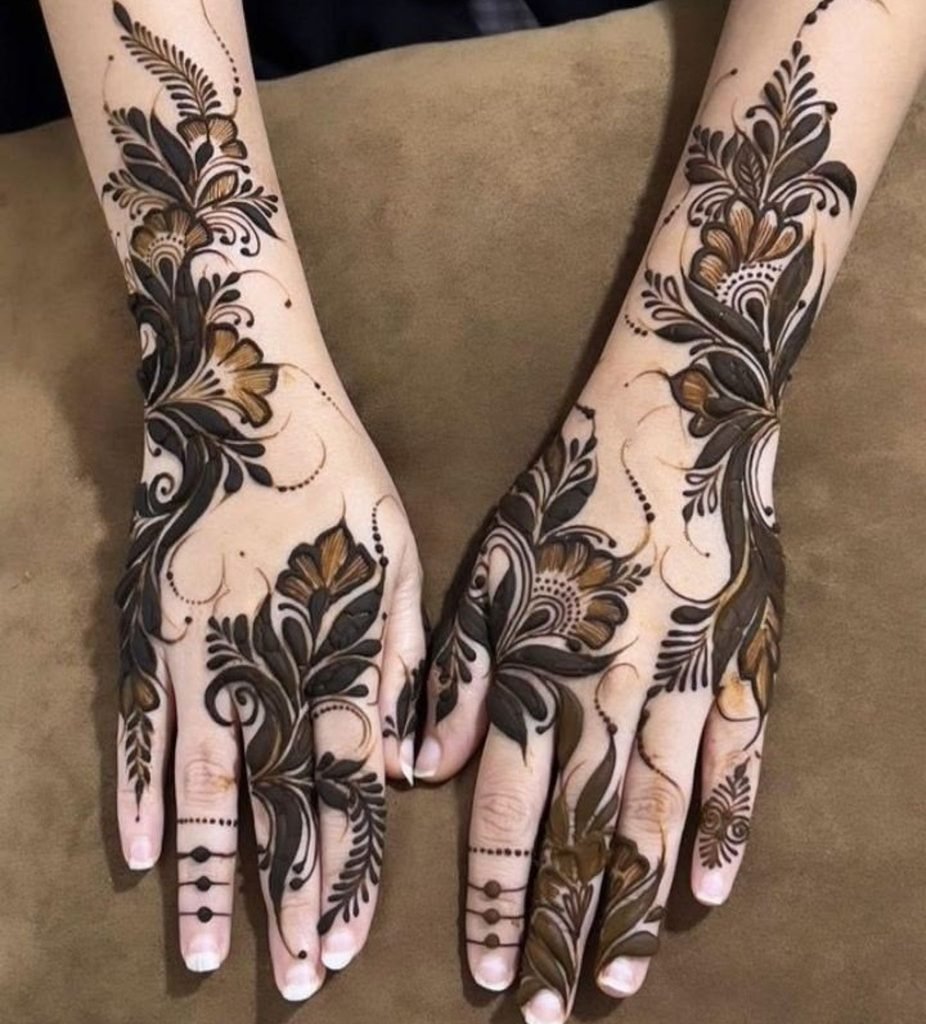
Arabic floral mehndi is all about confidence. Large flowers with bold outlines sit along one side of the hand, linked by a vine that curves gracefully toward the fingertips.
Leaves branch off in pairs, and plenty of skin is left open, so the henna stain stands out beautifully. The eye follows the trail naturally, which gives the whole design a relaxed, flowing feel.
Intricate Indian Peacock Pattern
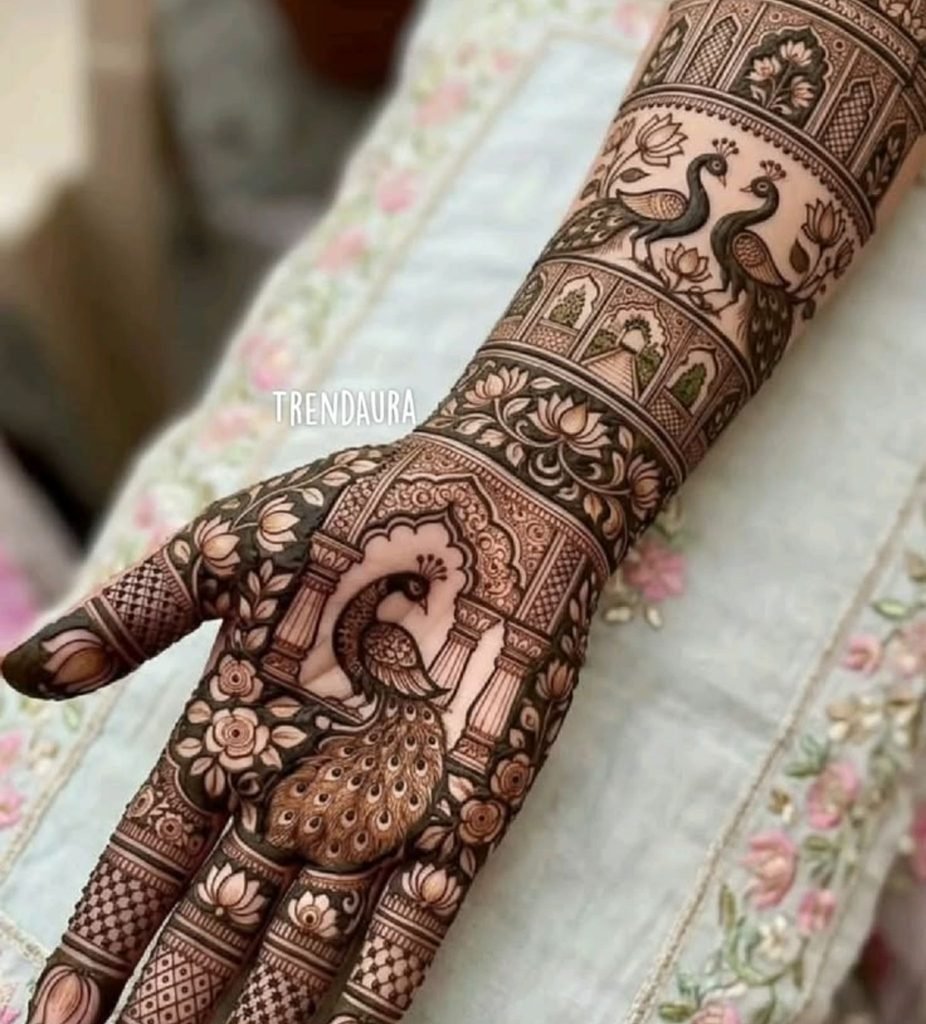
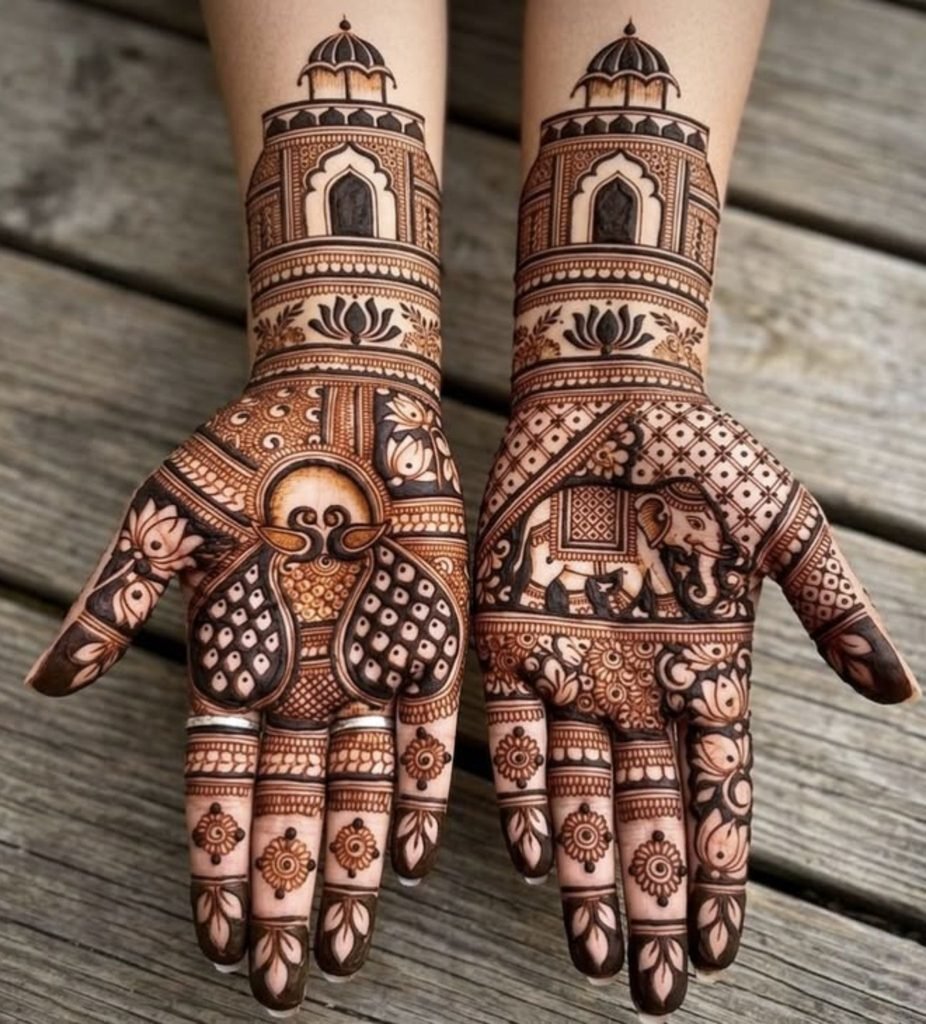
Arabic vs Indian mehndi designs, Here the mood shifts. A peacock, often placed at the center of the palm or along the back of the hand, is built from fine lines, tiny feather details, and delicate curls. Paisleys and dotted fillers surround it, leaving very little empty space.
The result feels richer and more story driven, the kind of design where you keep spotting something new.
Arabic Rose and Vine Design
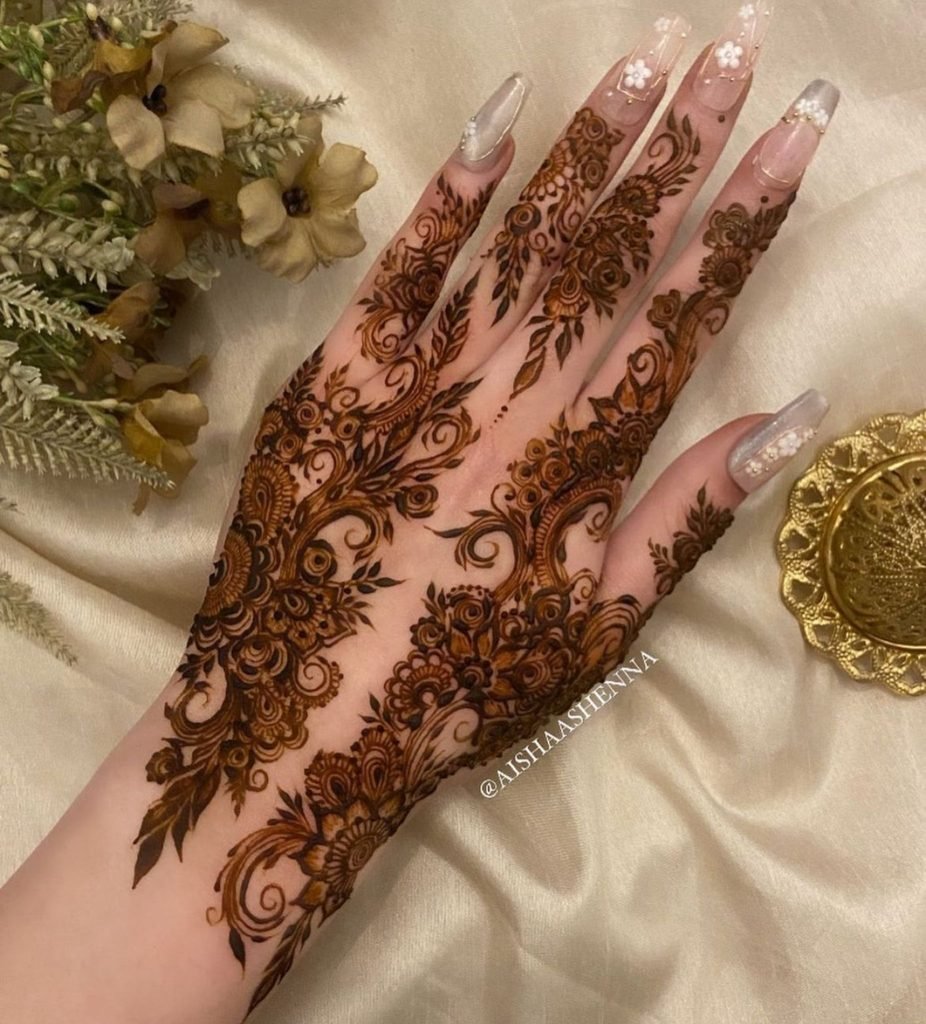
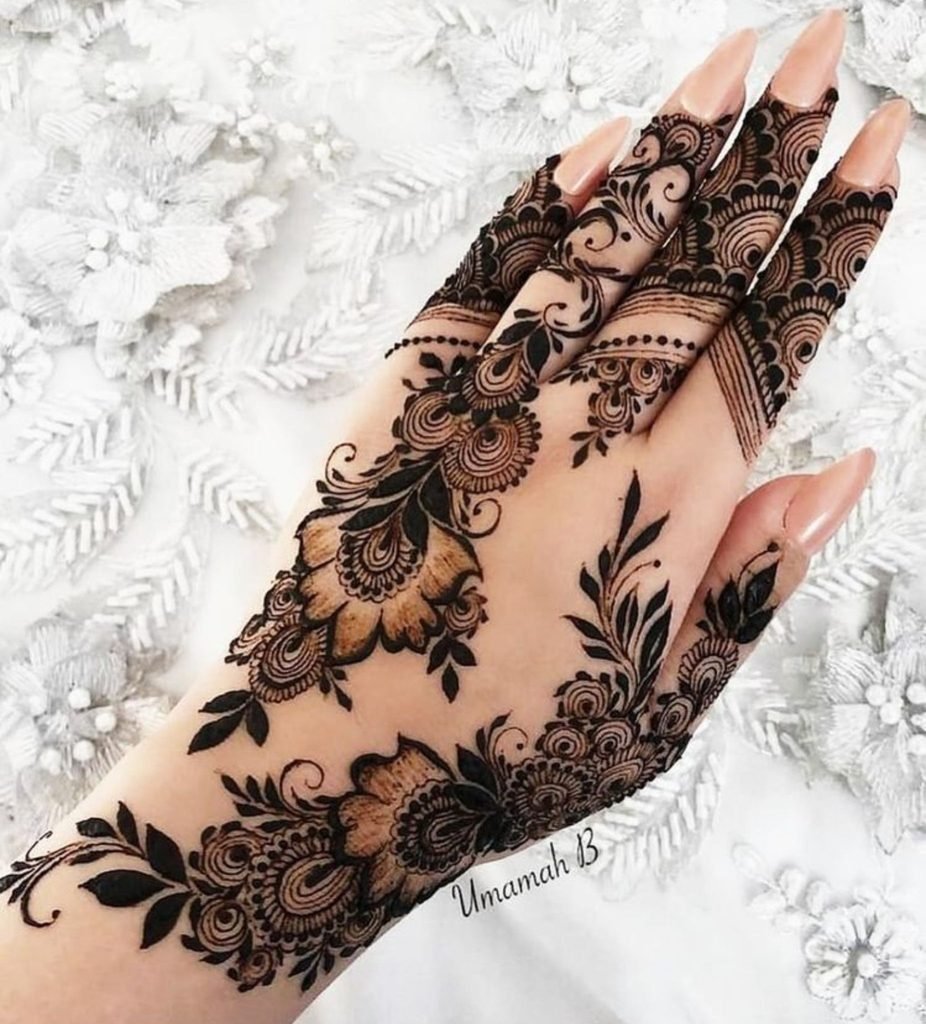
A single, well drawn rose can carry an entire hand. In this composition, the rose blooms near the wrist or the back of the palm while a slender vine winds upward, dotted with leaves and small buds.
The open space is part of the charm, since it lets every petal stand out. It looks soft, elegant, and beautifully balanced.
Indian Paisley Jaal Design
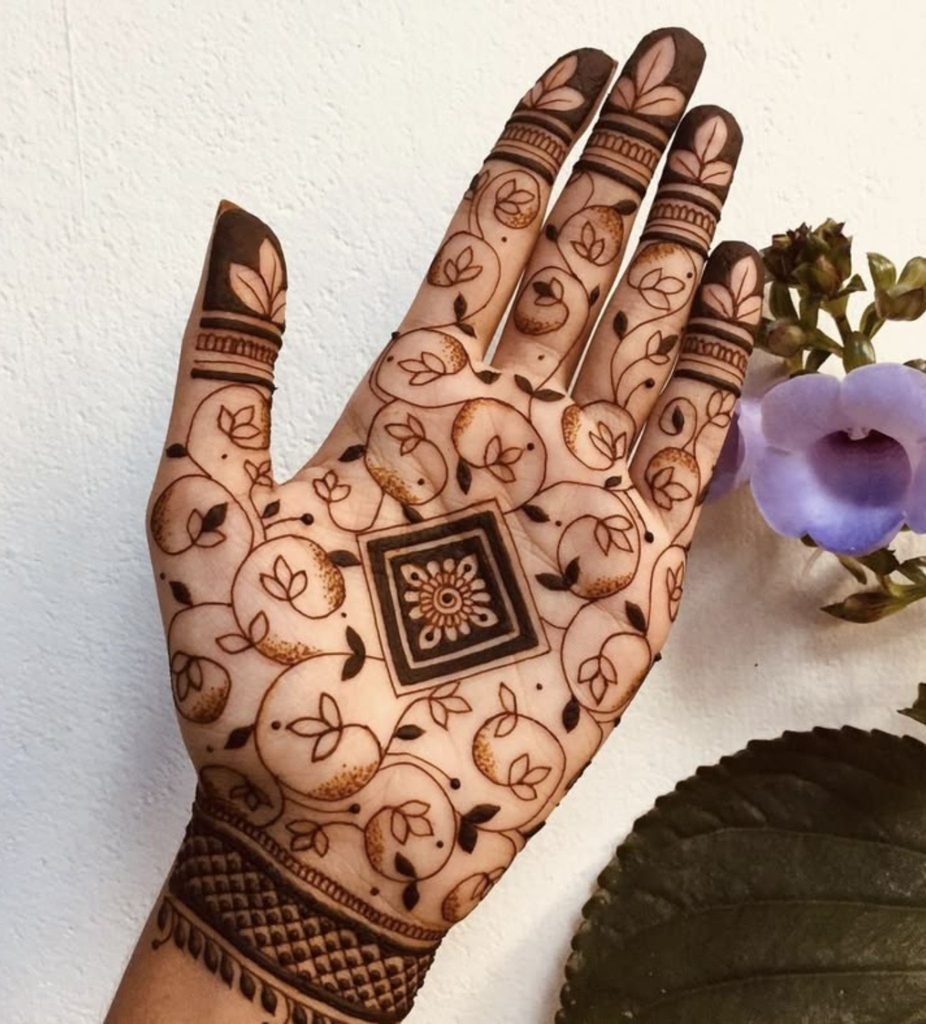
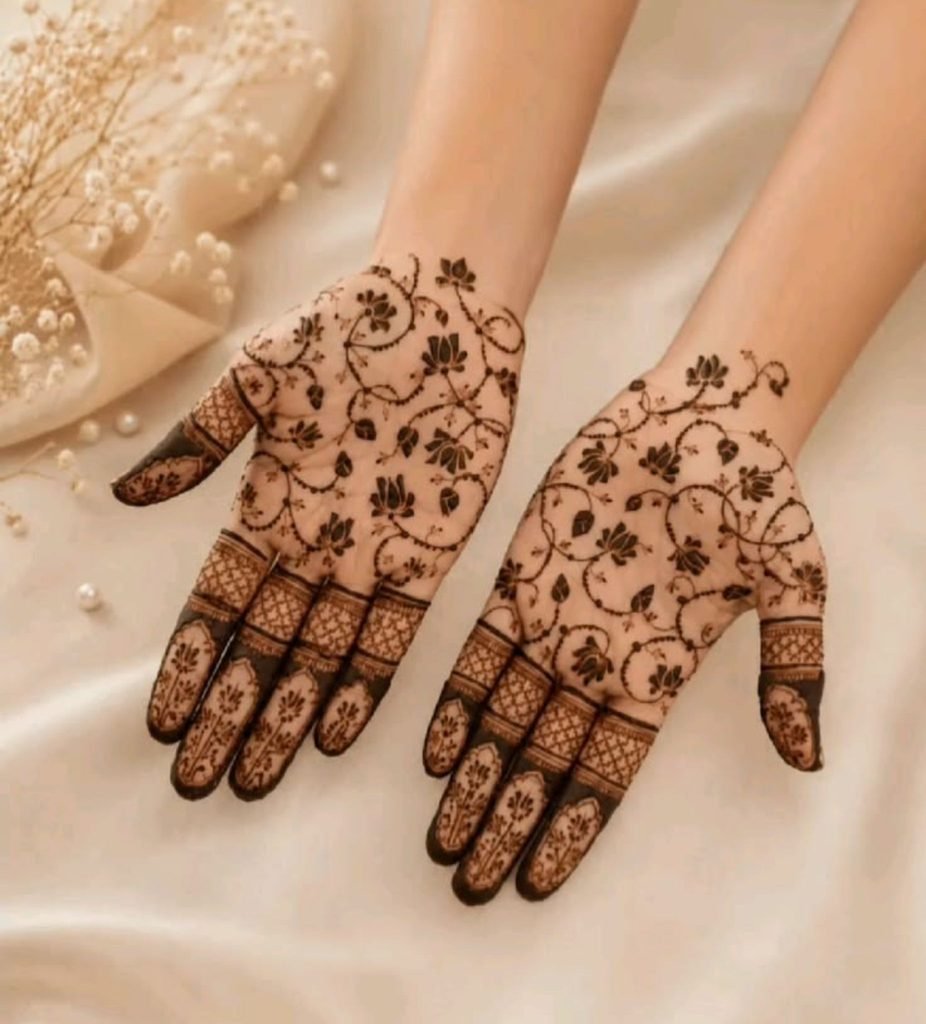
Jaal means net or lattice, and that’s exactly the idea. Paisleys, flowers, and curling stems link together in one connected web, and each paisley is layered with lines, dots, and tiny petals.
Floral fillers close the gaps, so nothing floats alone. The pattern reads as fuller and more textured, almost like fine embroidery worked into the skin.
Arabic Minimal Wrist Trail
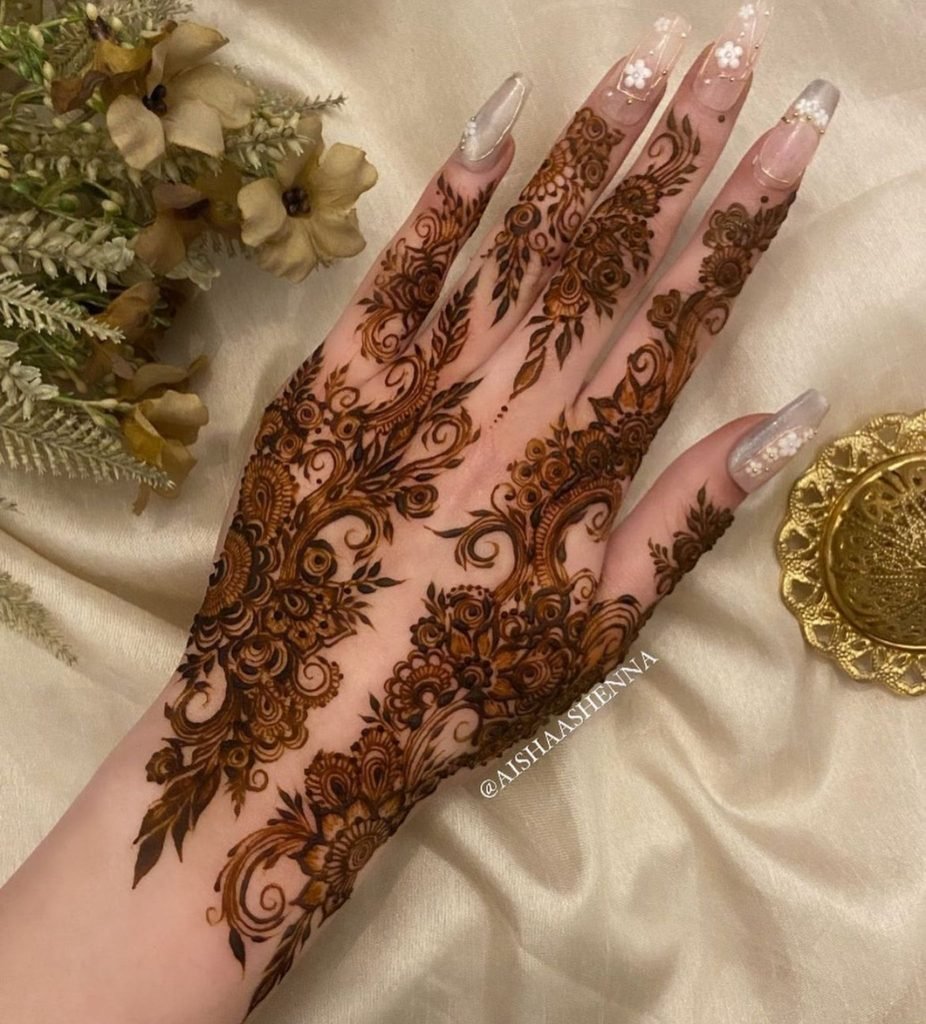
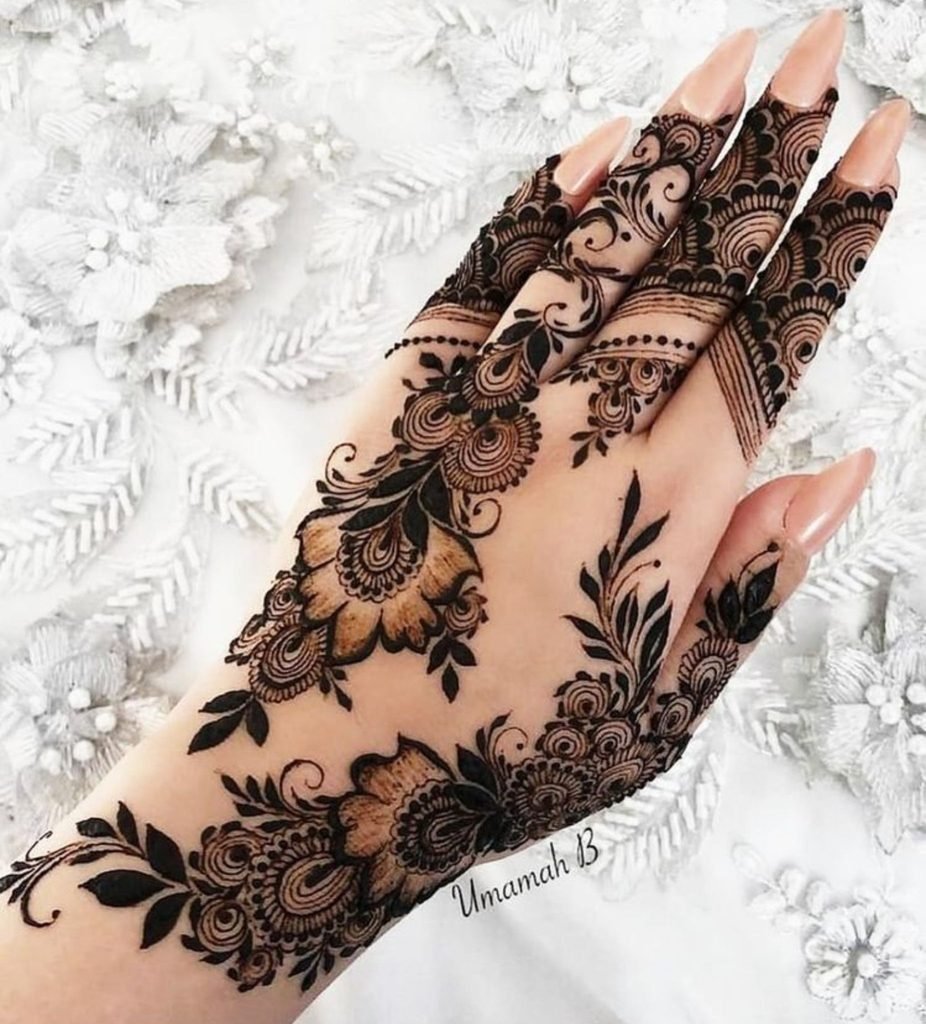
Not everyone wants a full hand of henna. This lighter design stays around the wrist with a few flowers, curved vines, and scattered leaves, all drawn with clean, steady lines.
It suits small gatherings, festive evenings, or a friend’s wedding, when you want something stylish that doesn’t take hours to apply or dry.
Indian Mandala Bridal Design
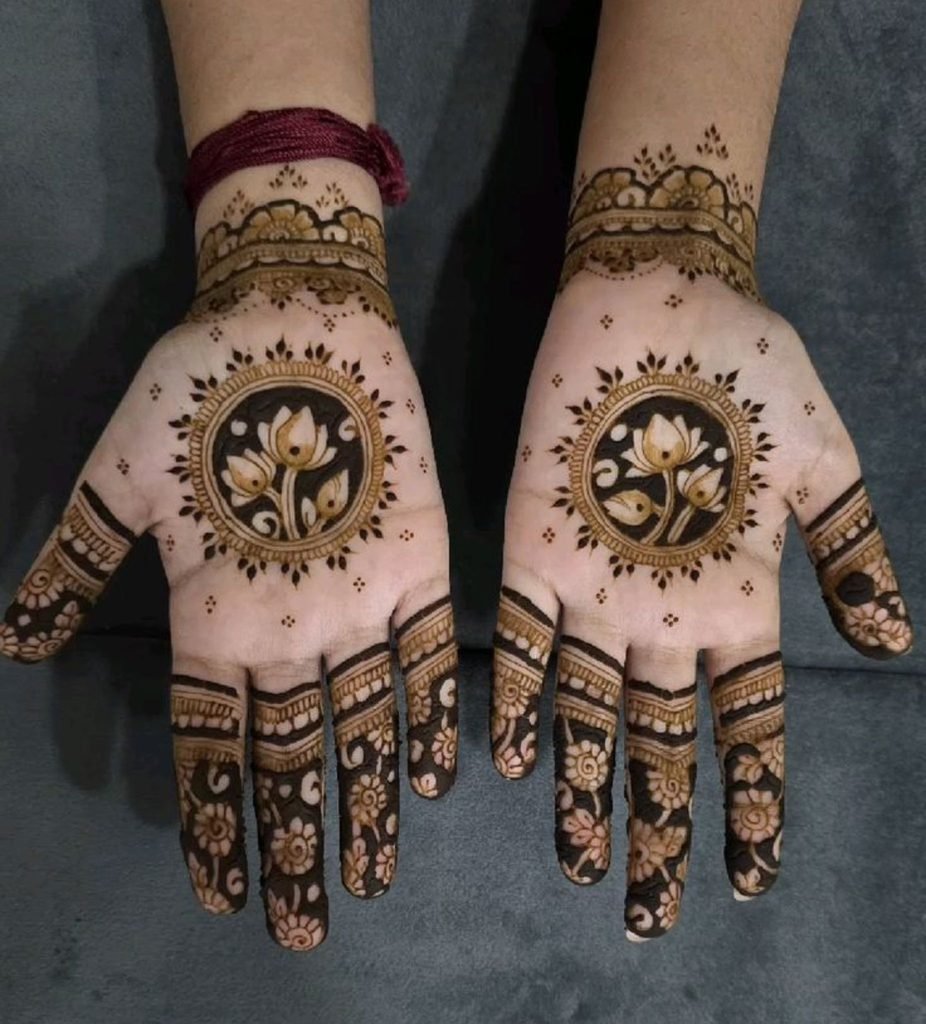
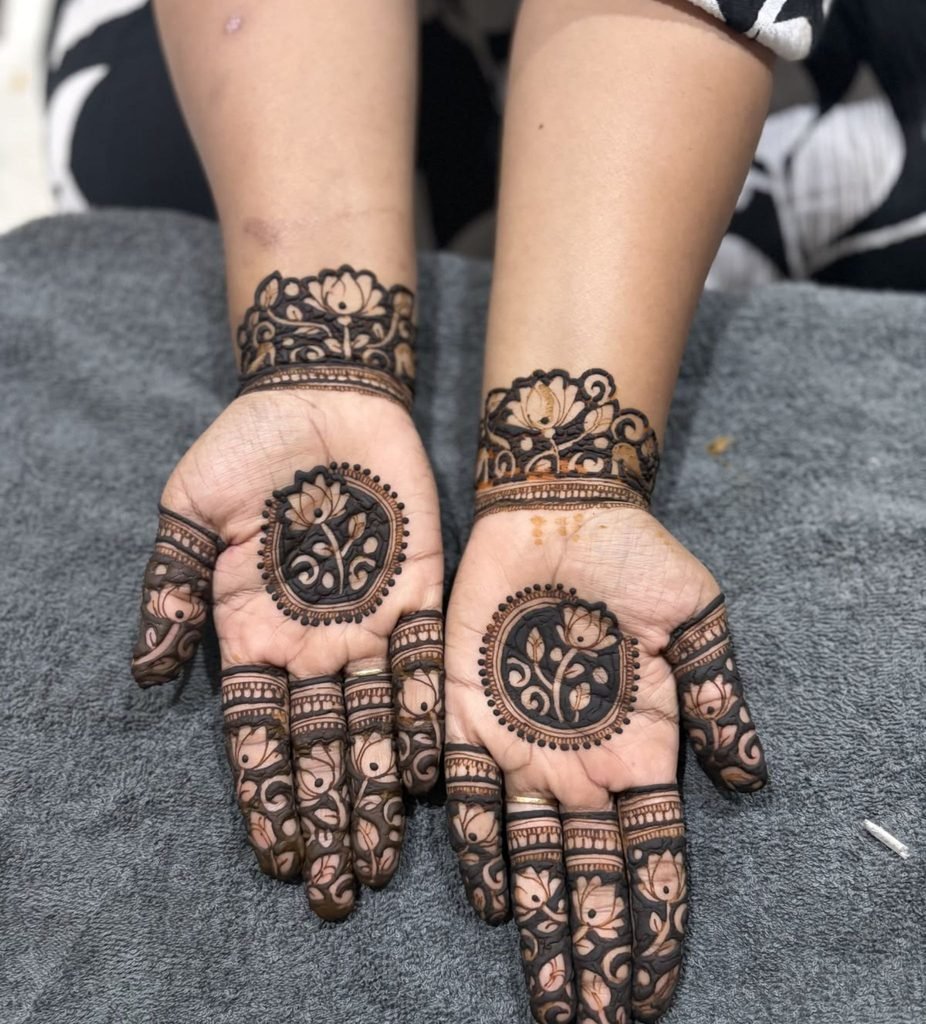
A mandala in the center of the palm acts like a jewel. Rings of petals, paisleys, and fine-line patterns spread outward from the middle, and the fingers are often filled with matching detail.
Because the circle draws the eye first, the rest of the hand can be as intricate as the bride likes without losing its focal point. That balance is one reason it remains such a loved choice for Indian bridal mehndi.
Indo-Arabic Fusion Design
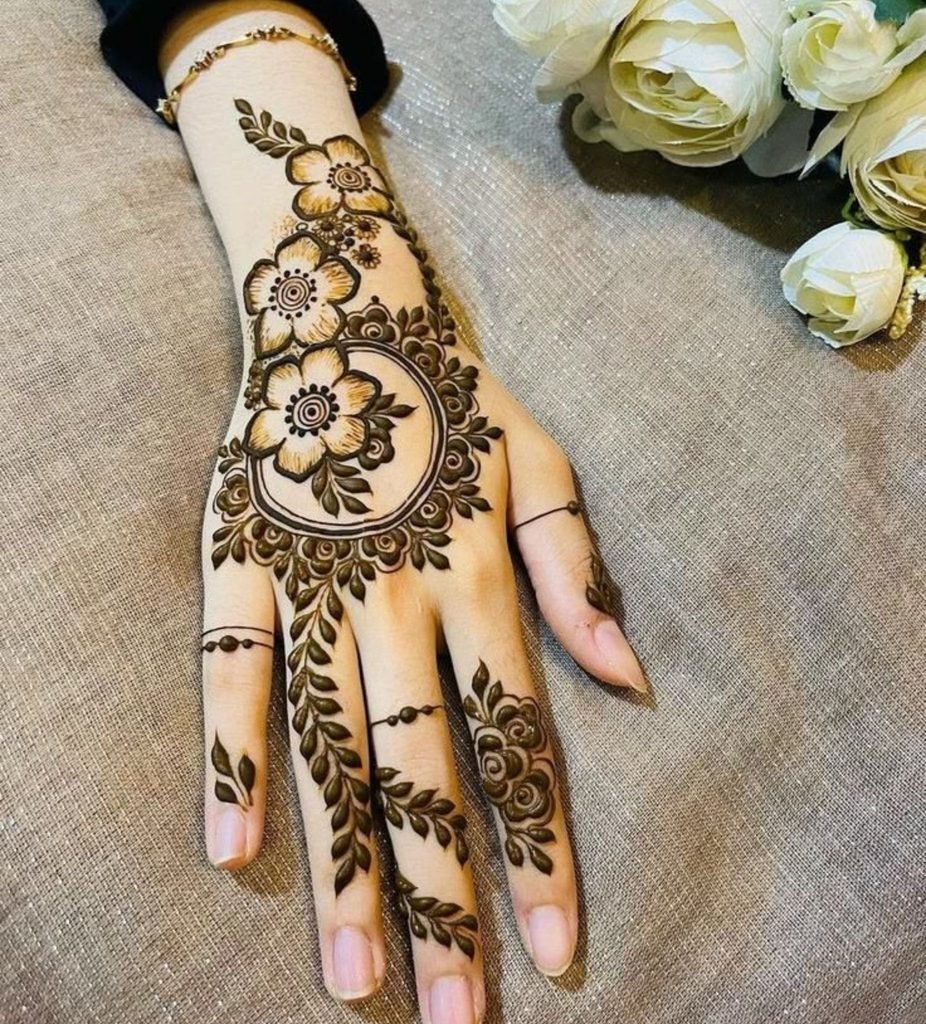
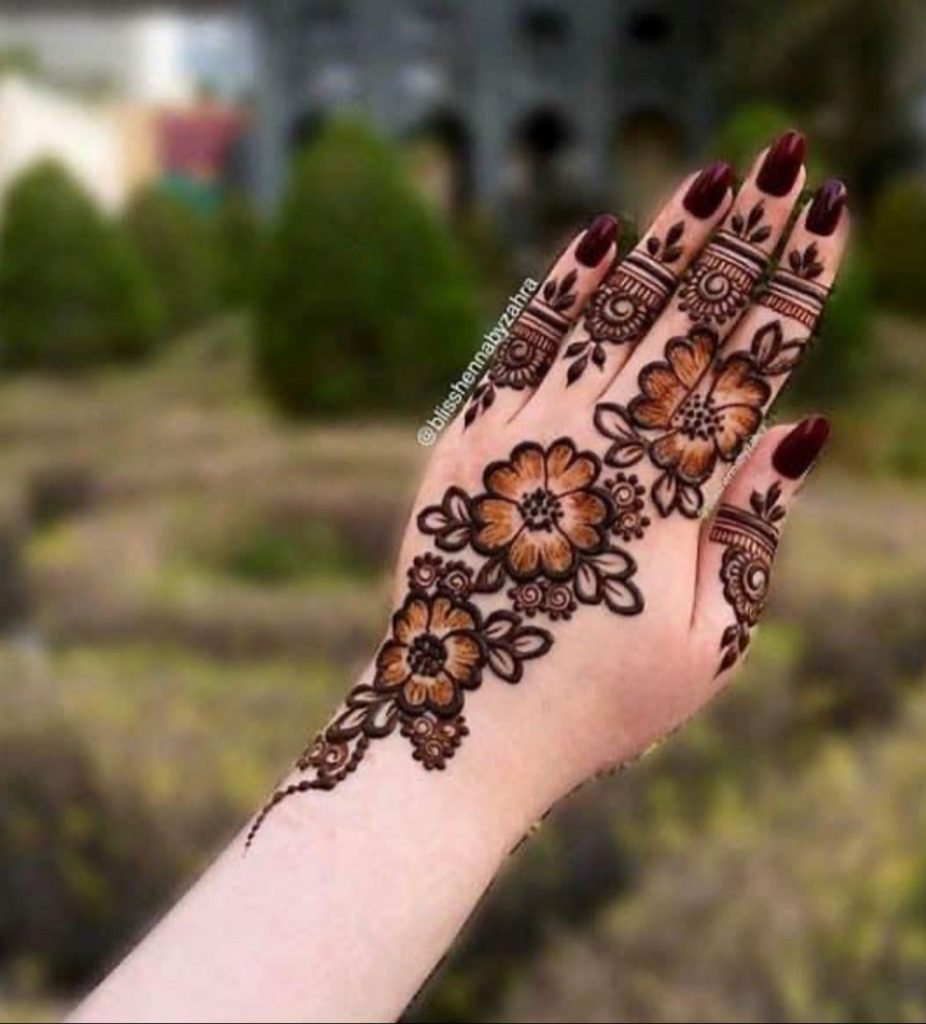
Why choose one when you can borrow from both? Picture a bold Arabic flower opening near the wrist, its vine slowly turning into a chain of Indian paisleys as it travels toward the fingers. Or imagine a peacock placed inside an airy layout, with fine fillers used only around its feathers.
Indo Arabic mehndi is flexible, and it’s a lovely option for anyone who enjoys the contrast between open space and rich detail.
Arabic vs Indian Mehndi Designs: The Key Differences
Here’s a quick side-by-side look. Treat it as a general guide, since every artist adds their own touch to both styles.
| Feature | Arabic Mehndi | Indian Mehndi |
| Overall appearance | Bold, flowing, airy | Ornate, detailed, tapestry-like |
| Common motifs | Large flowers, leaves, vines | Peacocks, paisleys, mandalas, jaals |
| Level of detailing | Moderate, with clean outlines | Very fine and layered |
| Negative space | Plenty of open skin | Minimal, filled with patterns |
| Hand coverage | Often one side or a diagonal trail | Often full hands, sometimes up to the forearms |
| Finger patterns | Simple vines or single-side trails | Fully filled or lace-like fingers |
| Bridal suitability | Popular for modern or minimal bridal looks | A classic choice for traditional brides |
| Overall feel | Modern and contemporary | Traditional and timeless |
Which Style Fits Your Mehndi Look?
If you love an airy, floral, modern look, Arabic-inspired patterns may feel right for you. If you’re drawn to intricate traditional Indian mehndi and fuller coverage, Indian designs might be closer to your heart.
Your outfit and the occasion matter too. A heavily embroidered outfit may look lovely with a lighter trail that lets it shine, while a simple outfit can carry a richly detailed hand. Still can’t decide? Fusion designs let you have both. There’s no better style, only the one that suits your taste and the moment.
Final Thoughts
Whether you fall for drifting vines or dense paisleys, mehndi is really about how it feels when it’s on your hands.
Now that you know how Arabic vs Indian mehndi designs differ, choose by the level of detail you love, the occasion you’re dressing for, and the look you want to carry. Both styles are beautiful, and both are worth trying at least once.