
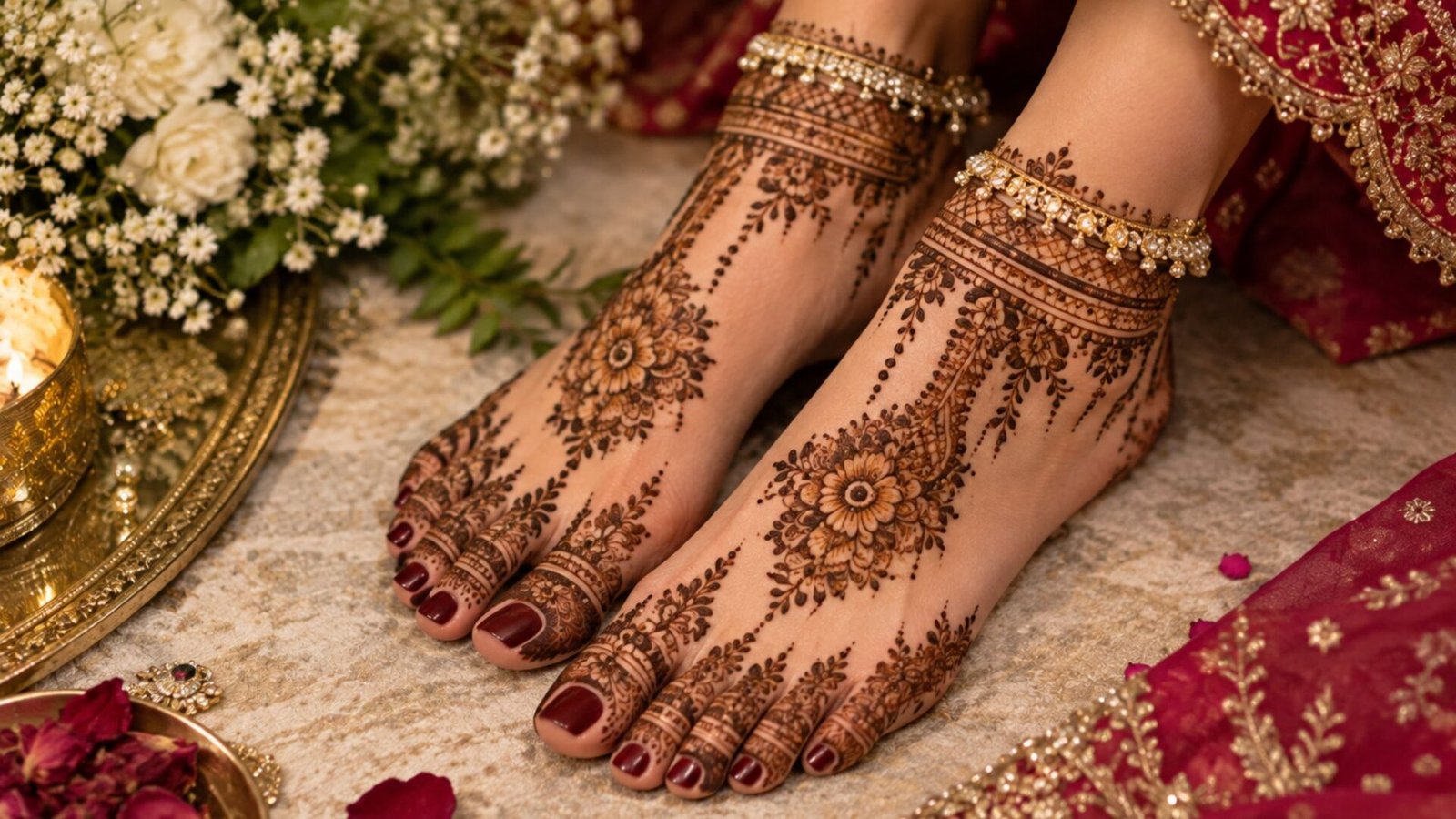
Hands get most of the attention on a mehndi night, but feet quietly finish the picture. They peek out as you walk in, show up in every close up of your jewelry, and frame the hem of your outfit.
A well planned bridal foot mehndi design can be a few delicate vines around the toes or a dense pattern that climbs past the ankle. Here are eight styles to help you picture yours.
Classic Full Foot Bridal Mehndi
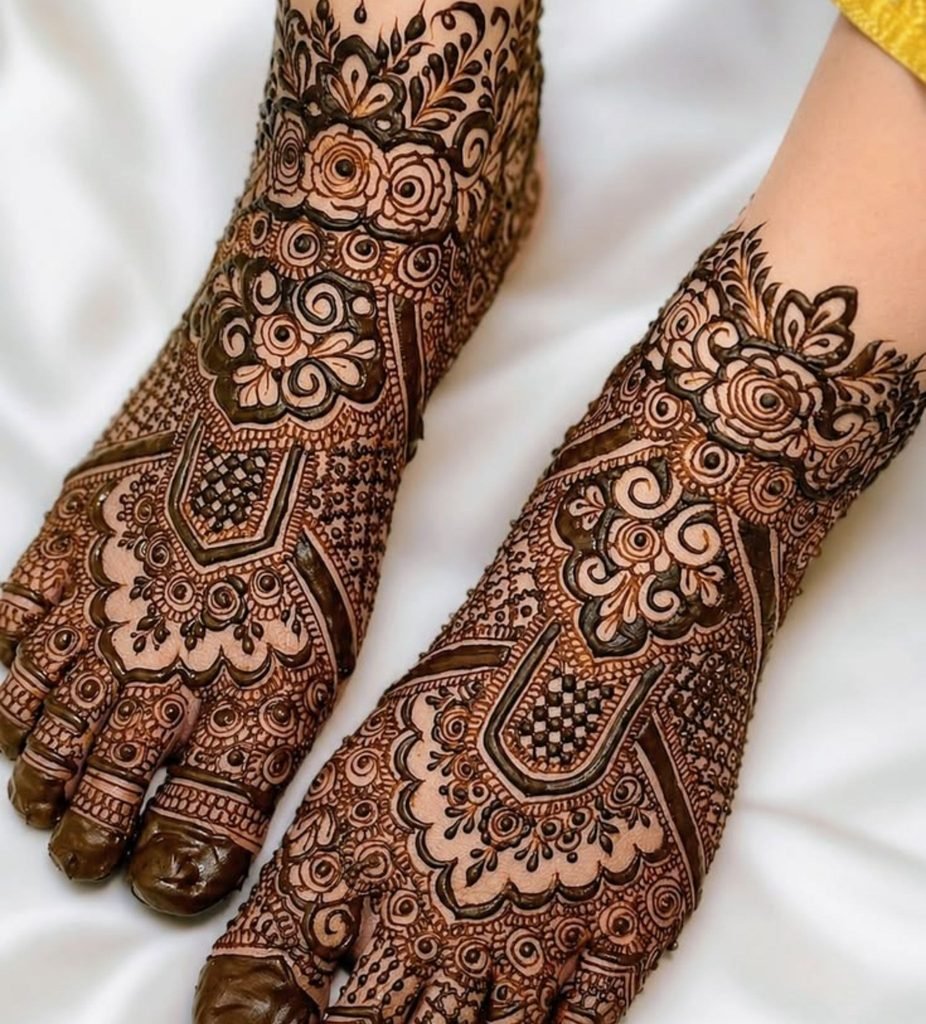
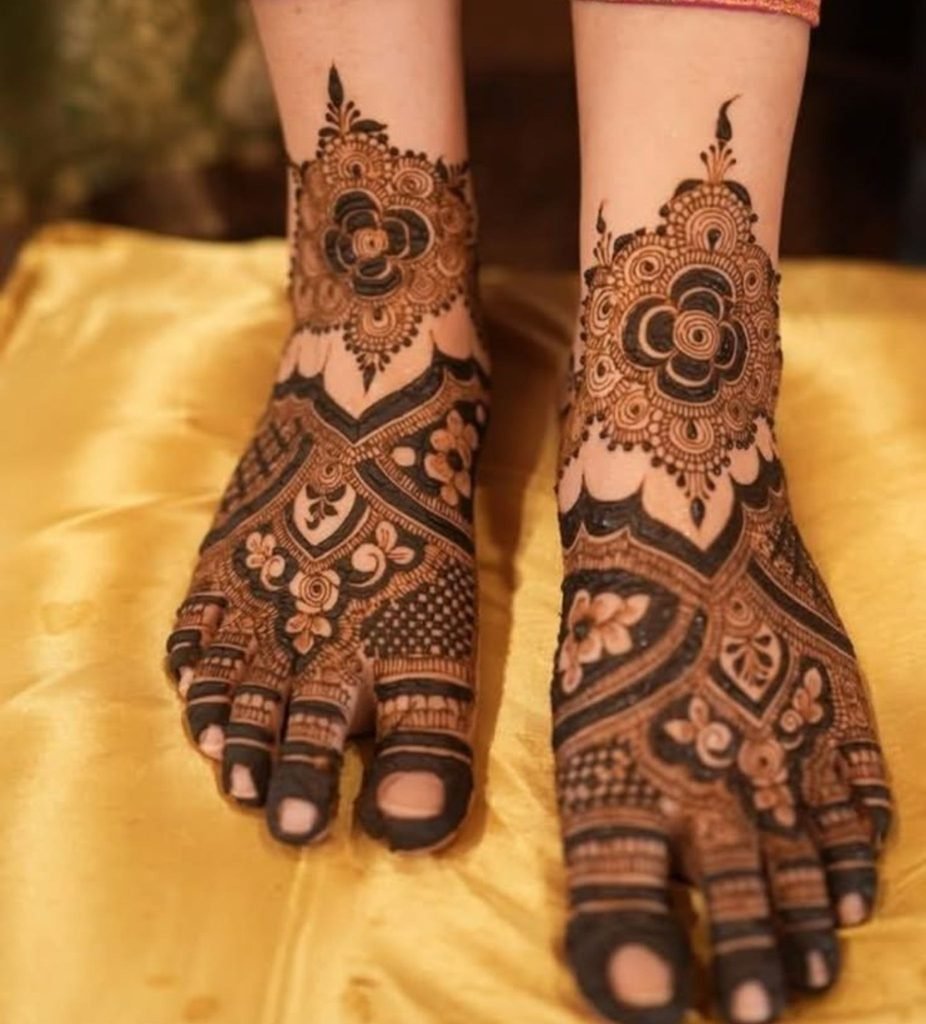
This is the look most people imagine first: the top of the foot covered edge to edge, with a central peacock or flower, leafy borders, and fine filler dots. Toes carry little bands or half circles, and the pattern wraps the ankle.
It suits brides in heavy lehengas or gharara sets, where full feet bridal mehndi matches the richness of the outfit.
Arabic Bridal Foot Mehndi
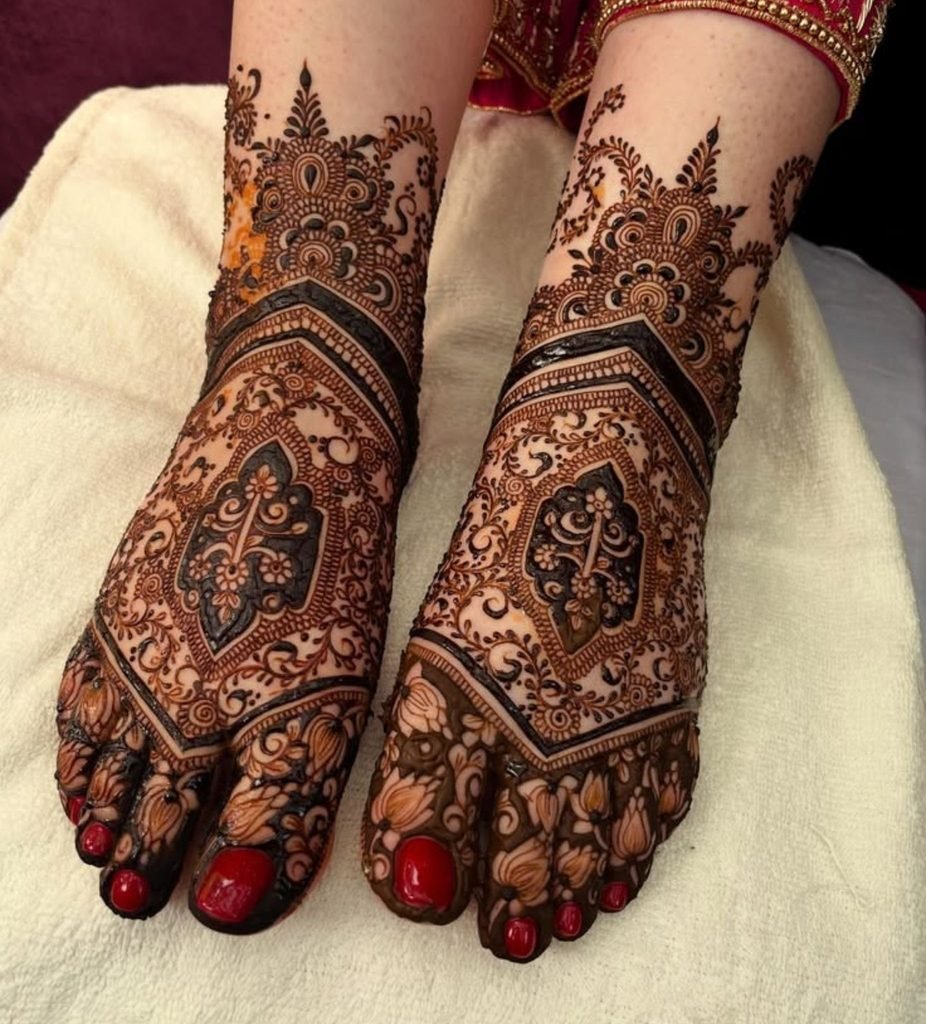
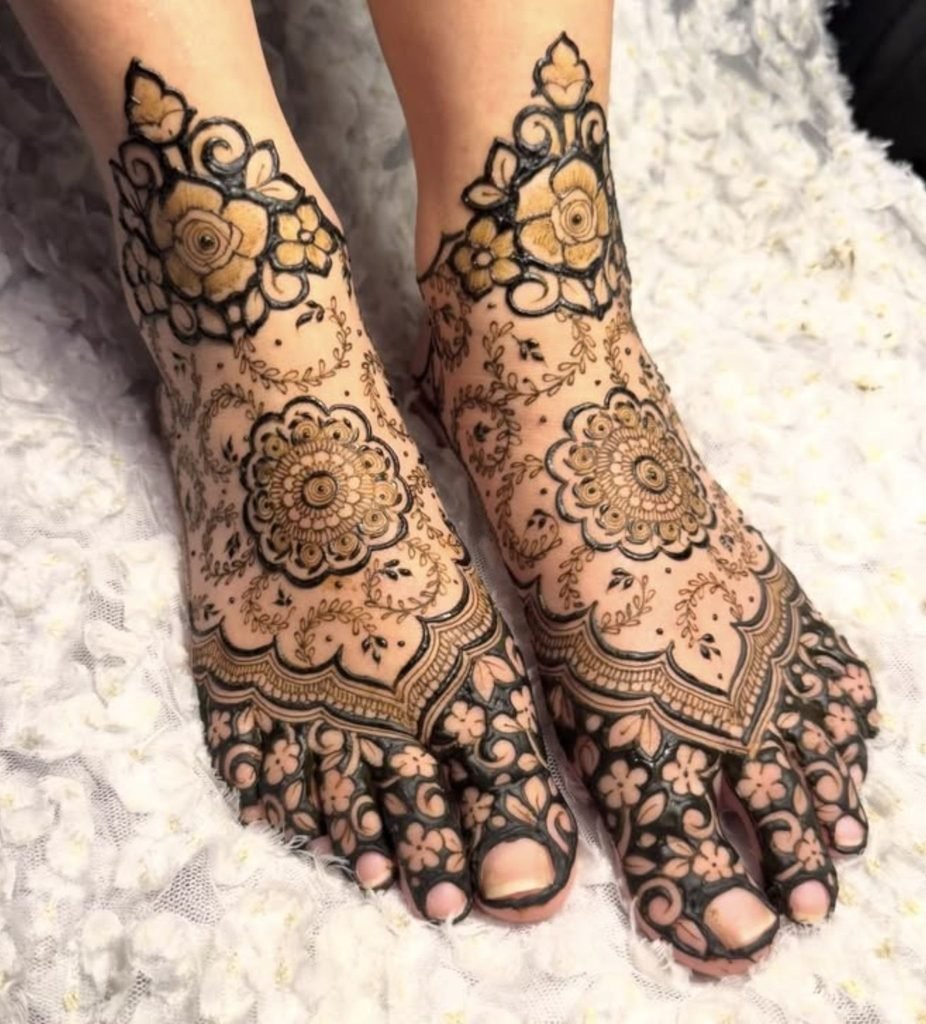
Arabic work leaves breathing room. Bold vines start at the ankle and sweep diagonally across the foot, ending in large leaves and a few teardrops. Toes are often left bare or lightly outlined.
It works for modern brides, destination weddings, and anyone who wants a lighter look that still reads clearly in photos from a distance.
Floral Bridal Feet Mehndi
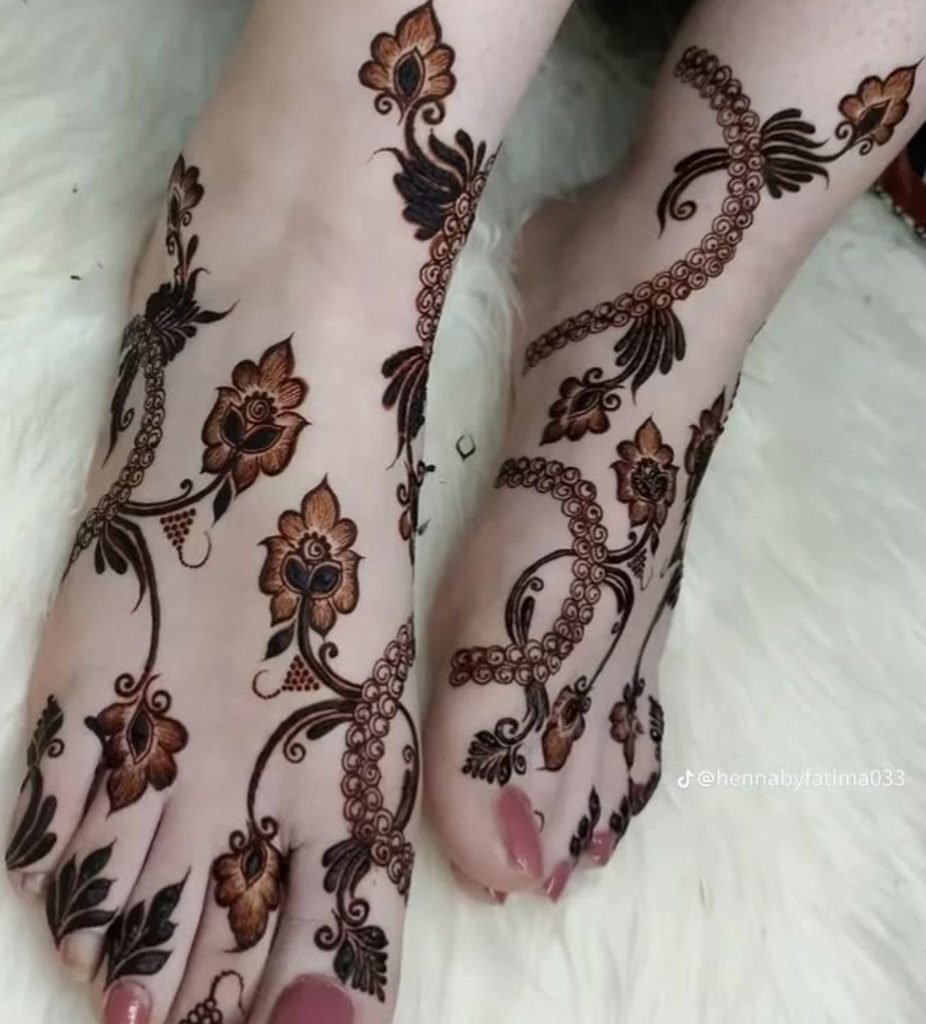
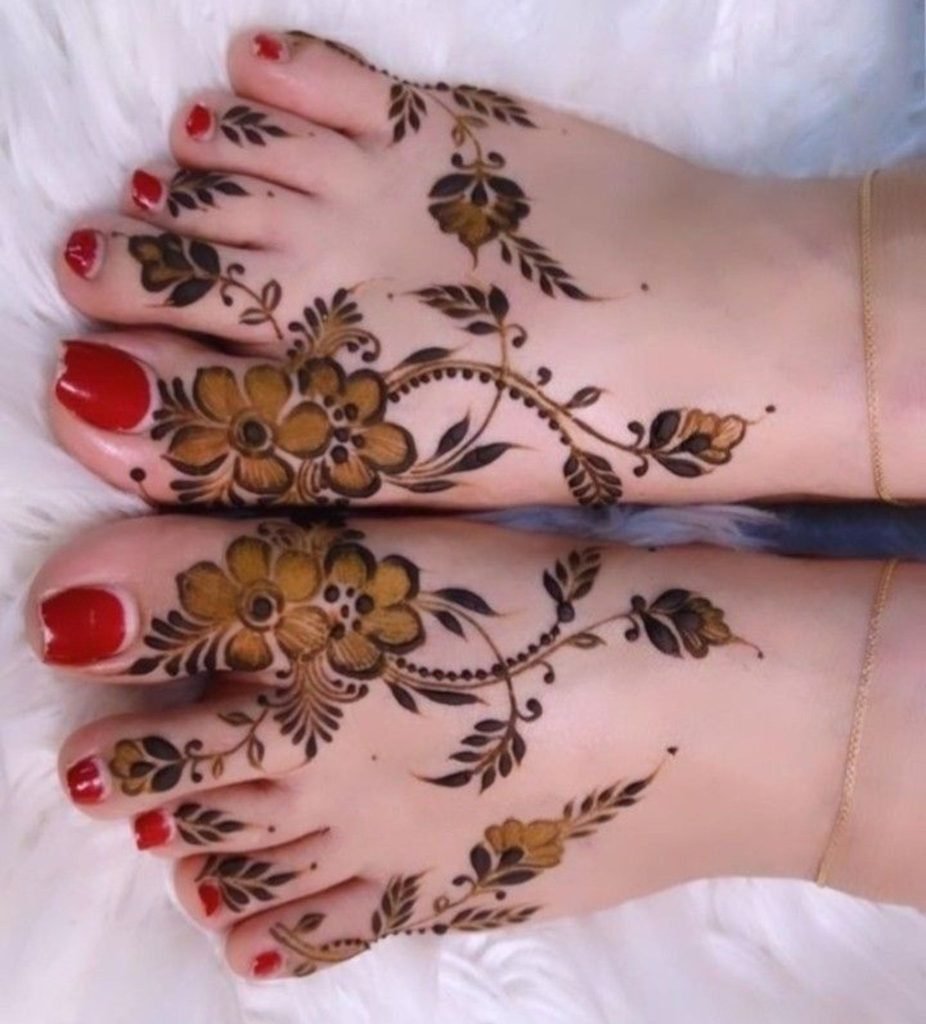
Here, blooms lead. Roses, lotuses, or daisies sit at the center of the foot, with smaller buds trailing toward the toes and vines curling along the sides. Shading inside the petals adds depth without crowding the skin.
It suits brides in pastel or floral embroidered outfits and pairs well with a soft, garden-style wedding theme.
Mandala Foot Mehndi
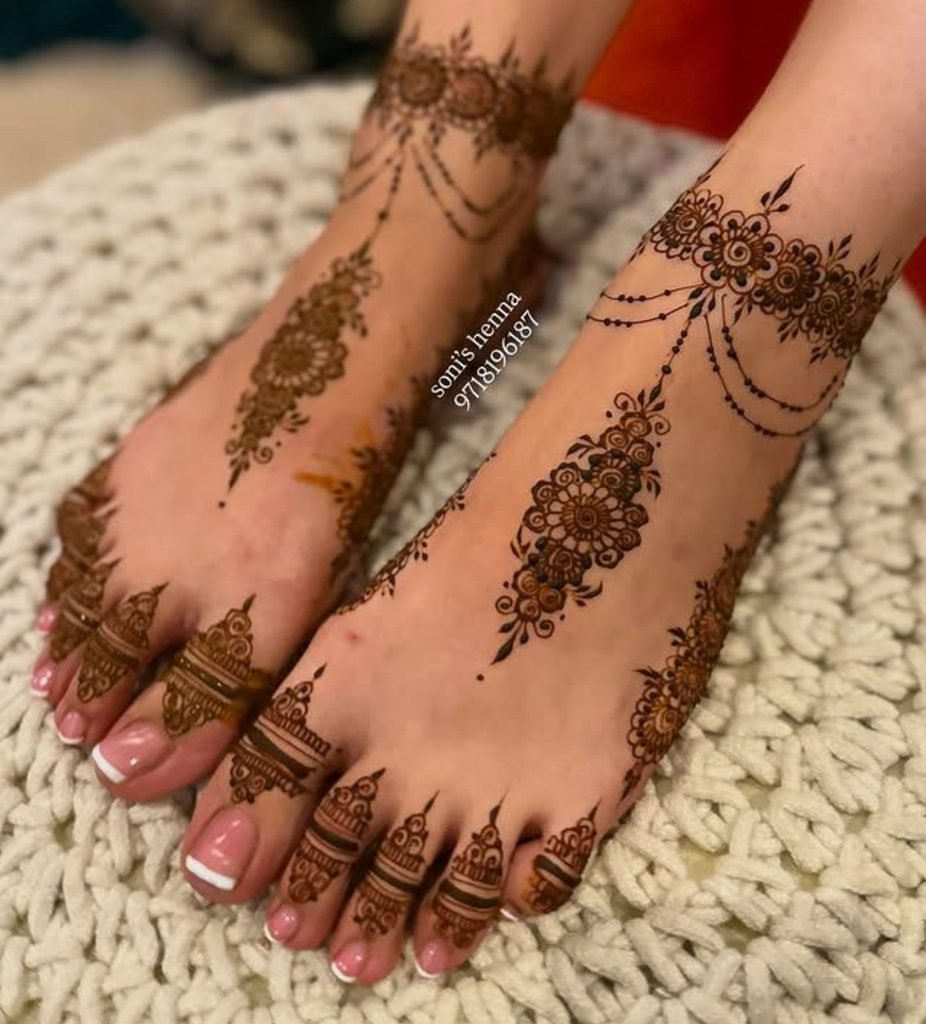
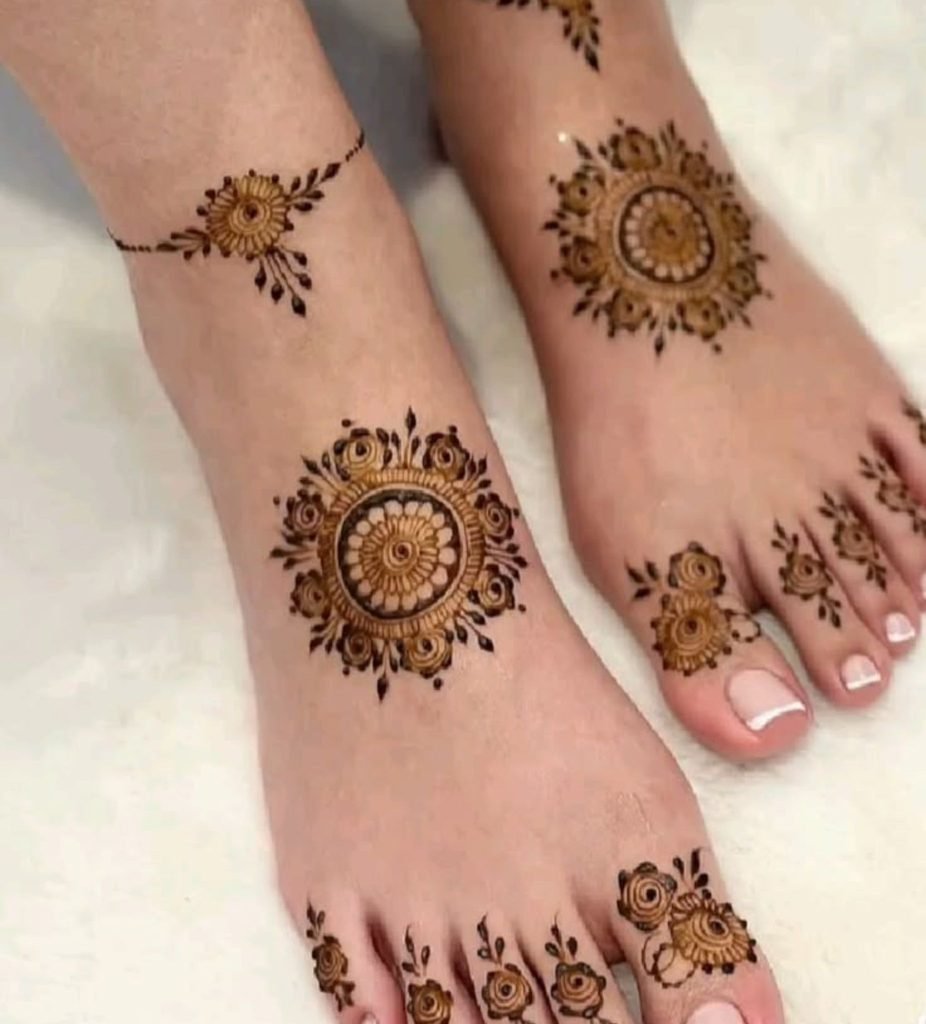
A round mandala sits at the center of the foot, radiating outward in rings of petals, dots, and small triangles. Some brides add a half mandala on the heel.
The symmetry feels calm and balanced, so it suits brides who love geometry and a contemporary look, particularly with minimal or pastel outfits.
How to Choose the Right Design for You
Start with your outfit. Heavy embroidery near the hem calls for a lighter pattern, while a plain or sheer outfit can carry more detail. Next, think about jewelry: if you’re wearing thick payal or toe rings, keep the ankle and toes a little open so nothing competes. Your wedding theme matters too; garden inspired events suit florals, while modern venues suit mandalas or Arabic lines.
Be honest about how much detail you want and how long you can sit still. When you compare any bridal foot mehndi design, picture it from standing height, where the top of the foot and the ankle show most. Finally, trust your personal style; if you rarely wear ornate pieces, a minimal design will feel more like you.
For balance, mirror the pattern on both feet, keep the ankle as dense as the foot, and end both designs at the same height.
Final Thoughts
Your feet will carry you through every ritual, so choose a bridal foot mehndi design that suits your outfit and feels like you. Bring a fabric swatch and your jewelry to the appointment, and enjoy the moment.
FAQs
Which mehndi design looks best on bridal feet?
Whichever suits your outfit. Arabic vines and Pakistani-style patterns are dependable because they read clearly.
How much of the foot should bridal mehndi cover?
There’s no rule. Some brides cover toes to ankle, others choose only the top of the foot or an ankle band.
Is Arabic mehndi suitable for bridal feet?
Yes. Its open spacing and bold lines suit brides who want a modern, less crowded finish.
Can simple foot mehndi look bridal?
Absolutely. A bridal foot mehndi design doesn’t need full coverage; a well-placed anklet band or single motif with clean lines still feels special.
How can I match my mehndi to my wedding outfit?
Check the outfit’s embroidery. Heavy work calls for lighter mehndi; simpler outfits can handle more detail.
t.